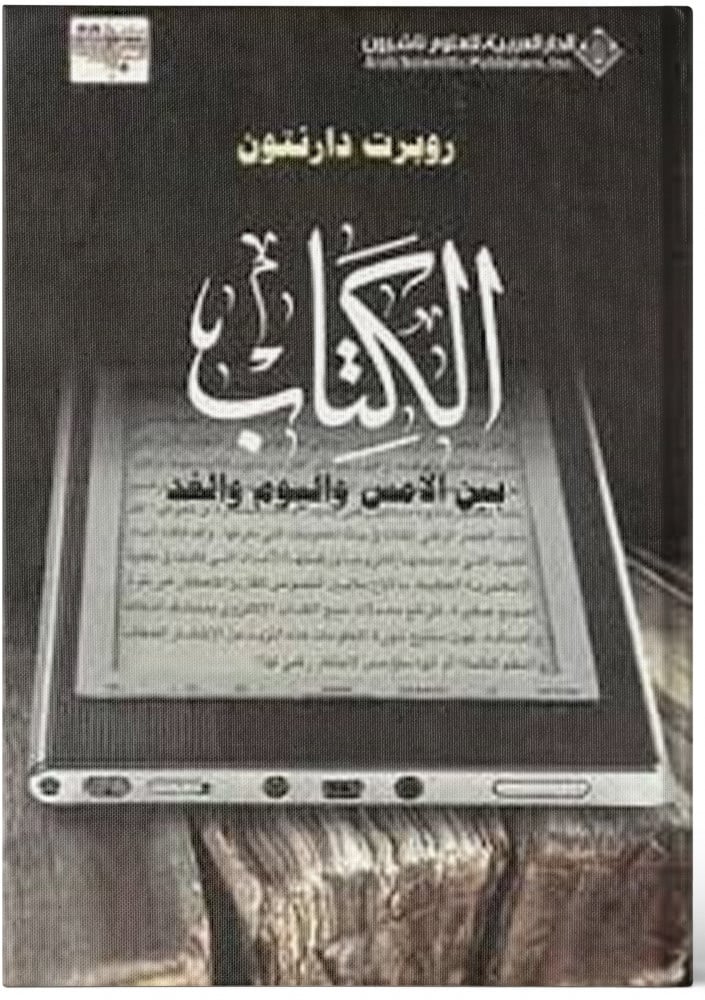

The book between yesterday and today and tomorrow - Robert Darenton
34ر.س
Out of Stock
Product description
The shape of the invention of writing was a breakthrough in the history of humanity in the fields of science, culture, and society. Through printed books, information and ideas spread faster and more effectively than ever before — and at times, they had an impact on the course of history itself. Today, more than a million books are published annually. But will the era of the book last? Or is it heading towards decline? In this case, should we prepare funeral ceremonies to celebrate the emergence of a new digital future? Or should we mourn a loss that cannot be compensated? In this book, "Robert Darnton" attempts to emphasize the importance and position of the book in the digital environment world, which has today transformed into one of the most advanced and fastest-used forms of knowledge in the lives of millions of people. Through the pages of this book, we will discover the common factors that unite the traditional book and the electronic book, as well as the most important advantages that connect libraries and the internet.
From his position as a university professor who spent most of his time in the atmosphere of the eighteenth century, studying a subject called "The History of Books," as well as holding several positions at the most important universities around the world such as Princeton and Oxford, and then serving as director of Harvard University Library, "Darnton" presents us with the culmination of his experience, practical knowledge, and vision for the future. He says: "I believe that studying and approaching the past is necessary when trying to anticipate the future while grappling with current problems. Therefore, I have organized this collection of articles into three sections, by looking back into the past, away from guessing the future of the world of books that will prevail after five or ten years, through discussions on new or recurring issues from old informational eras with their own communication systems. I do not mean that I wanted these articles to fit into specific pre-prepared templates, but they were written on specific occasions that called for direct and quick responses."
The author considers that the continued dominance of the book still embodies a general rule in the history of knowledge communication, and that one means does not eliminate another — at least in the near future. In his view, libraries have been and will remain centers of knowledge, dedicated to their intermediary role in the world of knowledge, serving as an ideal mediating arena between print and digital communication methods. A book can accommodate both means; whether it is printed on paper or stored on a server, it ultimately contains knowledge.
The contents of the book are divided into three main sections, titled as follows:
- The first section titled: Future, includes four chapters:
1. Google and the Future of the Book
2. The Reality of Information
3. The Future of Libraries
4. Lost and Found in Cyberspace
- The second section titled: Present, includes three chapters:
1. The Electronic and Traditional Book
2. The Gitenberg Electronic Project
3. Free Access
- The third section titled: Past, includes four chapters:
1. A Song of Thanks to Paper
2. The Importance of Being Bibliographically Accurate
3. The Secrets of Reading
4. What is the History of the Book?
Cover type: Regular paper
Size: 14×21
From Al Qatif