

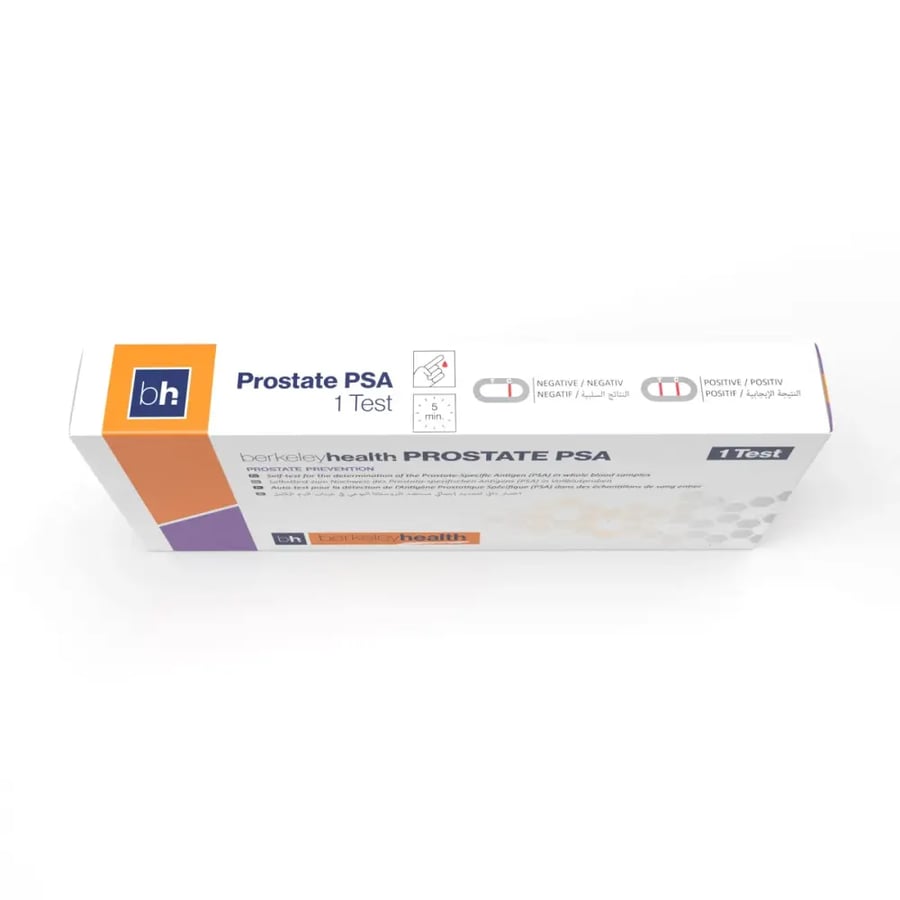
Prostate PSA test
80ر.س
Product description
Self-test to determine total prostate antigen in full blood samples to ensure the safety of the prostate gland with a simple self-test provided by Berkeley Healthcare. The test serves as the first line in prevention or diagnosis of several issues, from prostatitis to prostate cancer. Fast and easy to use with useful results, using a quick self-test within minutes with high accuracy. This test is intended for: men who have no symptoms, aged over 45, who want to check their prostate; men with urinary symptoms (difficulty urinating, pain, increased frequency). Comprehensive information about the test. Self-test to determine prostate-specific antigen PSA in full blood samples, which is a protein produced by the epithelial cells of the prostate gland. Its function is to liquefy the ejaculated semen to increase sperm movement, and it plays a role in dissolving cervical mucus, allowing sperm to enter the uterus. Small amounts of prostate-specific antigen are usually present in the blood of men with healthy prostates. PSA levels may rise in prostate diseases (such as prostatitis, benign prostatic hyperplasia, etc.), and this can occur naturally with age or after prostate surgery or specific diagnostic tests (such as rectal exam, prostate biopsy, etc.). Test principle: The prostate antigen test is a rapid qualitative test to measure PSA levels in full blood using antibodies that work selectively. A positive result indicates that the values are above 4 nanograms/milliliter and a doctor should be consulted. Method of use: Wash your hands with soap and water and let them dry. Prepare the necessary materials, open the test, and extract the pipette. Massage your finger to improve blood flow, open the attached needle by rotating the cap 360 degrees. Press the needle on the fingertip for pricking, and press the hand until a large drop of blood appears. If enough blood is not obtained, continue massaging. Draw the sample using the attached capillary to the black line (see illustrated instructions in the leaflet). Place the drawn sample into the sample well (S) indicated on the test strip. Add two drops of the diluent and wait 5 minutes before reading the result. Two colored lines: indicate a higher than normal concentration and a doctor should be consulted. One colored line at (C): indicates normal concentration. If you have any urinary problems, speak to your doctor anyway. Warnings and precautions: Read these instructions carefully before performing the test. This test is valid only if all instructions are followed precisely. Keep the test out of reach of children. Do not use after the expiration date or if the packaging is damaged. Follow the procedure exactly, using only the specified amounts of blood and diluent. Store the test components at a temperature between 4 and 30 degrees Celsius. Do not freeze. Use the test and lancet only once. This test is for external use only. Do not swallow. Laboratory diagnostic device for single use. Not recommended for those on anticoagulant medications or with hemophilia. After use, dispose of all components according to local waste disposal laws. Consult the pharmacist about this. It is advised to wait a certain period before testing in specific cases such as: long bike rides – wait one day; intercourse – wait one to two days; urinary catheterization or rectal ultrasound – wait two to three days; urinary tract infections – wait one week. Contents: Test strip and moisture-absorbing bag; clear bag with blood-absorbing pipette; dropper with diluent; sterile lancets; alcohol swab; leaflet. Required but not included: Timer.

From Riyadh