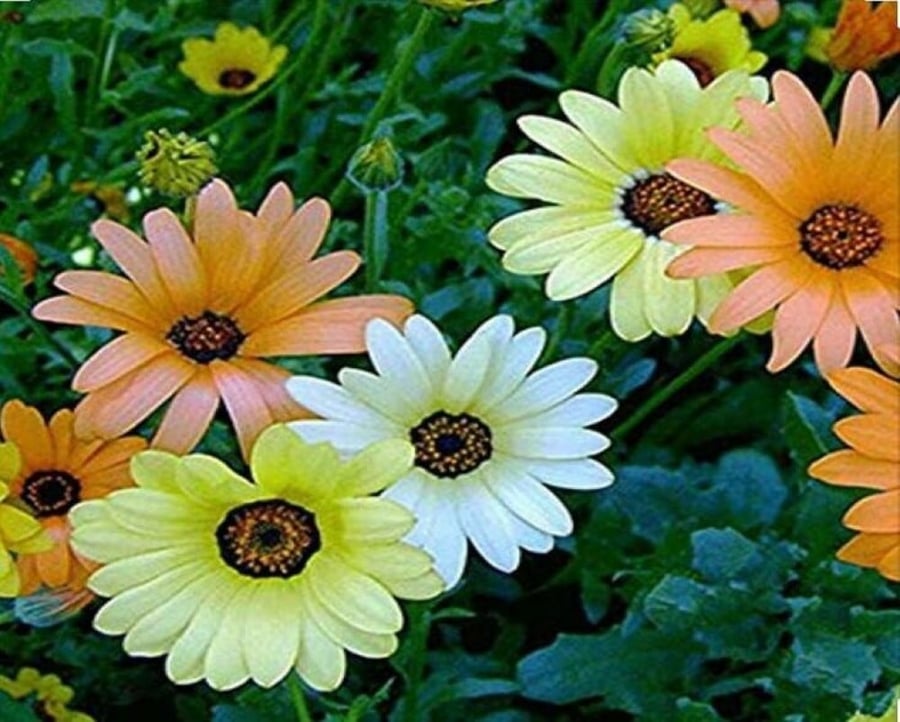


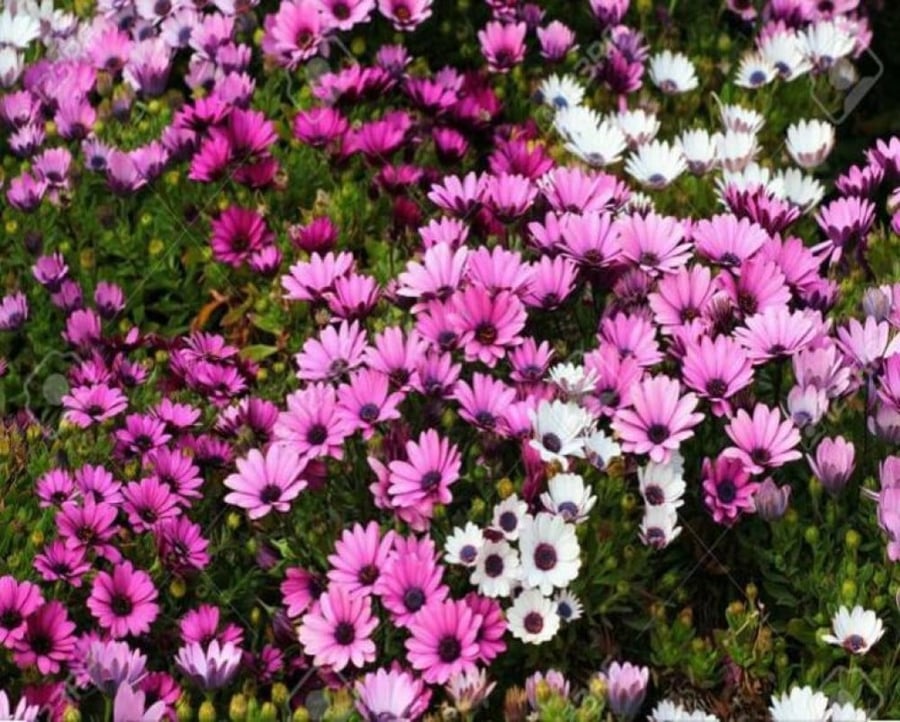

Dimorphotheca flower seeds
8ر.س
Product description
Dimorphotheca flower, African daisy, African pearl, head of cotton. Scientific name: Scientific name: Dimorphotheca app. An herbaceous annual plant, heavily branched at the base, easy to grow, reaching up to 100 cm in height. Its flowers are beautiful and multicolored, including white, pink, yellow, or orange. Its leaves are elongated with serrated edges. It is considered a low-growing, low-height annual perennial, and it fully tolerates heat and dry conditions and has the ability to adapt, leading to denser regrowth and creating a stunning visual display when planting flowers in large patches. It does not tolerate frost and extreme cold. Its planting season extends from the end of winter through October to March. The flowers bloom in sunny weather and close at night and do not open during rain. It is used for garden decoration and is not suitable for harvesting. Large blooms can be maintained by removing side buds, and it also tends to bend from the stems due to the weight of the flower, which can be avoided by raising the plants with good support. Its native habitat is South Africa and Australia. Propagation: Propagates through seeds. Soil type: Grows well in loamy and sandy soil. Soil drainage: Well-drained and ventilated. Soil moisture: Dry. Soil pH: Neutral. Watering: Water the plant daily with a spray to keep the growing soil moist until germination (the amount of moisture can be reduced later as the plant ages). Light exposure: Planted in sunny spaces. Blooming period: Spring – winter, from January to June. Suitable places for cultivation: Public gardens, home gardens, windows, roadside edges, balconies. Planting method: 1- Suitable pot and an open or partially open space. 2- Bring agricultural clay and mix it with fertilizer and place the mixture in the pot. 4- Place the seeds about 5 mm deep, then cover with light soil. 5- Water well. Note: *When planting seeds, make sure not to bury them too deep, as these plants need adequate sunlight to germinate.

Questions you might have