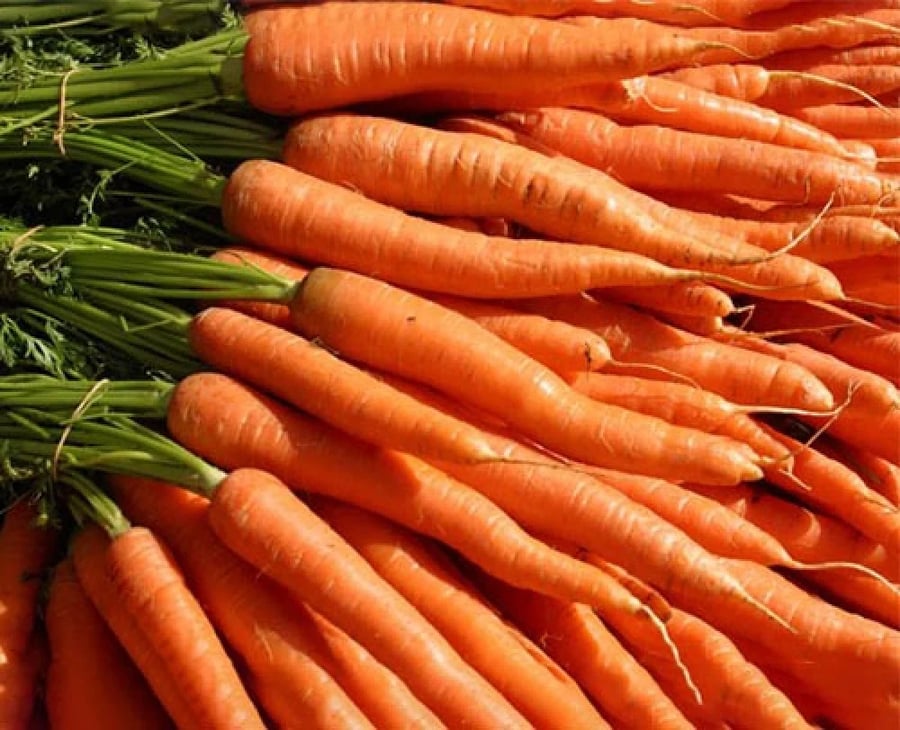
Carrot plant seeds
5ر.س
Product description
Carrot seeds (Daucus carota subsp. sativus) general description: The carrot, scientifically known as Daucus carota subsp. sativus, is a biennial herbaceous plant belonging to the Apiaceae family. The carrot is characterized by its long orange (or various colors such as purple, red, or white) roots, which are the edible part of the plant. The carrot is an excellent source of vitamins and minerals, especially vitamin A. Reproduction: The carrot reproduces by seeds. Carrot seeds germinate within 10-21 days after planting, and the edible roots continue to grow until the carrot is ready for harvest after 70-80 days of planting. Flowering time: The carrot is a biennial plant, meaning it produces flowers in the second year of cultivation. Small white flowers appear in umbrella-shaped clusters from mid-summer to early autumn. Seed planting method: Carrot seeds are sown at a depth of 0.5-1 cm in well-drained, nutrient-rich soil. A distance of 5-10 cm should be left between each plant, preferably in rows spaced 30 cm apart. It is recommended to plant carrots directly in the soil, as they do not tolerate transplanting after planting. Suitable climate and soil: Carrots grow best in temperate to cold climates, with temperatures ranging between 16-24 degrees Celsius. They require light, sandy or fine loamy soil that drains well to ensure straight, healthy roots. The soil should be moist but not waterlogged, with a pH between 6.0 and 7.0. Sowing and planting time: It is preferable to plant carrot seeds in early spring for a summer harvest or in late summer for a fall or winter harvest. In moderate climates, carrots can be grown year-round. Seeds and young plants should be protected from frost. Benefits and uses: Carrots are rich in beta-carotene, which converts to vitamin A in the body and helps promote good vision. They also contain vitamin C, fiber, and antioxidants that boost the immune system and improve skin health. Carrots are used in many dishes, such as salads, soups, and juices, and can be eaten raw or cooked. Native origin: The origin of the carrot traces back to Central Asia, Iran, and Afghanistan. Today, carrots are cultivated worldwide and are considered a staple vegetable in many cuisines due to their high nutritional value and delicious taste.
