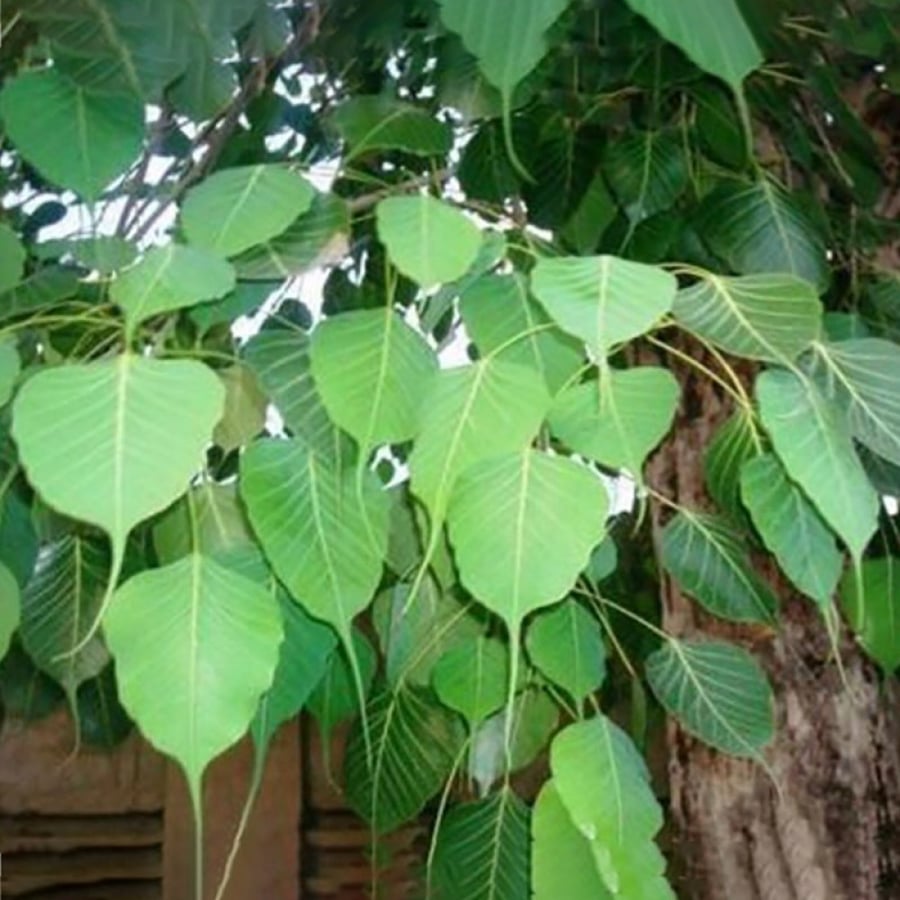


Bird of paradise tree seeds
7ر.س
Product description
The Ficus Religiosa tree, Lisan Al-‘Asfour.
Its scientific name: Ficus Religiosa.
It is a beautiful, fast-growing tree, flowering, with yellow flowers.
The trunk forms a large part of its size.
It can be planted along roads and streets to provide shaded areas.
Its leaves are oval, semi-deciduous.
Young leaves are pink, and as they grow, they turn dark green.
Width: 12 cm, length: 15 cm.
Its height ranges from 25 meters to 35 meters.
The leaves are considered semi-evergreen.
It is a fruit-bearing tree, flowering in spring, with its fruits appearing purple and then turning black.
The fruit of the Lisan Al-‘Asfour tree is fleshy, juicy, about 1 cm in size, and inedible.
Its native habitat is the Indian subcontinent, including Bangladesh, Pakistan, India, the Himalayas, the Nicobar Islands, Myanmar, and the Malay Peninsula.
Soil type: It is grown in light alkaline soil, deep, fertile soil, with aerial surface roots that appear outside the soil.
Therefore, it can only be cultivated in wide spaces, as planting near walls and houses is difficult because the roots cause significant damage to pavements and buildings.
Planting season: Mid-winter to early spring.
Blooming season: From early March to the end of May.
Watering: Regular but moderate watering.
Propagation: The Lisan Al-‘Asfour tree propagates through seeds, cuttings, air layering, or transplanting seedlings.
Pruning and trimming: Allowed, by removing dead branches and maintaining its shape.
Suitable climate: Prefers sunny places, tolerates moderate frost, salinity, and heat.
Drought sensitivity: Sensitive.
Frost tolerance: -3°C.
Planting method: Seeds are soaked for 24 hours in water, then scattered in well-tilled soil.
Fertilizer is sprinkled over the seeds and watered well.
They are covered with soil no more than half a centimeter deep, then watered thoroughly until germination.
Re-watering and fertilizing may be needed to keep the soil moist and promote seed growth.
Uses and benefits:
• The Lisan Al-‘Asfour can be used as an ornamental tree in parks and large gardens.
• It serves as a shade tree along wide roads.
• It has various medicinal uses in traditional Chinese medicine, but with caution, as the milky sap is considered toxic.
• It is used as a windbreak.

Questions you might have