

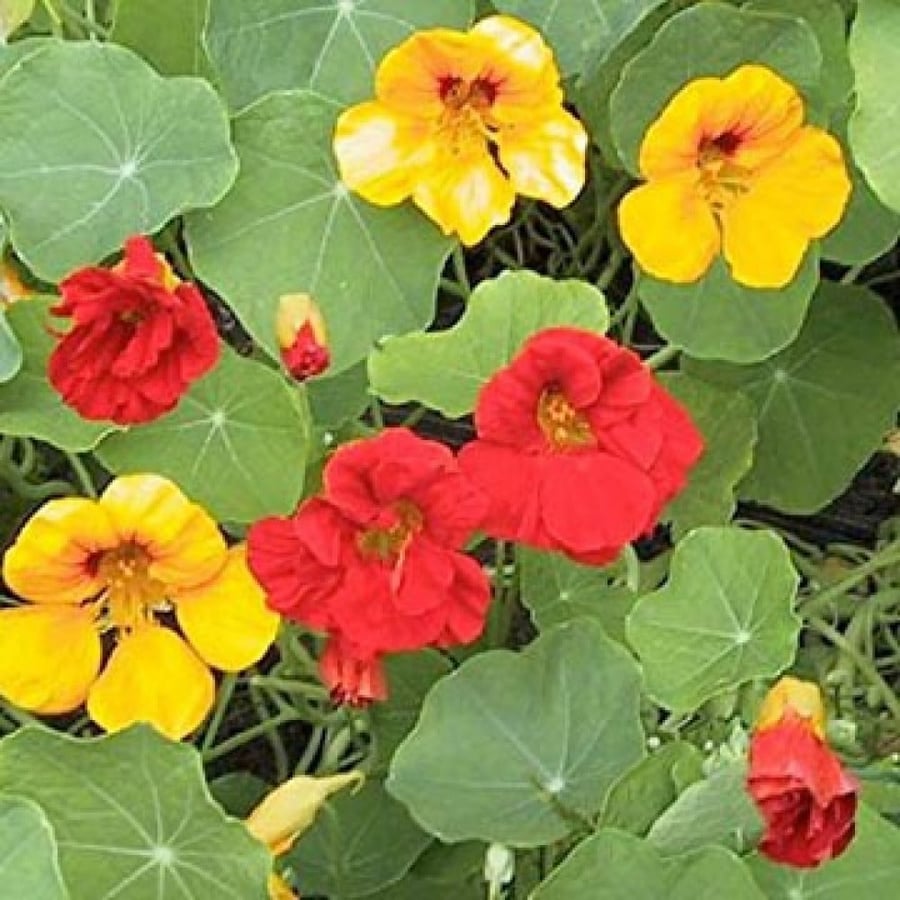
Seeds of the Salbut plant (Abu Khanjar)
7ر.س
Product description
Zuhur Al-Salboot, Abu Khanjar
Scientific name: Tropaeolum majus
Nasturtium or Salboot or Abu Khanjar plant, Latin flowers, Indian rocket, Loden flowers, and the flowers with bright spring colors of red, yellow, and orange, especially when those attractive colors harmonize with the surrounding greenery of leaves and branches, giving it a mesmerizing beauty that captivates minds and hearts. Yes, it is the Salboot flower, or as people call it, Abu Khanjar flower, because the shape of the flower resembles a dagger.
The Abu Khanjar flower is distinguished as an ornamental plant that is edible because its leaves are rich in vitamin C, which is essential for strengthening the human immune system.
The Tropaeolum plant is a climbing and creeping winter plant, with large green leaves, in a bright green color, and its flowers are shaped like a colorful cone between red, yellow, and orange. It reaches a height of about one and a half to two meters, which sets it apart from other flowers.
The Abu Khanjar flower is the perfect choice for decorating balconies or home gardens with its stunning natural colors.
Original habitat: Brazil, Peru, and Colombia in western South America.
Propagation: This beautiful flower propagates through seeds and cuttings.
Soil type: It thrives in most types of soil, especially ordinary or sandy soil.
Soil drainage: Good drainage and aeration.
Soil pH: Acidic, neutral, and alkaline.
Planting time: Abu Khanjar is planted from the ninth month, and it blooms from the first month until the fifth month.
Blooming time: Near the end of spring, and continues until October.
Light: Bright sunlight with light shade.
Watering: Moderately, especially when temperatures rise.
Suitable climate: It cannot tolerate cold or frost, so it must be placed in a warm, shaded place to grow and bloom. It also cannot withstand being moved from one place to another.
Method of cultivation: Soak Abu Khanjar seeds in lukewarm water for 12 hours, then place them in soil at a depth of 1 cm. This method speeds up and improves growth and germination. It does not need much fertilizer; it grows well in ordinary soil that does not contain many fertilizers or vitamins, as excessive fertilization may affect its growth and harm its propagation.
