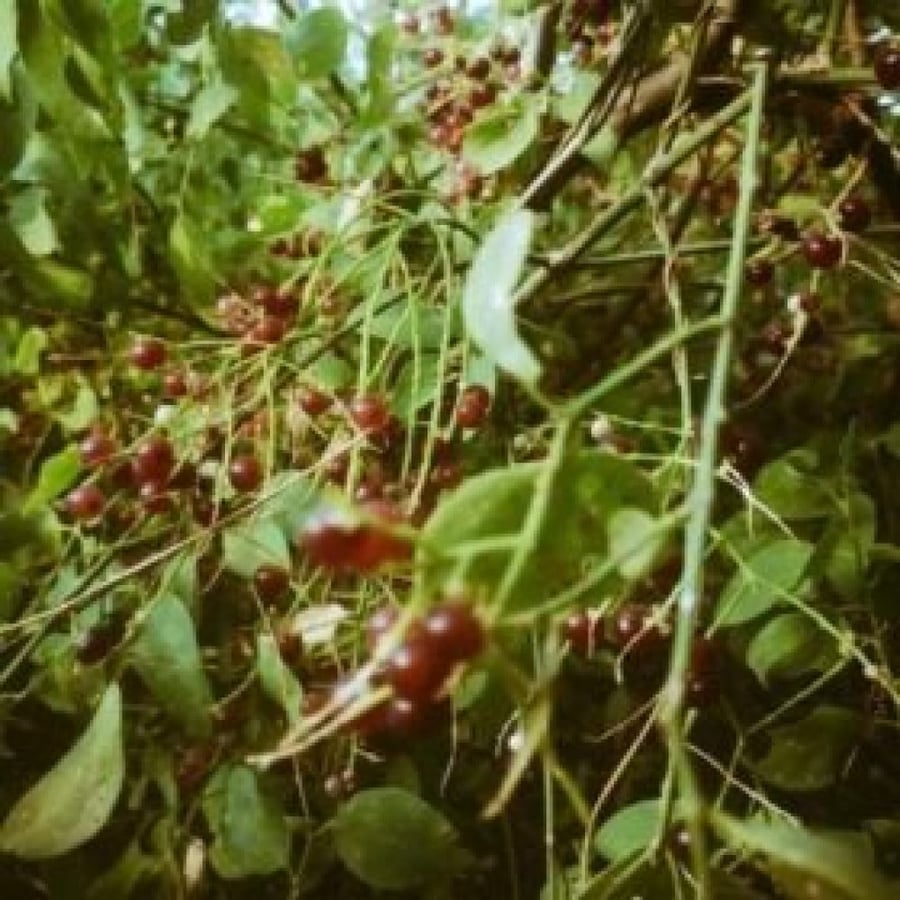
Seeds of the Arak tree (Miswak)
7ر.س
Product description
The Arak tree or Miswak. Scientific name: Salvadora persica. It is one of the famous trees in many countries, from the olive family, and it is a perennial tree that adorns nature with its stunning beauty and flowing greenery throughout the year. The Arak or Miswak tree is a dense-leaved and branched tree, reaching approximately 3 meters in height. It is characterized by its pleasant fragrance, good taste, and delicious fruit. From it, the Miswak sticks are obtained, which the Prophet Muhammad (peace be upon him) recommended using, because they contain fluoride and other compounds that protect teeth from decay. This tree has small, beautiful yellow flowers, and round red fruits with a sweet and tasty flavor. Its original homeland is the Hejaz region, and it is abundant in the Arabian Peninsula, especially in Jazan and Abha.
Propagation: The Arak tree propagates through seeds.
Soil type: Fine sandy soil, and it can also be cultivated in rocky soil.
Soil drainage: Good drainage.
Planting time: From the beginning of spring until summer.
Blooming period: From early February until the end of December.
Pruning and trimming: This is done by pruning broken, dead, or secondary branches. Pruning should not be done immediately after planting but after a period.
Light: Partial sunlight or indirect sunlight.
Watering: Minimal, and it does not require much care.
Suitable climate: The Arak tree tolerates frost, drought, salinity, and wind. It does not need much watering or care, making it a great restorative tree that can be cultivated even in harsh climatic conditions, as it lives in high-temperature (tropical) areas.
Planting method: By using seedlings, where a deep hole is dug in the soil. The purpose of the depth is to allow the roots to grow and spread well inside the soil. The seedling is placed inside the hole, and the soil removed during digging is returned around it, then watered until it appears to be well hydrated. It can also be cultivated using seeds by soaking them in water for 12 hours until they sprout well, then placing them in a container with good drainage and rich soil with organic fertilizers. The seeds are covered with soil, then placed in a shaded area for 2-3 days, and then moved to a location with about 4-6 hours of sunlight. After the seedling grows, it is removed and planted in the soil.
