


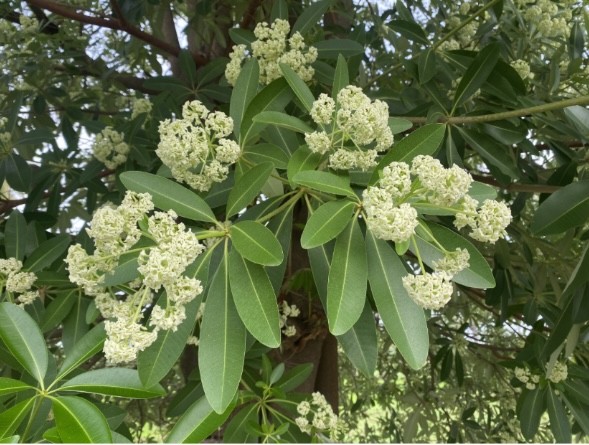
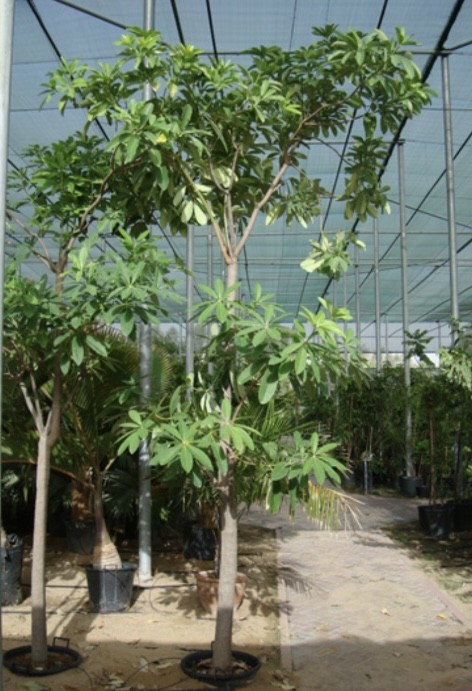
Stevia tree seeds (a million flowers)
8ر.س
Product description
Seeds of the Millingtonia tree (Million Flowers) (Millingtonia hortensis) General description: The Millingtonia tree, also known as "Indian trumpet tree" or "Million Flowers tree," is a fast-growing tropical tree characterized by its fragrant white flowers that bloom at night. The tree bears tubular-shaped flowers that emit a pleasant and attractive fragrance, making it a popular choice in public and private gardens. The tree reaches a height of 10-25 meters. Reproduction: The Millingtonia tree reproduces by seeds collected from the long, slender pods that hang from the tree. It can also be propagated by cuttings, but seed cultivation is more common. Blooming time: The Millingtonia tree usually blooms in autumn, producing clusters of fragrant white flowers that open at night and attract butterflies and pollinating insects. Seed planting method: Millingtonia seeds are planted in well-draining light soil, such as a mixture of clay and sand. It is preferable to soak the seeds in lukewarm water for 12-24 hours before planting to improve germination rates. The seeds are planted at a depth of 1-2 cm in the soil and kept moist. The seeds require warm temperatures to germinate, usually taking 2 to 4 weeks for sprouting. Suitable climate and soil: The Millingtonia tree prefers hot and tropical climates but also grows well in semi-tropical areas. It needs fertile, well-drained soil and tolerates clay and sandy soils. The tree loves direct sunlight but can tolerate some partial shade. Planting and cultivation timing: The best time to plant Millingtonia seeds is in spring or early summer. The seedlings grow quickly and need a warm, sunny environment. Benefits and uses: The Millingtonia tree is used as an ornamental plant in gardens and parks due to its beautiful, fragrant flowers. It is also planted as a shade tree in hot regions. Its flowers can be used in making traditional perfumes and some herbal remedies. Native origin: The origin of the Millingtonia tree is from South and Southeast Asia, especially India, Myanmar, and Thailand. It is now spread in tropical and semi-tropical regions around the world due to its easy cultivation and beautiful flowers.

Questions you might have