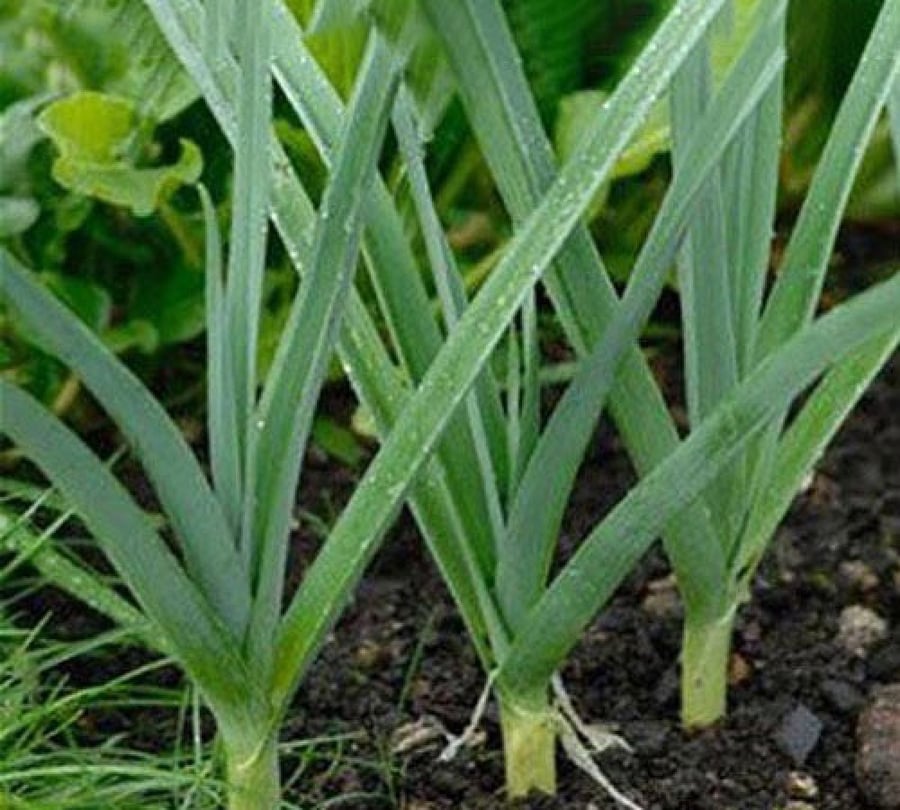
Leek plant seeds
5ر.س
Product description
Leek seeds (Allium ampeloprasum var. porrum) general description: Leek, scientifically known as Allium ampeloprasum var. porrum, is a biennial herbaceous plant belonging to the Amaryllidaceae family. Leek is used in cooking as a vegetable for various dishes, including soups and stews, and is considered a light-flavored substitute for onion and garlic. Leek is characterized by its long, flat leaves that form a cylindrical white stalk. Reproduction: Leek reproduces by seeds, and its seeds begin to germinate within 7-14 days after planting. Flowering time: Leek is a biennial plant, meaning it flowers in the second year of cultivation. It produces spherical flowers in summer, consisting of many small white or pinkish flowers. Seed planting method: Leek seeds are planted at a depth of 1-2 cm in well-drained fertile soil. They can be sown in rows spaced about 15-20 cm apart. It is preferable to plant in a location exposed to full or partial sunlight. Seeds can be sown directly in the ground or in seedling trays, then transplanted after 6-8 weeks. Suitable climate and soil: Leek grows best in cold and moderate climates, preferring temperatures between 15-20°C. It requires rich, well-drained soil with a pH between 6.0 and 7.0. Improving the soil with organic compost is recommended for a good yield. Planting and cultivation timing: It is preferable to plant leek seeds in late winter or early spring to harvest in late summer or fall. Leek can also be planted in late summer for winter harvesting. Leek grows slowly, so it is important to leave enough space between plants. Benefits and uses: Leek is rich in vitamins such as vitamin C and K, and contains important minerals like iron and manganese. It is considered beneficial for heart health and digestion due to its dietary fiber content. Leek is used in many recipes such as soups and stews, and can also be steamed or grilled. Native origin: Leek originates from the Mediterranean and Middle Eastern regions, where it has been cultivated for thousands of years. It is now grown worldwide, especially in regions with moderate climates, and is considered a staple vegetable in European and American cuisine.
