DSPPA MAG2120II 8x20 Intelligent PA Center with 7-inch Screen
10628.05ر.س
Product description
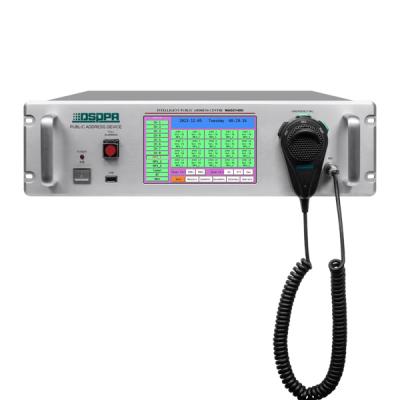
The DSPPA MAG2120II is an intelligent PA center that routes 8 sources to 20 zones, with a 7-inch touch screen, AM/FM radio, Bluetooth and telephone paging. It suits schools, malls and hotels that want different audio per area plus scheduling, paging and fire alarm linkage.
====
The DSPPA MAG2120II is an intelligent PA center built as an audio matrix: 8 sources in, and any source to any of 20 zones out. It handles background music, scheduled playback, remote paging and fire alarm linkage, and DSPPA aims it at small and mid-size venues such as schools, plants, parks and public squares. You control it from a 7-inch color touch screen, a wireless remote or a networked PC.
Why the DSPPA MAG2120II stands out
Every zone can carry its own source. In a shopping mall, the kids' area gets upbeat music, the food court gets something calmer and the car park hears directions, all from one chassis.
- 8 rear inputs (CH1 to CH8), each with its own level knob, plus 2 MIC jacks wired to CH1 and CH2.
- 20 zone outputs at 1V (0dBV) line level to feed your amplifiers.
- 85dB zone SNR and 70dB crosstalk between zones.
- 22W power draw in a 484 × 360 × 132 mm chassis.
Sources built in
Inside are 3 MP3 players, an AM/FM tuner, Bluetooth, network audio decoding and 6G of storage. Copy tracks from a USB stick and play them on schedule. Three chime tones and an alarm tone each have digital level control. Need a disc player too? The LAN port can control DSPPA's PC1061 CD/MP3 player and PC1062 tuner.
Paging by microphone or telephone
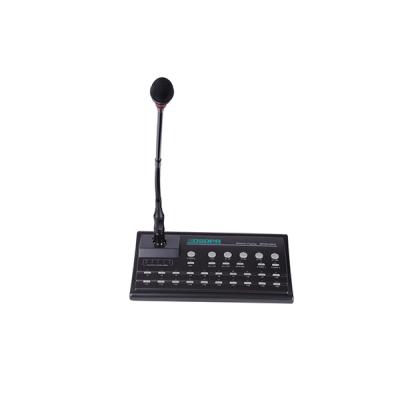
Four 9-pin ports take remote paging microphones, so reception and the admin office can each have one. The telephone IN/OUT port lets staff page all zones or selected zones from a phone line, protected by a password, and an Android app adds network paging. Priority is fixed: front emergency mic, then alarm input, then remote paging mic, then telephone.
Scheduling and emergencies
Set up 5 timer schemes on a 7-day cycle. Each point picks the source, the zones and the PWR1 and PWR2 outlets (500W each). For emergencies there are 20 fire alarm inputs, a front all-zone alarm button and a handheld mic that overrides every output. A built-in monitor speaker lets you check any zone.
Use cases in Saudi Arabia
- Schools: school radio, morning assembly, class bells and the anthem in the yard only.
- Shopping malls: different music per section and announcements in parking.
- Hotels in Makkah and Madinah: recitation in the lobby, soft music in the restaurant, staff paging.
- Factories: hall-by-hall paging and alarms tied to the fire panel.
MAG2120II, MAG2140II or MAG1116?
The MAG2120II and MAG2140II share the same inputs, screen, sources, size and power draw. The difference is zone and fire input count, 20 versus 40, and net weight, 9.2 kg versus 9.6 kg. The MAG1116 routes amplifier output to 10 zones without a source matrix, with a 5-inch screen and two paging ports. Choose the MAG2120II when you have 11 to 20 areas.
Frequently Asked Questions
Can each zone play a different source?
Yes. It is an 8x20 matrix, so any input goes to any zone, backed by 3 built-in MP3 players, radio and Bluetooth.
Do I need amplifiers?
Yes. Zone outputs are 1V line level, so they feed power amplifiers that drive the speakers.
Can I page from a phone?
Yes. A telephone IN/OUT port supports all-zone or selected-zone paging with a password.
Specifications
- Model: MAG2120II
- Type: Intelligent public address center (audio matrix)
- Matrix: 8 inputs × 20 outputs
- Control zones: 20
- Display: 7-inch color touch screen
- Control modes: Touch screen, remote control, wireless remote
- Built-in storage: 6G
- Input sensitivity: 250mV (±25mV)
- Output: 1V (0dBV)
- Built-in sources: Radio, MP3 (3 MP3 players), Bluetooth, network audio decoding
- MP3 frequency response: 20Hz-20kHz
- MP3 SNR: 85dB
- MP3 dynamic range: 80dB
- MP3 THD: 0.05%
- AM radio: 52dBu sensitivity, 522kHz-1620kHz, 6kHz passband, 35dB SNR
- FM radio: 26dBu sensitivity, 87.0MHz-108.0MHz, 15kHz passband, 75dB SNR
- Wireless control: 12 groups, remote with 12 programmable buttons
- Zone frequency response: 20Hz-20kHz (±3dB), single zone
- Zone SNR / crosstalk: 85dB / 70dB
- Timer: 5 programs, 7-day cycle
- Audio priority: Local emergency mic, then alarm input, then remote paging mic, then telephone paging
- Rear audio inputs: 8 inputs (CH1-CH8) with level knobs, plus 2 MIC jacks paralleled to CH1 and CH2
- Remote paging ports: 4 × 9-pin D ports with level knob
- Fire alarm inputs: 20 short-circuit inputs, each can trigger any programmed zone
- Alarm trigger mode: Low level 0V; high level 5V-24V
- Alarm outputs: Short-circuit output when any zone opens, short-circuit output from alarm button or fire center, fire linkage output for extension units
- External alarm input: Input from external alarm generator with level knob
- Telephone: IN/OUT ports for telephone paging (all zones, selected, programmed) with password
- Network: LAN for PC control, network playback, PC1061 CD/MP3 and PC1062 tuner control, network time sync
- Data interface: Serial link to DSPPA central control system
- USB: Playback, song copying, mouse support
- Timed power outlets: PWR1 and PWR2, AC220V / 50Hz / 500W each
- Monitoring: Built-in monitor speaker for each zone
- Fuses: Machine F1AL, power F10AL
- Power supply: AC220V (±10%) / 50Hz
- Power consumption: 22W
- Dimensions: 484 × 360 × 132 mm
- Net weight: 9.2 kg
Features
- 8x20 audio matrix: play recitation in the prayer hall, soft music in corridors and an announcement in the yard at once.
- 3 built-in MP3 players, AM/FM radio, Bluetooth and 6G storage: ready sources with no extra rack gear.
- 4 remote paging ports plus telephone paging: the principal reaches any zone from the office or a PBX handset.
- 20 fire alarm inputs: each one triggers only its programmed zone, with priority over music and routine paging.
- 12-button wireless remote and LAN port for PC control: run the system without standing at the rack.
