Grandstream GWN7625 4x4:4 Wave-2 Access Point with 2.03 Gbps
293.25ر.س
Product description
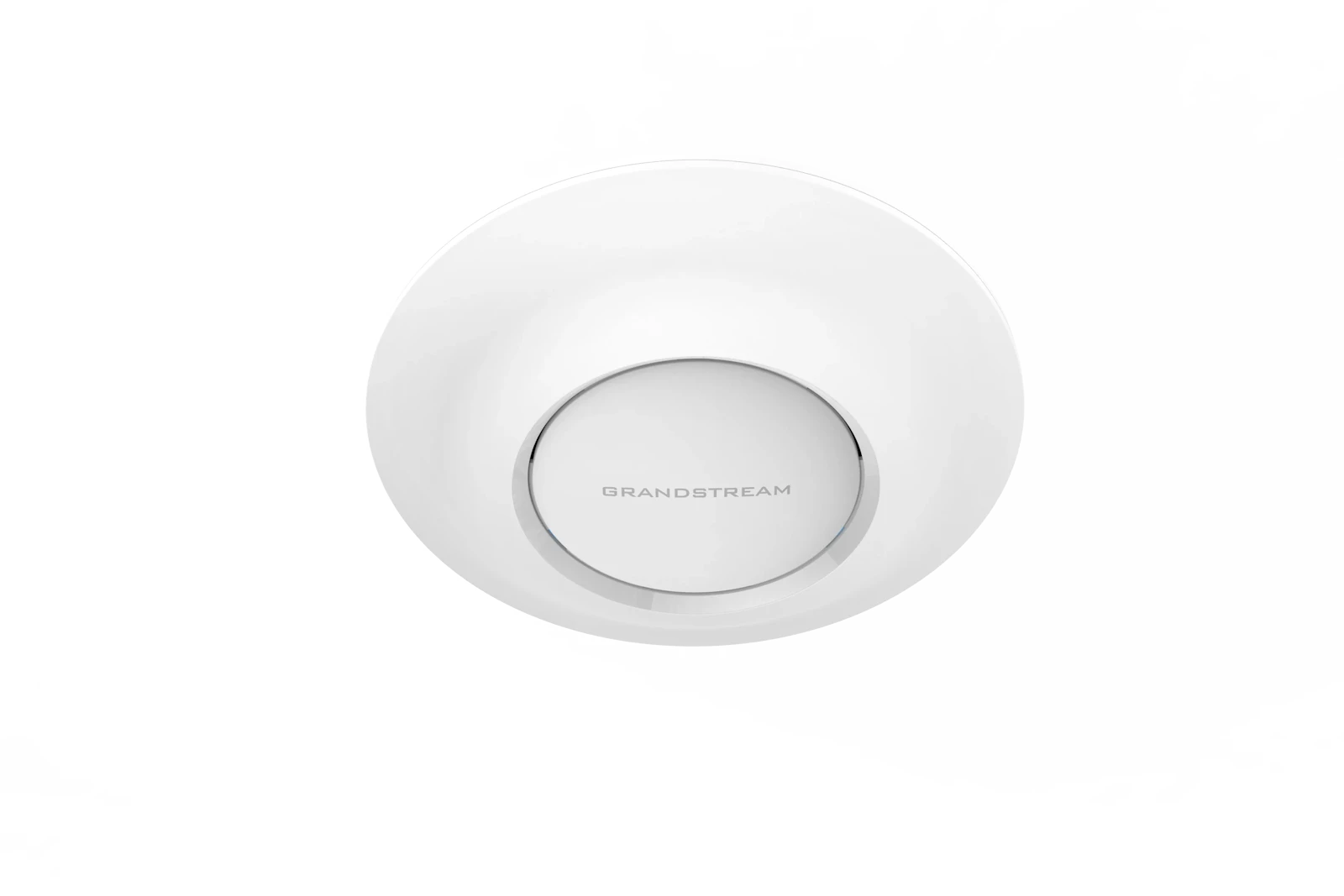
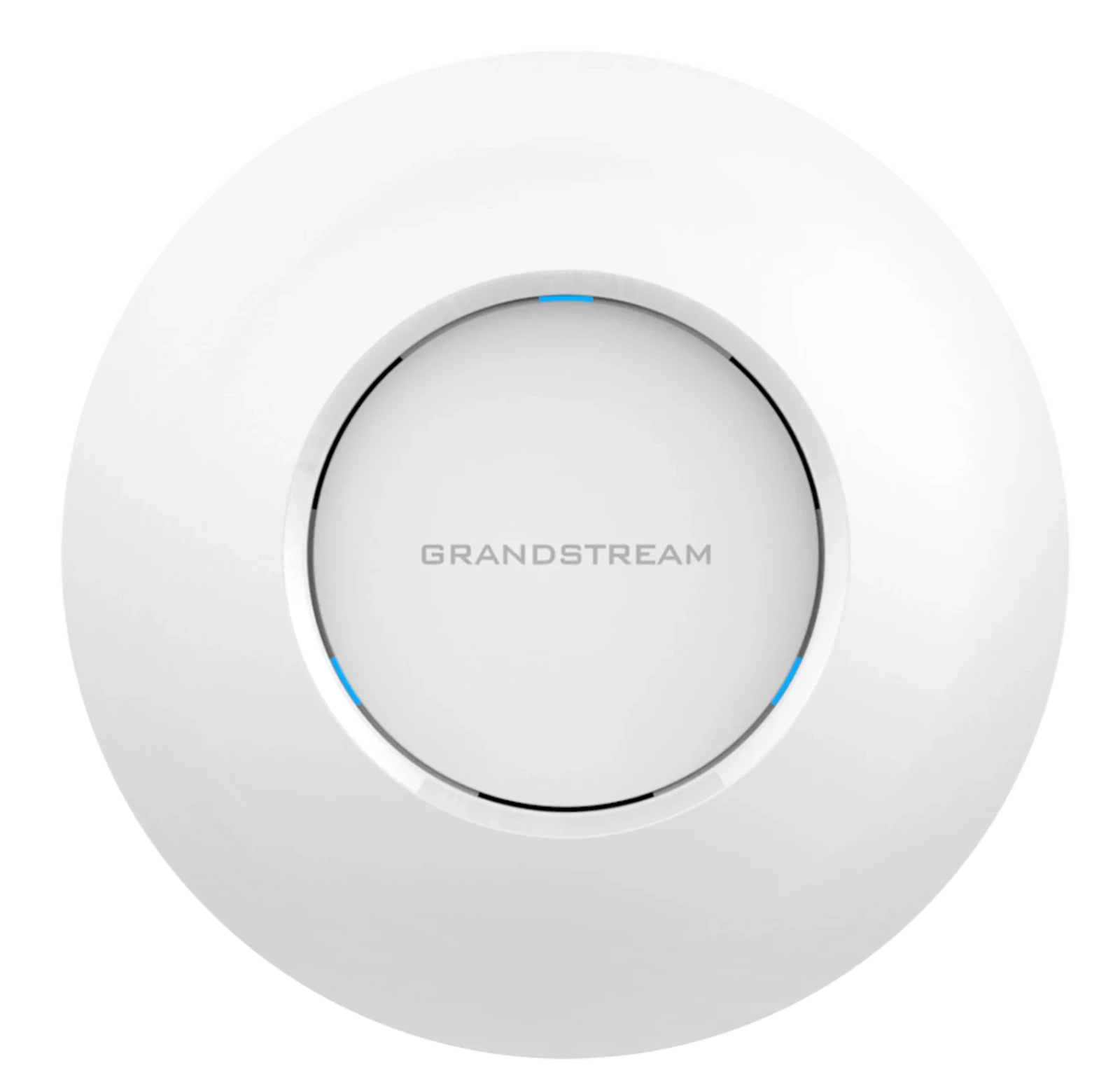
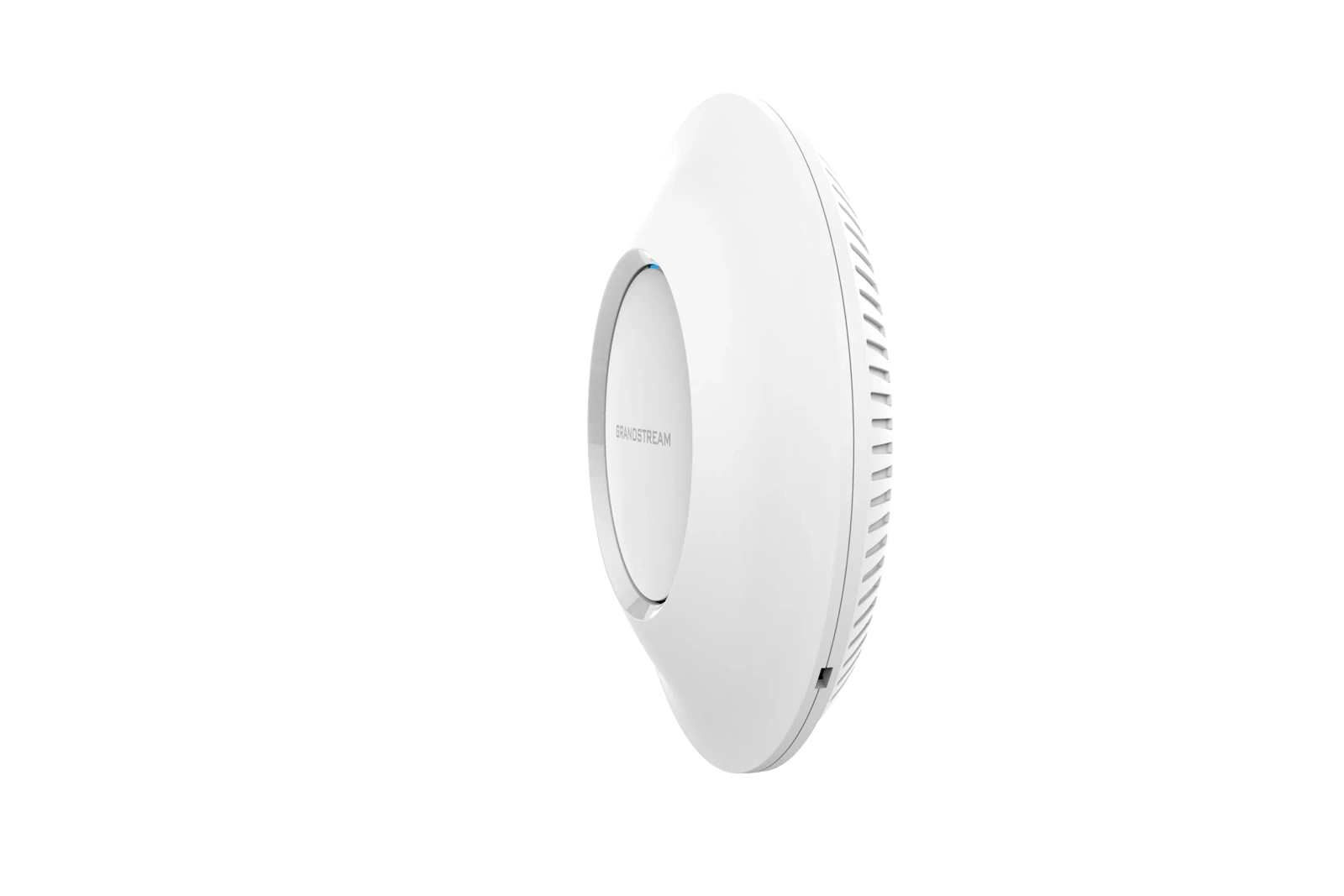
The Grandstream GWN7625 is a Wi-Fi 5 ceiling access point with four spatial streams (4x4:4) on 5 GHz, reaching 1733 Mbps on that band and 2.03 Gbps overall for up to 200 clients. It suits meeting and training rooms and offices where most laptops and phones connect on 5 GHz.
====
The Grandstream GWN7625 puts its weight on the 5 GHz band: four spatial streams (4x4:4) with MU-MIMO take that band to 1733 Mbps, and with 2.4 GHz added the combined figure is 2.03 Gbps. It serves up to 200 clients, covers up to 165 m and mounts on a ceiling or wall from a single Ethernet cable. Meeting rooms, training halls and offices full of recent laptops and phones are where it pays off.
Grandstream GWN7625 specs: four streams on 5 GHz
- 1733 Mbps on 5 GHz with 4x4:4 MU-MIMO.
- 300 Mbps on 2.4 GHz with 2x2:2.
- Six internal single-band antennas, 4.5 dBi on 5 GHz.
- Transmit power of 25 dBm on 5 GHz and 23 dBm on 2.4 GHz.
- Two Gigabit ports and a maximum draw under 13 W over PoE.
Why 4x4:4 on 5 GHz matters
MU-MIMO lets an access point send data to several clients at the same moment instead of one after another, and more streams means more clients served in parallel. Most modern laptops and phones connect on 5 GHz, so the GWN7625 puts its extra capacity where the load is, while 2.4 GHz stays available for printers and older smart devices.
Guest Wi-Fi with your own login page
The GWN7625 supports up to 16 SSIDs, each with its own settings: a captive portal that greets visitors before they connect, and bandwidth limits so one device cannot use the whole line. Assign every SSID its own VLAN to keep company devices away from guest traffic.
Installation and first boot
Grandstream recommends ceiling mounting: fix the bracket to the ceiling tile, connect the cable to the NET/PoE port, then seat the unit and turn it to lock. Out of the box it broadcasts an SSID named GWN plus the last six digits of its MAC address, with a random password printed on the label. A Kensington slot helps secure it in public spaces.
Where it fits in KSA
- Meeting and training rooms in companies and government offices.
- Private schools and universities: computer labs and lecture halls.
- Clinics and medical centers: a staff network plus a patient network with a login page.
- Large offices in Riyadh, Jeddah and Al Khobar: open floors with dozens of devices.
Management and compatibility
The built-in controller manages up to 30 GWN APs. You can also run them from GDMS Networking, free cloud management for unlimited units, or GWN Manager on-premise for up to 3,000. Any 802.3af PoE or 802.3at PoE+ switch will power it, and it supports WPA3 and 802.1x enterprise authentication.
GWN7625, GWN7615 or GWN7624?
Against the GWN7615, the GWN7625 is faster on 5 GHz (1733 vs 1300 Mbps) but slower on 2.4 GHz (300 vs 450 Mbps), with 16 SSIDs instead of 32, a 30-AP controller instead of 50, and 165 m of range instead of 175 m. The GWN7624 has the same radio in a wall unit with four ports, two PoE outputs and 100 m of range. Choose the GWN7625 for ceilings in spaces where most devices run on 5 GHz.
Frequently Asked Questions
How many devices does the GWN7625 support?
Up to 200 concurrent clients according to Grandstream, with 2.03 Gbps combined throughput.
Does it support a guest login page?
Yes. Each of its 16 SSIDs can use a captive portal and its own bandwidth limits.
GWN7625 or GWN7615?
The GWN7625 is faster on 5 GHz (1733 Mbps, 4x4:4). The GWN7615 is faster on 2.4 GHz (450 Mbps), offers 32 SSIDs and has a 50-AP controller.
Specifications
- Model: GWN7625
- Series: GWN7600 (Wi-Fi 5)
- Wi-Fi standard: IEEE 802.11a/b/g/n/ac (Wave-2)
- Aggregate wireless throughput: 2.03 Gbps
- Antennas: 6 internal single-frequency antennas; 3.5 dBi gain at 2.4 GHz, 4.5 dBi at 5 GHz
- 5 GHz data rates: 802.11ac: 6.5-1733 Mbps; 802.11n: 6.5-600 Mbps; 802.11a: 6, 9, 12, 18, 24, 36, 48, 54 Mbps
- 2.4 GHz data rates: 802.11n: 6.5-300 Mbps; 802.11b: 1, 2, 5.5, 11 Mbps; 802.11g: 6, 9, 12, 18, 24, 36, 48, 54 Mbps
- Frequency bands: 2.4 GHz: 2412-2484 MHz; 5 GHz: 5180-5825 MHz (not all bands available in every region)
- Channel bandwidth: 2.4 GHz: 20/40 MHz; 5 GHz: 20/40/80 MHz
- MIMO: 2.4 GHz 2x2:2; 5 GHz 4x4:4 (MU-MIMO)
- Wi-Fi and system security: WEP, WPA/WPA2-PSK, WPA/WPA2 Enterprise (TKIP/AES), WPA3; secure boot; signed image and critical control lockdown; unique security certificate and random default password per device
- Coverage range: Up to 165 m (varies by environment)
- Maximum TX power: 2.4 GHz: 23 dBm; 5 GHz: 25 dBm (varies by country, band and MCS rate)
- Receiver sensitivity 2.4 GHz: 802.11b: -96 dBm @1 Mbps, -88 dBm @11 Mbps; 802.11g: -93 dBm @6 Mbps, -75 dBm @54 Mbps; 802.11n: -73 dBm @MCS7 (20 MHz), -70 dBm @MCS7 (40 MHz)
- Receiver sensitivity 5 GHz: 802.11a: -92 dBm @6 Mbps, -74 dBm @54 Mbps; 802.11n: -74 dBm @MCS7 (20 MHz), -71 dBm @MCS7 (40 MHz); 802.11ac: -67 dBm @MCS8 (20 MHz), -63 dBm @MCS9 (HT40), -59 dBm @MCS9 (80 MHz)
- SSIDs: 16 total, 8 per radio
- Concurrent clients: 200
- Network interfaces: 2x autosensing 10/100/1000 Base-T Ethernet (NET/PoE and NET)
- Auxiliary ports: 1x reset pinhole, 1x Kensington lock
- Mounting: Indoor ceiling or wall mount, kits included
- LEDs: 3 tri-color LEDs
- Network protocols: IPv4, IPv6, 802.1Q, 802.1p, 802.1x, 802.11e/WMM
- QoS: 802.11e/WMM, VLAN, TOS
- Network management: Embedded controller for up to 30 local GWN APs; GDMS Networking (GWN.Cloud) free cloud management for unlimited APs; GWN Manager on-premise controller for up to 3,000 APs
- Power: PoE 802.3af / PoE+ 802.3at; 802.3az support; max consumption under 13 W
- Environmental: Storage: -10 to 60°C; humidity: 10% to 90% non-condensing
- Unit dimensions and weight: 205.3 x 205.3 x 45.9 mm; 530 g
- In the box: GWN7625 access point, mounting kits, quick installation guide (no power adapter listed)
- Compliance: FCC, CE, RCM, IC, UKCA
Features
- 4x4:4 MU-MIMO on 5 GHz: up to 1733 Mbps on that band and 2.03 Gbps including 2.4 GHz.
- Up to 200 concurrent clients: a training room or large staff floor from one unit.
- 6 internal single-band antennas, 4.5 dBi on 5 GHz and 3.5 dBi on 2.4 GHz: dedicated antennas for each band.
- 16 SSIDs with captive portal and per-SSID bandwidth limits: a guest network with your own login page.
- 802.3az energy-efficient Ethernet: maximum draw under 13 W over PoE.
