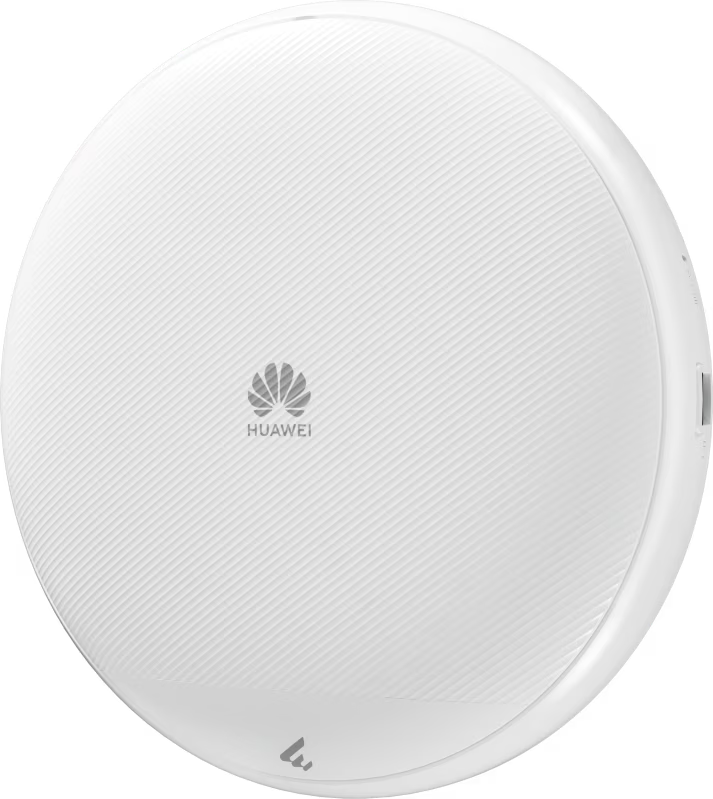
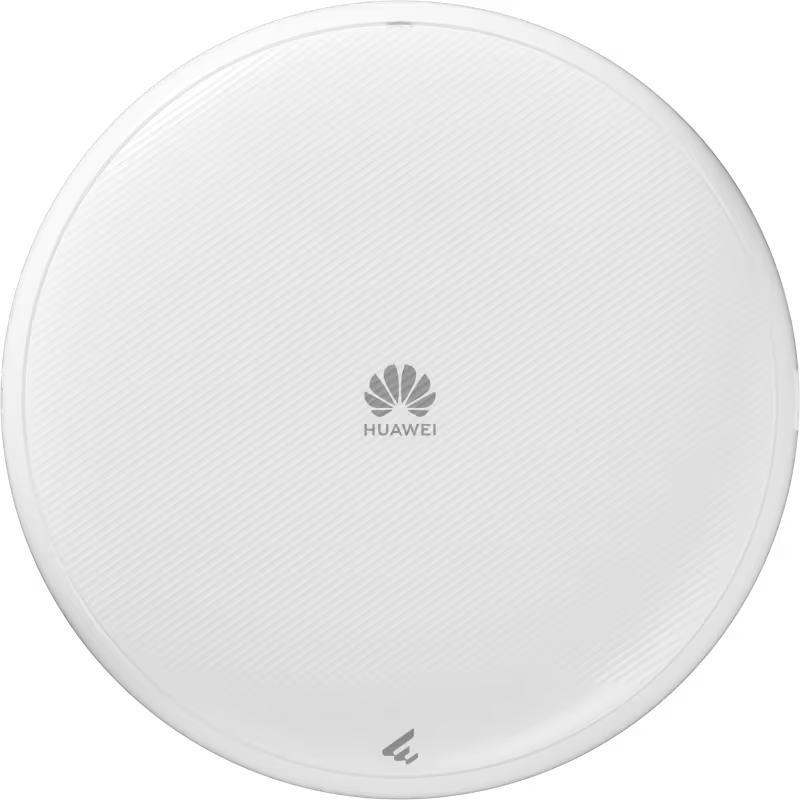
Huawei AP673 Tri-Band Wi-Fi 7 Access Point, 13.66 Gbps
1085.60ر.س
Product description
The Huawei AP673 is a HUAWEI eKit indoor access point running tri-band Wi-Fi 7 across 2.4, 5 and 6 GHz for a 13.66 Gbps device rate, fed by a 5GE port. It supports up to 1024 clients within a 40 m optimal range and suits modern offices, showrooms and studios equipped with 6 GHz-capable devices.
====
The Huawei AP673 is the only access point in this group with a 6 GHz radio, and that is where its value lies. Three Wi-Fi 7 radios cover 2.4, 5 and 6 GHz for a combined 13.66 Gbps, with a 40 m optimal signal distance. Huawei describes it as a Wi-Fi 7 settled AP for high-density scenarios. It belongs to HUAWEI eKit, the distribution-focused line for small and medium businesses, not to the enterprise AirEngine series.
The 6 GHz advantage of the Huawei AP673
In most buildings 2.4 and 5 GHz are crowded with neighbours' routers and home gear. The 6 GHz band is wider and far quieter. The AP673 uses it with a 4x4 radio and channels up to 320 MHz, double the widest channel available on 5 GHz. Recent phones and laptops that support 6 GHz get higher throughput and lower latency, while older devices stay on the other two bands.
- 2.4 GHz: 2x2, 40 MHz channels, 23 dBm.
- 5 GHz: 2x2, 80 MHz channels, 23 dBm.
- 6 GHz: 4x4, 320 MHz channels, 26 dBm.
A 5GE uplink for 13.66 Gbps
An access point this fast needs more than a gigabit link. The AP673 has a 5GE port that negotiates 100M, 1000M, 2500M or 5000 Mbps, plus a second GE port and a USB port. It runs on 802.3at or 802.3af PoE or a 12 V DC adapter and draws up to 21.1 W, excluding USB. A gigabit switch works, but full capacity needs a multi-gigabit switch port.
Capacity and coverage
Huawei recommends 300 users and allows up to 1024 clients. The optimal signal distance of 40 m is the longest in this group, helped by built-in smart antennas with 5 dBi per chain on 5 and 6 GHz.
Who should buy the AP673 in Saudi Arabia
- Modern offices where staff use 6 GHz-capable laptops and phones.
- Showrooms and car dealerships streaming high-resolution content.
- Design and video studios moving large files over Wi-Fi.
- Meeting rooms in Riyadh and Jeddah office towers.
Mounting and compatibility
Mount it on a wall, any common ceiling type, or 86 mm, 120 mm 1-gang or 2-gang and octagonal junction boxes. It measures 220 mm across, weighs 0.745 kg and operates from -10°C to +50°C. The 6 GHz band only serves Wi-Fi 6E and Wi-Fi 7 clients.
AP673, AP673E or AP572?
The AP673 covers 2.4, 5 and 6 GHz at 13.66 Gbps with up to 40 m reach, powered by 802.3at PoE or 12 V DC. The AP673E drops 6 GHz in favour of a second 5 GHz radio, giving 7.89 Gbps and 30 m; it needs 802.3bt PoE or a 48 V adapter and adds a PoE-out port. The AP572 is dual-band only at 6.45 Gbps. If your devices support 6 GHz, the AP673 is the one to pick.
Frequently Asked Questions
Do I need special devices to use 6 GHz on the Huawei AP673?
Yes. The 6 GHz band works with Wi-Fi 6E and Wi-Fi 7 phones and laptops. Older devices still connect normally on 2.4 or 5 GHz.
Which switch suits the AP673?
An 802.3at PoE switch powers it, as peak draw is 21.1 W. To use the full 5GE uplink, you need a multi-gigabit port rated 5G or higher.
What is the difference between the AP673 and AP673E?
The AP673 adds 6 GHz for 13.66 Gbps and runs on 802.3at or 12 V. The AP673E has no 6 GHz, tops out at 7.89 Gbps, needs 802.3bt or 48 V, and adds a PoE-out port.
Specifications
- Model: AP673 (part number 50087291)
- Product line: HUAWEI eKit indoor settled AP for high-density sites
- Wi-Fi standard 2.4 GHz: 802.11b/g/n/ax/be
- Wi-Fi standard 5 GHz: 802.11a/n/ac/ac Wave 2/ax/be
- Wi-Fi standard 6 GHz: 802.11a/ax/be
- Radios: 3 (2.4 GHz, 5 GHz, 6 GHz)
- Device rate: 13.66 Gbps
- Max channel bandwidth: 2.4 GHz: 40 MHz; 5 GHz: 80 MHz; 6 GHz: 320 MHz
- MIMO spatial streams: 2.4 GHz: 2x2; 5 GHz: 2x2; 6 GHz: 4x4
- Max transmit power: 20 dBm/chain; combined: 23 dBm on 2.4 GHz, 23 dBm on 5 GHz, 26 dBm on 6 GHz
- Antennas: Built-in smart antennas
- Antenna gain: 2.4 GHz: 4 dBi/chain peak, 2 dBi combined; 5 GHz and 6 GHz: 5 dBi/chain peak, 3 dBi combined
- Access users: 300 recommended, 1024 max
- Optimal signal distance: 40 m
- Network ports: 1 x 5GE RJ45 (100M/1000M/2500M/5000M auto-sensing) + 1 x GE RJ45 (10M/100M/1000M auto-sensing)
- USB: 1
- Power input: DC 12 V ±10% or PoE 802.3at/af
- Max power consumption: 21.1 W (excluding USB)
- Installation: Wall or ceiling (solid wall, gypsum board, spring tee, flat-edge T-rail, channel rail, beam, threaded rod); Junction box: 86 mm, 1-gang 120 mm, octagonal, 2-gang 120 mm
- Dimensions (unpacked): Diameter x depth: 220 x 45 mm
- Weight: 0.745 kg
- Operating temperature: -10°C to +50°C (max derated 1°C per 300 m from 1800 m to 5000 m)
- Operating humidity: 5% to 95% RH, non-condensing
Features
- A 4x4 6 GHz radio with 320 MHz channels: a fresh, uncrowded band for the latest phones and laptops that support it.
- 13.66 Gbps device rate across three radios: the highest figure in this group of access points.
- 5GE, GE and USB ports: an uplink fast enough to carry Wi-Fi 7 traffic to the switch.
- 300 recommended and up to 1024 clients within a 40 m optimal range: wider coverage with fewer units.
- 802.3at/af PoE with 21.1 W max draw: runs off one cable from a PoE+ switch.
