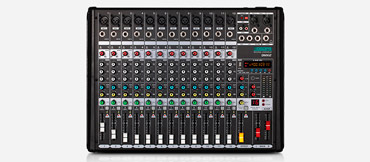
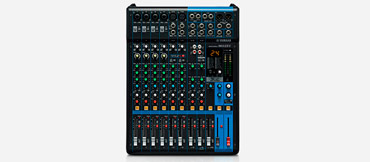
DSPPA CM208 Mixing Console with 8 Input Channels and 2 Groups
1795.81ر.س
Product description
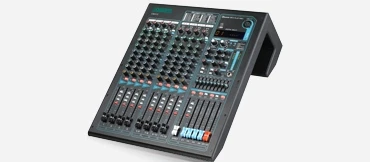
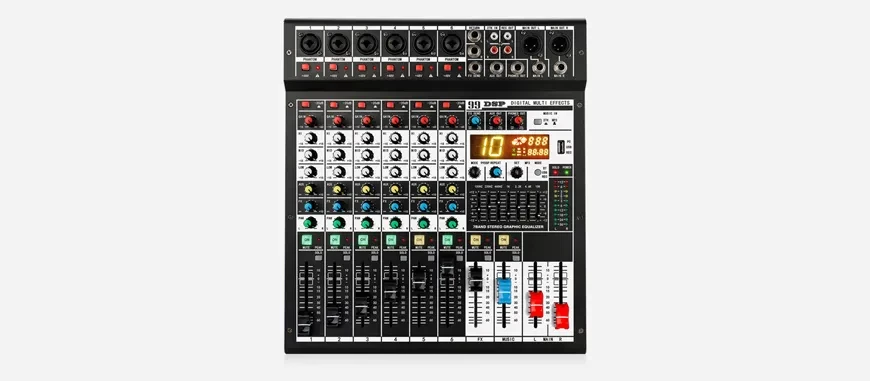
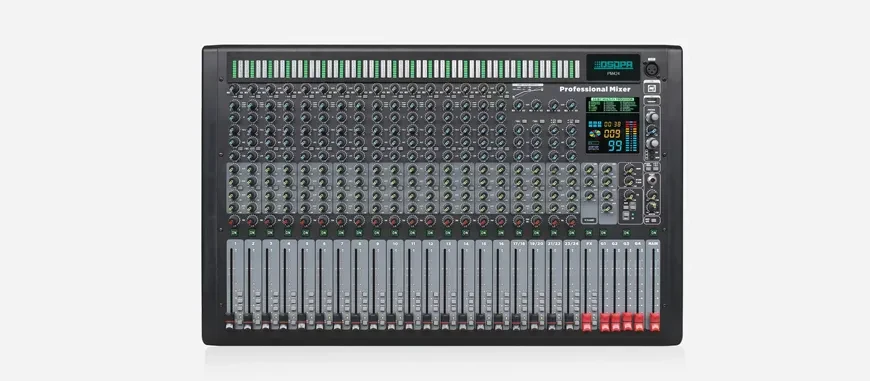
The DSPPA CM208 is a mixing console with 8 input channels and 2 group buses, where microphones and playback sources are blended before they go to a processor or amplifier. It fits mid-size mosques, school halls and small event rooms with up to eight sources.
====
The DSPPA CM208 is a mixing console with 8 input channels and 2 group buses. It is where your microphones and playback sources meet before the signal moves on to a processor or amplifier. DSPPA lists it on its international website within the CM208/CM212 professional mixing console range. It suits places that need simple hands-on control of a handful of sources: a neighborhood mosque, a school hall or a small event room.
DSPPA CM208 key specs
Two figures define this model:
- 8 input channels, each with its own level.
- 2 groups for combining channels and controlling them together.
- Manufacturer category: professional mixing console.
What two groups do for you
Without groups, every channel is adjusted on its own. A group bus collects several channels into one path, so a single fader raises or lowers all of them. In a mosque, for example, the imam, minbar and iqama microphones can sit on Group 1 while recitation playback sits on Group 2. When the khutbah starts, pull Group 2 down and every microphone keeps its own setting.
How many channels do you need?
List every source that will be plugged in at the same time, then add one or two spare channels:
- Each wired microphone (lectern, table, minbar) takes one channel.
- Each wireless receiver takes one channel per microphone, depending on how the receiver is wired.
- A laptop, phone or media player takes one or two channels (left and right).
Six or seven sources fit the CM208 comfortably. More than eight points you to the CM216.
Typical uses in Saudi Arabia
- Mosques: imam, minbar and iqama mics plus a wireless mic for lessons.
- Schools: the morning broadcast with a presenter mic, a guest mic and a music source.
- Istirahas and small event rooms: a speech mic and background music.
- Corporate training rooms: trainer mic, a handheld mic for questions and laptop audio.
Where the CM208 sits in your sound system
The mixer comes after the microphones and before processing and amplification. A common chain is microphones, then the CM208, then the DSPPA D6576 feedback suppressor (2 in, 2 out), then the amplifier and speakers. For halls with several speaker zones, the mixer output can feed a D6648 processor with 4 inputs and 8 outputs.
CM208 or CM216?
The confirmed difference is channel count: 8 inputs on the CM208 against 16 on the CM216, with 2 groups on both. Pick the CM208 when you have eight sources or fewer and do not want to pay for channels you will never use. Pick the CM216 for a large jami mosque or a school theater with many microphones.
Frequently Asked Questions
How many microphones can the DSPPA CM208 take?
It has 8 input channels, so up to eight sources in total.
What are the two groups for?
They let you send several channels to one path and control them with one fader, for example sermon mics on one group and recitation playback on the other.
Do I need a feedback suppressor with the CM208?
Where microphones sit close to speakers, as in many mosques and halls, adding the DSPPA D6576 after the mixer helps; it has 41 adaptive notch filters per input.
Specifications
- Model: CM208
- Type: Audio mixing console
- Series: CM208/CM212
- Input channels: 8
- Groups: 2
Features
- 8 input channels: enough for imam, minbar and iqama mics, a wireless receiver and a recitation source, with spares.
- 2 group buses: route several channels to one path and ride them with a single fader instead of one by one.
- The 8-channel option in the range: pay only for the channels you use, and step up to the 16-channel CM216 if sources grow.
- Feeds DSPPA processing downstream: the 2-input D6576 feedback suppressor or the 4-in/8-out D6648 processor for zoning.
