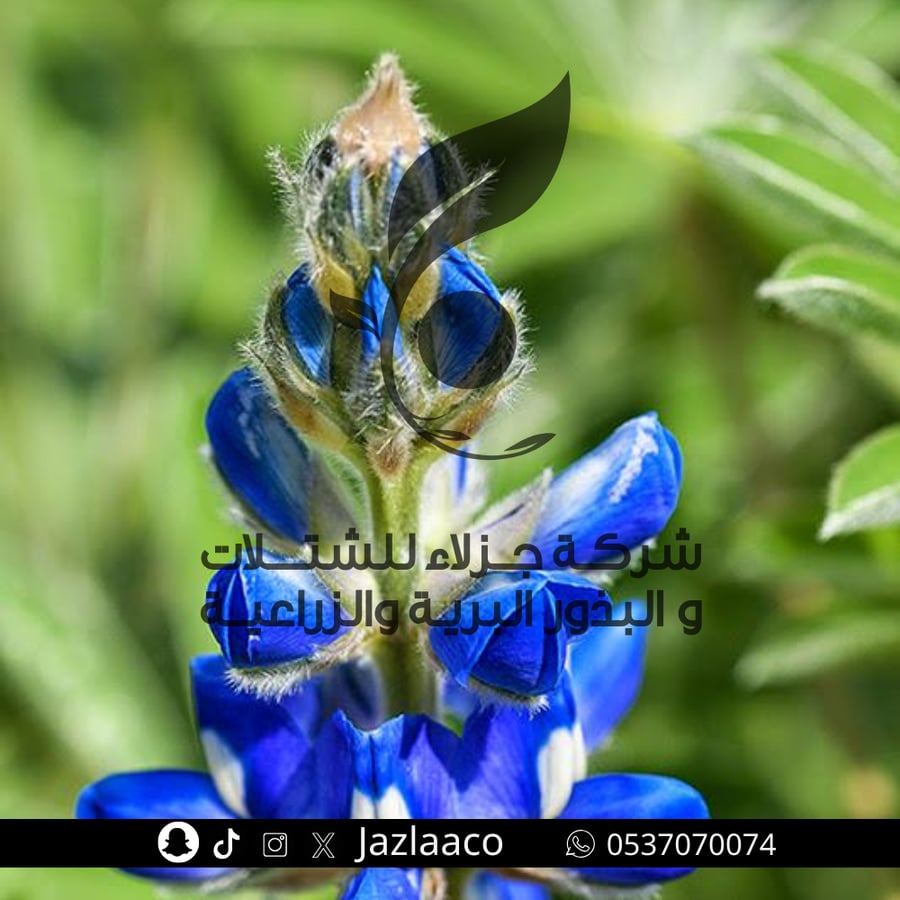

Lupinus cosentinii
9.50ر.س
Product description
Lupin (Lupinus cosentinii) is an annual herbaceous plant belonging to the legume family (Fabaceae). It is characterized by its colorful flowers and palmate leaves, and it grows in grassy environments and open areas. It is a species that grows primarily in the Mediterranean region, but has become widespread in some areas outside its natural range due to introduction, cultivation, and propagation in suitable environments.
General Description
It grows as an upright, branching herbaceous plant, and can reach a height of about 80 cm or more under suitable conditions. Its stems and leaves are characterized by the presence of fine hairs, while the leaves are arranged in palmate clusters, giving the plant a distinctive appearance.
Papers
Its leaves are compound and palmate, usually consisting of several narrow or lanceolate leaflets clustered at the petiole. The leaflets are covered with fine hairs, and the plant appears lush and green during its growth period.
flowers
The flowers are clustered in upright spike-like inflorescences, and their colors range from white and yellow to purple or pink. Multiple colors may appear on the plant depending on the conditions and the specific plant species. The flowers give the plant a distinct aesthetic value during the flowering season.
Fruits and seeds
It produces pods containing numerous seeds, which are characterized by the size and shape typical of lupin species. Seeds are the plant's primary means of reproduction and can be used to propagate it when suitable germination and growth conditions are present.
Endurance and suitability
Lupins thrive in open areas, grasslands, and well-drained soils, preferring temperate conditions during the growing season. As a legume, its roots form a symbiotic relationship with nitrogen-fixing bacteria, giving it ecological importance in improving soil fertility.
Uses
Some lupin varieties are used in agriculture and for seed production, and their plants are also valued for their ability to fix nitrogen and enrich the soil. However, Lupinus cosentinii, in particular, should not be considered a food lupin variety without verifying the cultivar and seed content, as the seeds of some lupin species contain alkaloids that may be toxic if not properly processed.
natural spread
Lupinus cosentinii is naturally found in parts of the Mediterranean basin, and is particularly associated with open areas and grasslands. It has also become present in other parts of the world as a result of introduction and spread beyond its native range.
Preservation status
Lupinus cosentinii is not currently known as a globally threatened plant, however, the availability of an official, independent global assessment from the IUCN Red List for this particular species needs to be verified against the most up-to-date database before a precise conservation category can be determined.
