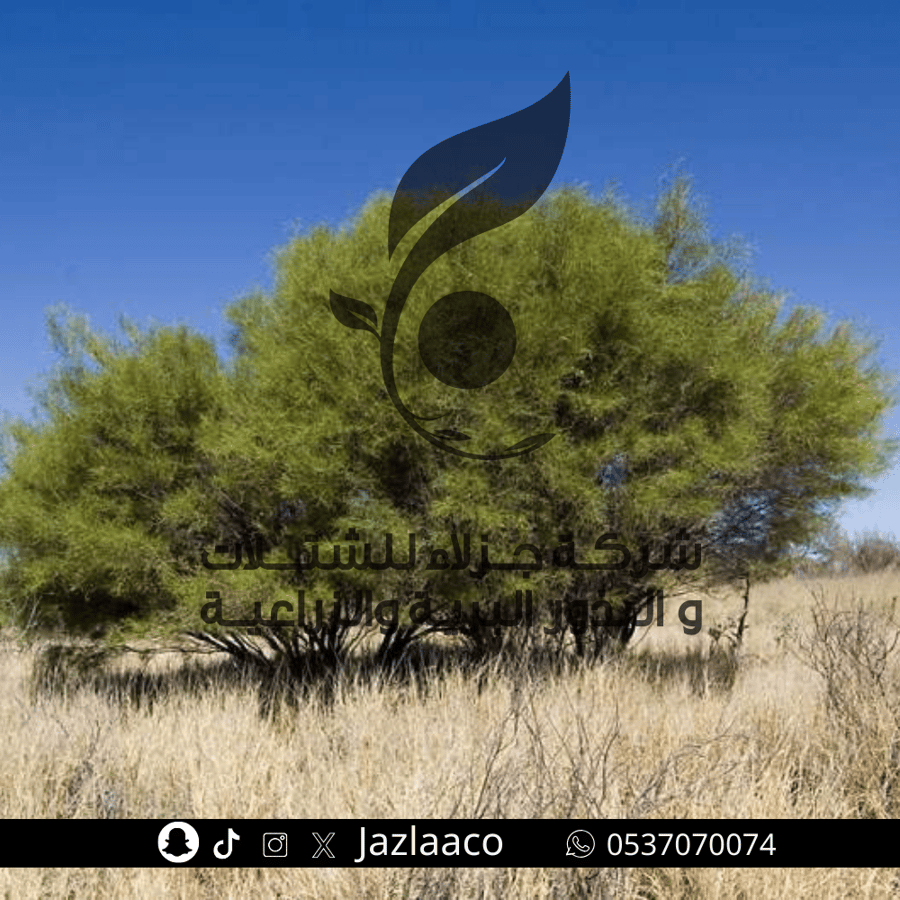
Acacia sclerosperma seedlings
9.50ر.س
Product description
Acacia sclerosperma
Common name: Large-seeded Cooba (Acacia sylvestre) Family: Legumes (Fabaceae)
the introduction
Acacia sclerosperma is a drought-tolerant shrub or small tree native to Western Australia, where it naturally grows in desert and semi-desert environments. It is characterized by its branching stems, grey bark, and leaves reduced to narrow leaflets known as phyllodes. It also produces small, yellow, spherical flowers that cluster in heads. Acacia sclerosperma produces seed pods containing hard seeds and is well-adapted to hot conditions and sandy or calcareous soils, making it suitable for dry gardens and low-rainfall areas.
☀️ Lighting (Light)
It prefers direct sunlight and grows well in open locations that receive sunlight for most of the day. It thrives in warm, sunny conditions, while heavy shade may lead to stunted growth and reduced flowering.
💧 Irrigation (Watering)
Once established, it tolerates drought, but young seedlings require relatively regular watering during the establishment phase. Deep watering is preferred when needed, allowing the soil to dry out between waterings and avoiding constant waterlogging around the roots. Watering frequency should be reduced during cold weather or when growth is slow.
🌱 Soil & Growing Medium
It adapts to various soil types, including sandy, loamy, gravelly, and calcareous soils, and tolerates alkaline soils and some saline conditions. Good drainage is essential to prevent root rot. When growing in pots, a well-aerated and well-draining potting mix is recommended, avoiding heavy, waterlogged potting mixes.
🌿 Fertilizing
It does not usually require intensive fertilization, especially when grown in suitable soil. A diluted, balanced fertilizer can be used during the growing season when needed, avoiding over-fertilization, particularly with nitrogen-rich fertilizers, to ensure balanced growth.
🌳 Growth Habit
A large shrub or small, multi-stemmed tree, typically ranging in height from one to four meters, but reaching up to six meters under favorable conditions. It is characterized by a dense, rounded or spreading crown, gray bark, and branching stems bearing relatively long, narrow, false leaves. It produces spherical, golden-yellow flowers clustered in small heads, followed by seed pods containing very hard seeds. The flowering period varies depending on environmental conditions and the region.
⚠️ Toxicity & Safety
There is insufficient information to definitively confirm the safety of all parts of the plant for human consumption. Therefore, it is advised not to consume the seeds or any part of the plant without first ensuring its safety, and to handle the plant with care when pruning or transporting it to avoid damage to tough branches.