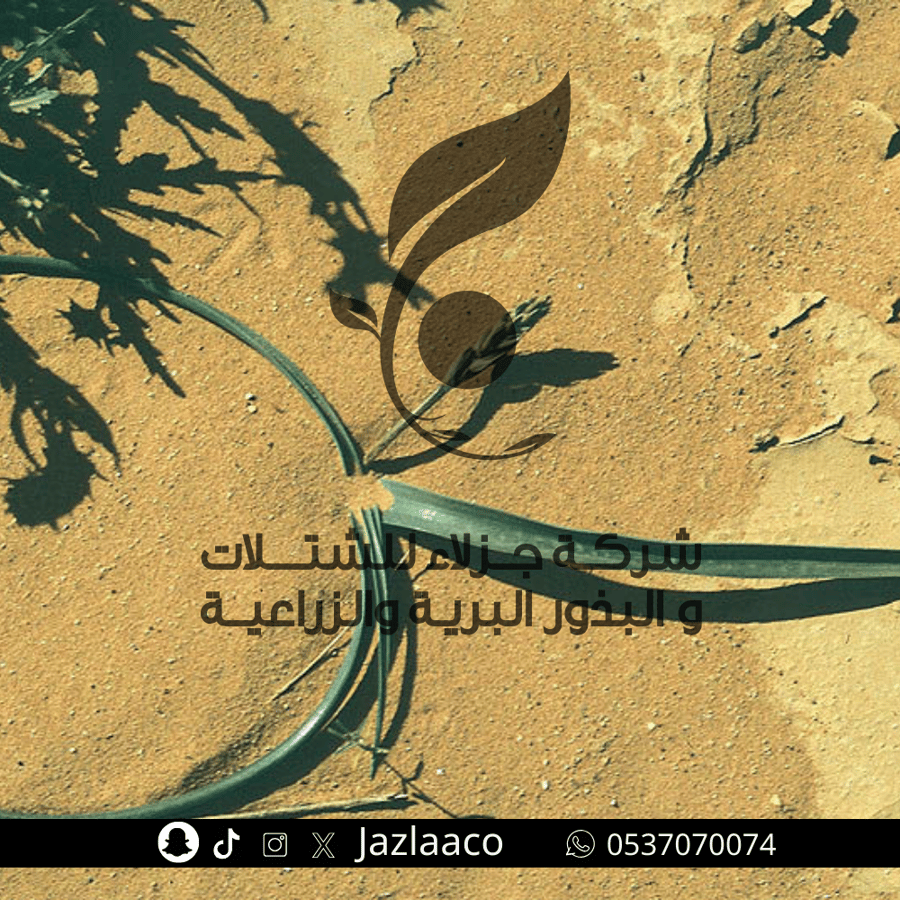


Dipcadi erythraeum
9.50ر.س
Product description
The squill (Dipcadi erythraeum) is a perennial bulbous herbaceous plant belonging to the Asparagaceae family. It grows naturally in desert, arid, and semi-arid environments and is considered a native wild plant in Saudi Arabia. It is characterized by its ribbon-like leaves and small, drooping flowers with a distinctive shape, and it typically thrives after the arrival of seasonal moisture.
General Description
It grows as a small herbaceous plant originating from an underground bulb. Leaves emerge from the base of the plant, while the flowering stem appears from its center. It is characterized by its ability to survive periods of drought thanks to the bulb located beneath the soil surface, and then resumes growth when environmental conditions improve.
Papers
Its leaves are basal, ribbon-like, and relatively long, and may be upright or slightly curved, appearing during the growing season. The bulb and leaves help to store and utilize available water resources during the short growing period.
flowers
It produces small, drooping flowers that cluster on the flower stalk in a racemose inflorescence. The flowers are typically yellowish-green to brown or greenish-purple, with some having dark bands or markings. The shape of the flowers gives the plant a distinctive appearance among desert plants.
Fruits and seeds
It produces dry, capsule-shaped fruits containing numerous black or dark seeds. The fruits split open upon ripening to release the seeds, which represent one of the plant's natural methods of reproduction, in addition to its ability to continue growing from the bulb.
Endurance and suitability
The squill is well-adapted to arid and desert environments, and its underground bulb helps it survive periods of drought and heat. It grows in sandy and gravelly soils and open areas, and benefits from seasonal rains to complete its growth and flowering cycle.
Uses
The squill is a wild plant of ecological value, and it can be utilized in projects to conserve native plants and rehabilitate vegetation in desert environments. It is also distinguished by its unusual flowers, which give it aesthetic value in natural gardens and landscaping projects using wild plants.
natural spread
Dipcadi erythraeum is naturally distributed across parts of the Arabian Peninsula and Northeast Africa, and in Saudi Arabia it is found in desert and arid environments. It is typically associated with sandy and gravelly areas and locations that receive seasonal rainfall.
Preservation status
Dipcadi erythraeum is not currently known to be globally threatened, however, the determination of an official conservation category requires reference to the most recent published assessment of the IUCN Red List or a reputable conservation authority before a specific classification is included.
