
Fescue - Aeluropus lagopoides
9.50ر.س
Product description
Aeluropus lagopoides is a perennial herbaceous plant from the Poaceae family. It is an important halophytic herb, characterized by its high tolerance to salinity, drought, and heat. It grows especially in salt marshes, saline lands, and coastal areas.
General Description
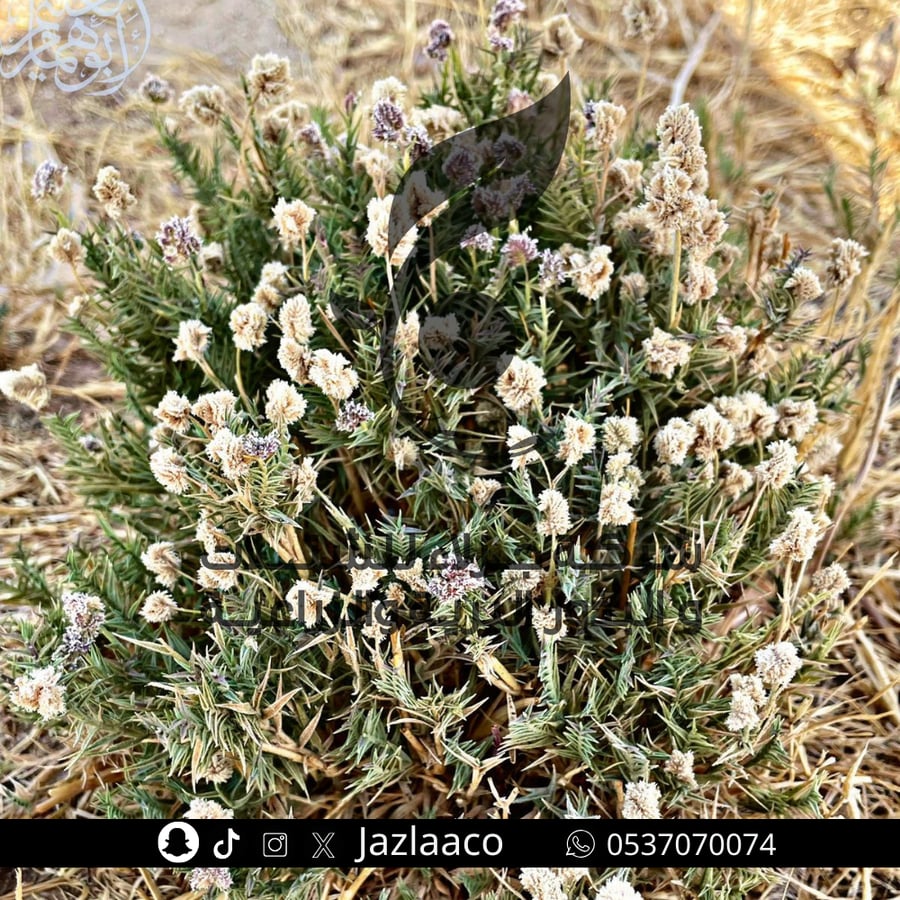
It grows as a creeping perennial herb, forming low, dense clumps or carpets. It spreads by creeping stems that grow above or near the soil surface, and these stems help to form large clumps.
Papers
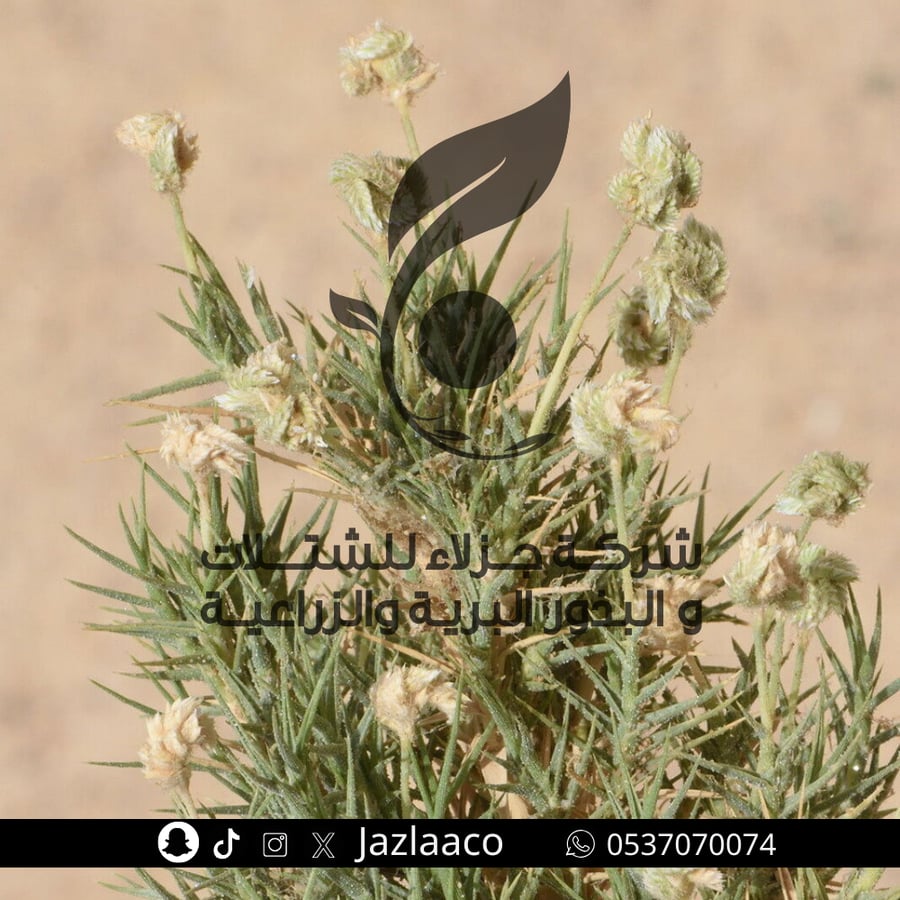
Its leaves are narrow, linear, green to gray-green, relatively short, and emerge from nodes on creeping stems. The leaves may be slightly rough, and their nature helps them tolerate salinity and drought.
Inflorescences and flowers
It produces small spike-like inflorescences clustered on short stems. The spikelets are green to violet or pale purple, then turn to shades of brown when mature.
Fruits and seeds
It produces small grains inside the spikelets, can reproduce by seeds, and its creeping stems help it to spread vegetatively and form new clusters.
Endurance and suitability
It is characterized by a very high tolerance to salinity, and can withstand drought, heat, and temporary immersion in salt water. It grows in salt marshes, saline soils, coastal areas, and desert depressions affected by salts.
Uses
It has environmental and pastoral importance, as it can provide fodder in saline environments, contributes to soil stabilization, reduces erosion, and covers degraded lands. It can be used in saline land reclamation projects and the rehabilitation of degraded salt flats and rangelands.
natural spread
Aeluropus lagopoides is widespread in the Middle East, the Arabian Peninsula, North Africa and South Asia, and is associated with coastal environments, salt marshes, saline lands and desert regions.
Preservation status
Aeluropus lagopoides is not known to be globally threatened and has a wide distribution and high adaptability to salinity and arid conditions. Its populations may be affected locally by land-use change and the degradation of coastal and saline habitats.
