Salosola villosa
9.50ر.س
Product description
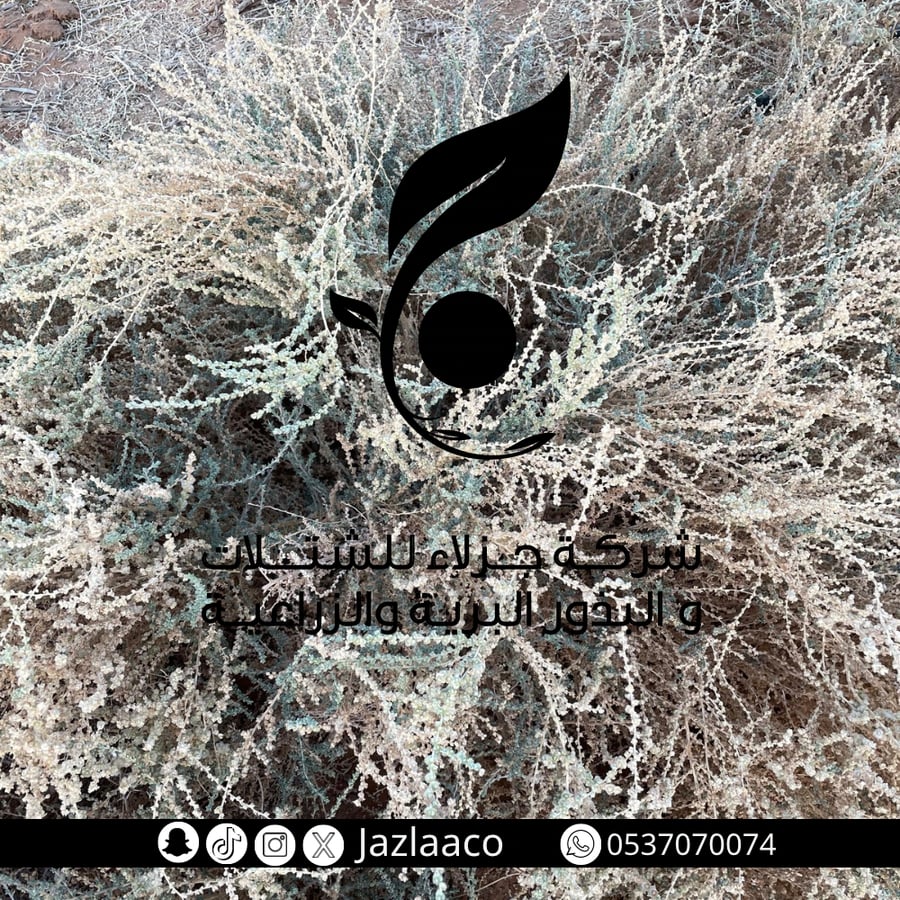
Salsola villosa is a perennial desert shrub of the Amaranthaceae family. It is a plant adapted to drought, heat, and salinity, and is characterized by the density of hairs on its vegetative parts and its silvery-grey appearance.
General Description
It grows as a branching, dense shrub, usually reaching a height of about 30–100 cm, with upright or spreading branches, giving it a round or hemispherical shape.
leaves and stems
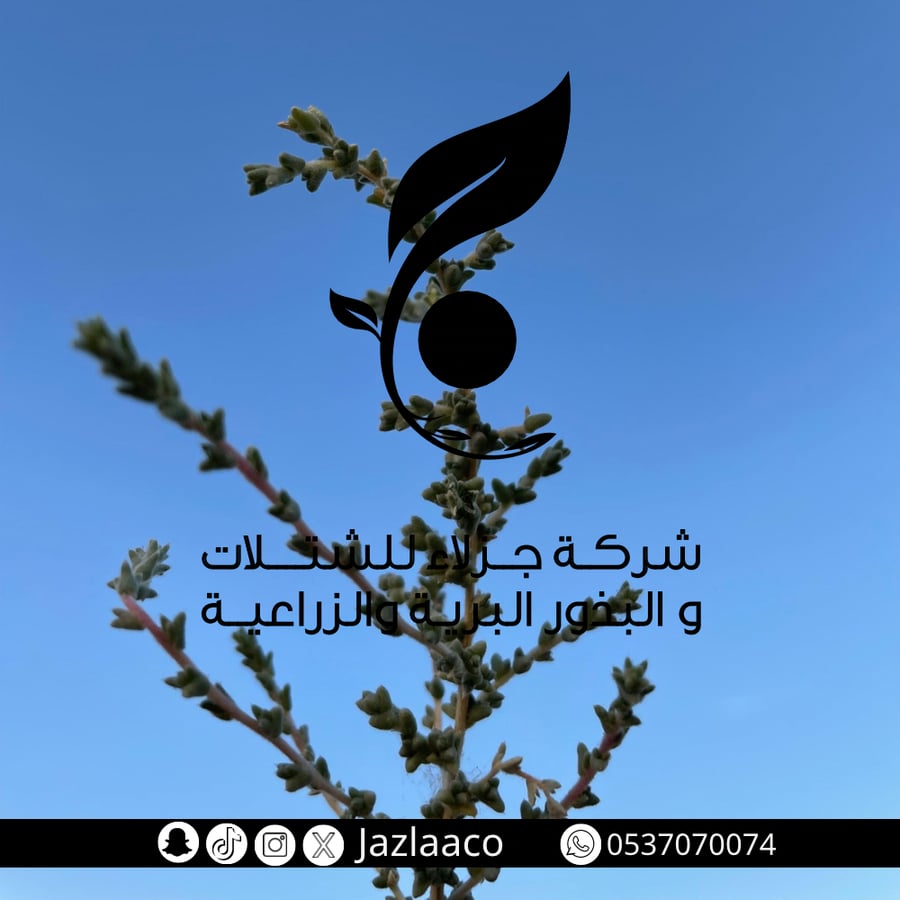
The leaves are small, simple, fleshy, and grayish-green, covered with dense hairs that give the plant a fuzzy or silvery appearance. The stems and branches are green to gray, soft in new growth, and become more rigid with age.
flowers
It produces small, inconspicuous flowers, green to yellow-green, that appear in the leaf axils and on branches. The flowers are small and do not have distinctly colored petals.
Fruits and seeds
It produces small, dry fruits, and the structures surrounding the fruits are characterized by membranous extensions that aid in wind dispersal. The seeds mature after the flowering cycle is complete and contribute to plant regeneration and propagation.
Endurance and suitability
It is highly tolerant of drought, heat, and salinity, and thrives in sandy, gravelly, and clay soils, as well as open areas and desert plains. Its dense hairs and fleshy leaves help minimize water loss and protect it from harsh climatic conditions.
Uses
It has pastoral and environmental importance in desert regions, where it can benefit some grazing animals, contributes to soil stabilization and erosion reduction, and provides cover and shelter for desert organisms. It can also be utilized in vegetation restoration and desertification control projects.
natural spread
Salsola villosa is found in parts of the Middle East, the Arabian Peninsula and North Africa, and is associated with desert and semi-desert environments, sandy and gravelly areas and open plains.
Preservation status
Salsola villosa is not currently known to be globally threatened and is well-adapted to arid and saline environments. Its density varies locally depending on climatic conditions, grazing pressure, and the state of its natural habitat.
