
Glossonema varians
15ر.س
Product description
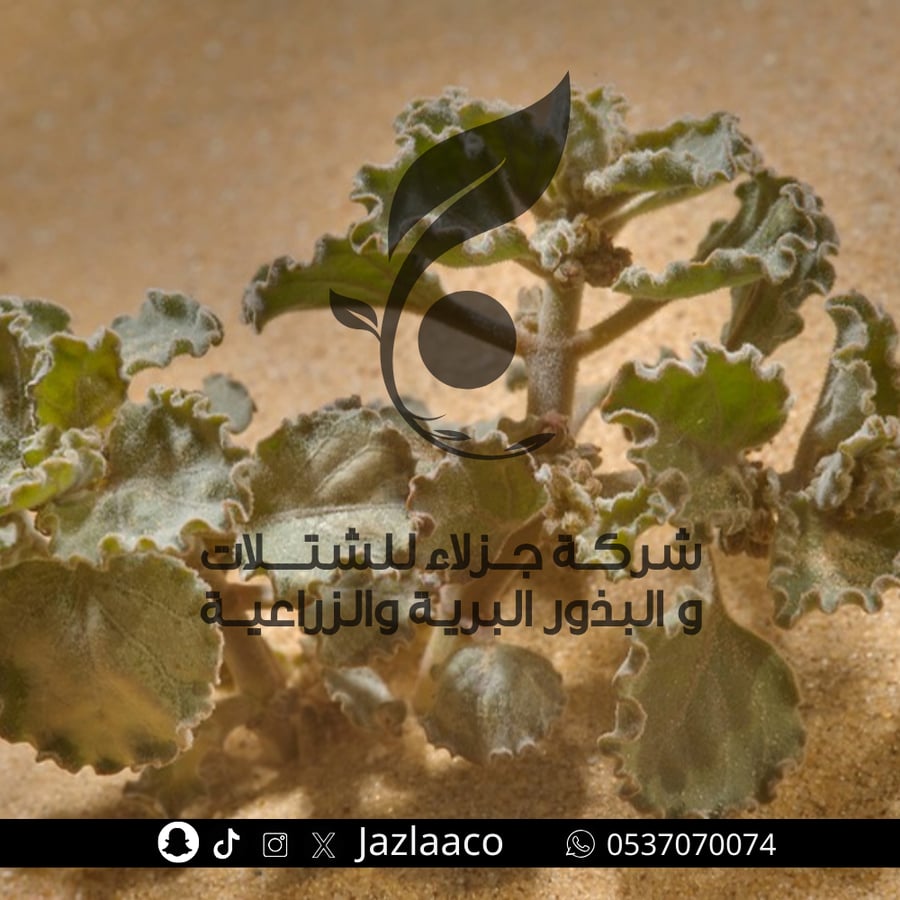
'Atr (Glossonema varians) is a perennial herbaceous plant from the Apocynaceae family. It is a wild desert plant in the Arabian Peninsula, characterized by its thick leaves, distinctive colored flowers, and ability to withstand drought and heat.
General Description
It grows as a low-growing, upright or spreading herbaceous or semi-shrubby plant, branching from the base. It often remains close to the soil surface and can survive in dry and very hot environments.
Papers
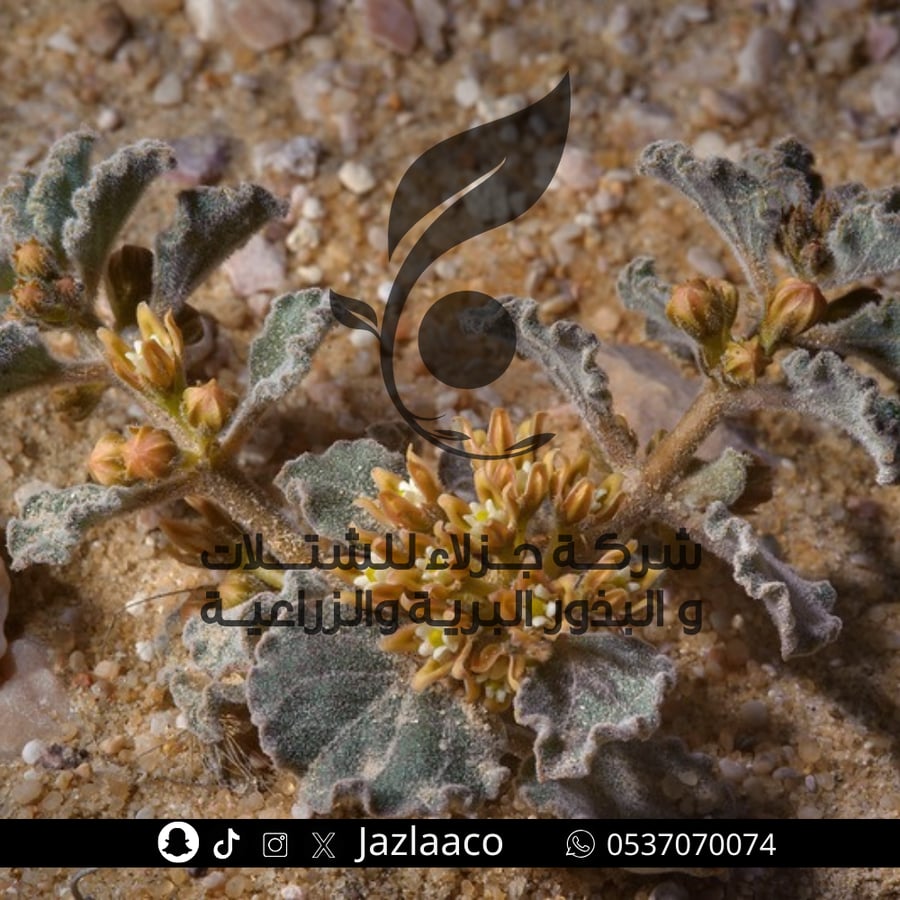
Its leaves are simple and opposite, relatively thick and fleshy, green to gray-green, oval to oblong in shape, and their thickness helps to retain water and reduce its loss in desert conditions.
flowers
It produces distinctive flowers that appear singly or in small clusters, and their colors are usually between yellow and green with purple or brown tones in the center of the flower, which are characteristics that help to distinguish it from many other desert plants.
Fruits and seeds
It produces double or horn-shaped fruits containing several seeds. The seeds are covered with silky down that helps them to be dispersed by the wind after the fruits dry and open.
Endurance and suitability
Adapted to drought and heat, it grows in sandy, gravelly, and rocky soils, as well as in plains, valleys, and desert regions. Its thick leaves and roots help it take advantage of short periods of moisture.
Uses
It has ecological importance as a wild desert plant, contributing to plant diversity and providing food or shelter for some wildlife. Some species in the Apocynaceae family also contain active compounds; therefore, internal or medicinal use is not recommended without verifying the species, dosage, and safety.
natural spread
Glossonema varians is widespread in the Arabian Peninsula, especially in desert environments and sandy, gravelly and rocky areas.
Preservation status
It is not known to be globally threatened with extinction, however, its local populations may be affected by habitat degradation, grazing, and removal from the wild.
