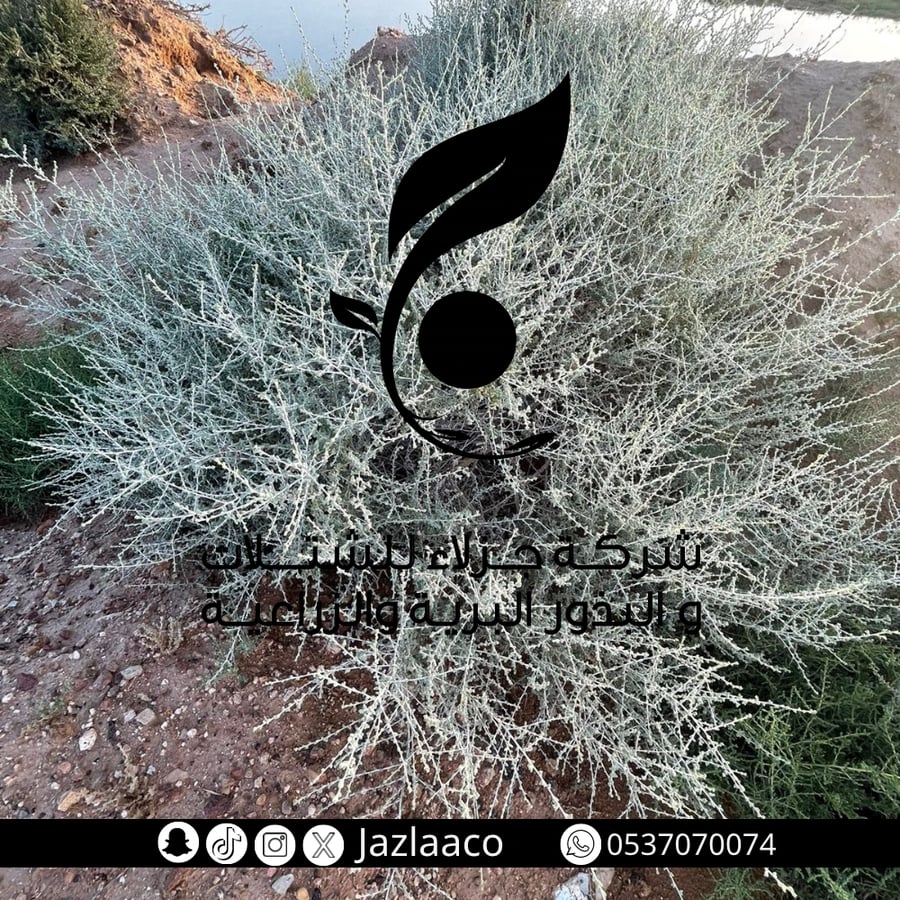

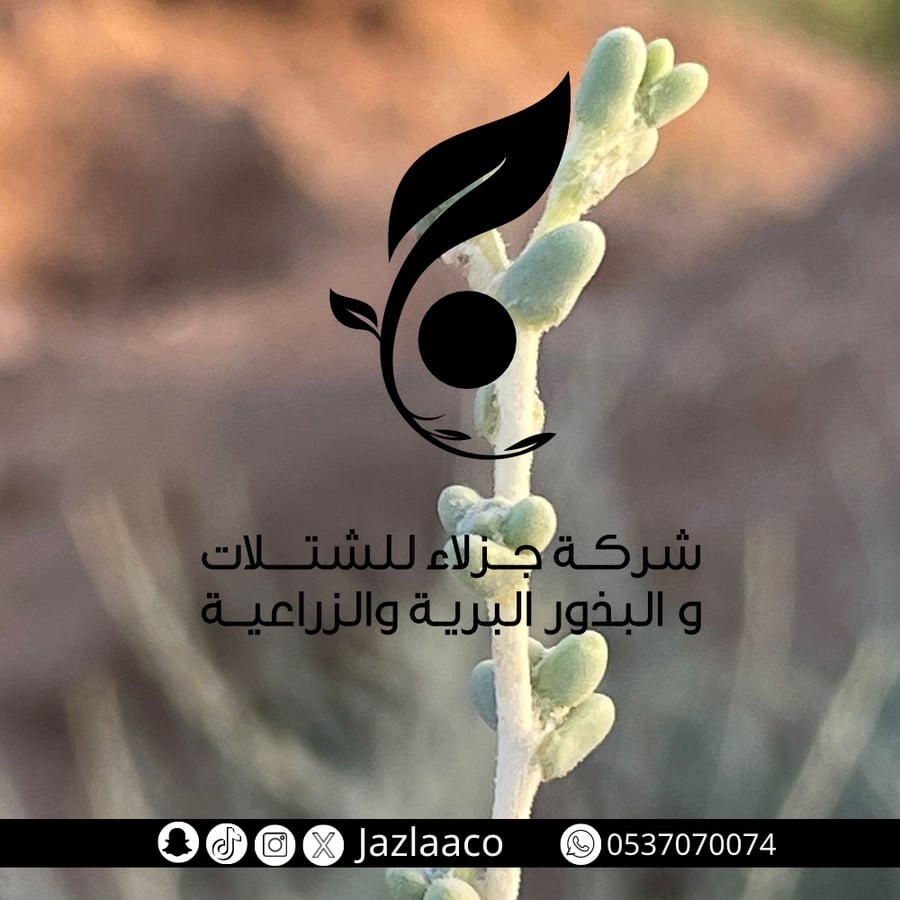
Dhamran - Traganum nudatum Del
9.50ر.س
Product description
Traganum nudatum is a perennial shrub of the Amaranthaceae family, a desert and saline plant adapted to drought, heat and wind, and is characterized by its ability to grow in shifting sands, dunes and desert plains.
General Description
It grows as a dense, branching shrub, typically reaching a height of 30–100 cm, with branches spreading horizontally to form a wide vegetative mass. It is characterized by strong stems and branches that help it withstand wind and harsh desert conditions.
Papers
Its leaves are small, simple, and relatively fleshy, ranging in color from green to gray-green. They may be semi-cylindrical or ovate and are closely spaced on the branches. Their fleshy nature helps to reduce water loss and promotes tolerance to drought and salinity.
flowers
It produces small, inconspicuous flowers, green to yellowish-green, that appear in clusters in the leaf axils and on branches. The flowers are small relative to the size of the plant and do not have large petals or bright colors.
Fruits and seeds
It produces small, dry fruits, and the structures surrounding the fruit are designed to aid in seed dispersal. The seeds remain in the soil or are carried by sand and surface water until suitable conditions for germination are present.
Endurance and suitability
Damran possesses a high tolerance for drought, heat, and salinity, and can withstand parts of the plant being buried in sand and the movement of dunes. Its branching growth and extensive roots help stabilize the sand and reduce its movement.
Uses
It has significant environmental importance in stabilizing sand dunes, combating sand encroachment, and reducing soil erosion. It also provides cover and shelter for many desert organisms. Furthermore, it is suitable for vegetation restoration projects in sandy, arid, and saline areas.
natural spread
Traganum nudatum is widespread in North Africa, the Middle East and the Arabian Peninsula, and is associated with sandy deserts, dunes, plains, coastal areas and salinity-affected environments.
Preservation status
Traganum nudatum is not globally threatened and is well-adapted to desert and saline environments. Its density varies locally depending on sand movement, grazing, human activities, and the condition of natural habitats.
