


Talh Fitna - Sant Fitna - Vachellia farnesiana
9.50ر.س
Product description
The Acacia of Fitna (Vachellia farnesiana) is a perennial tree or shrub of the legume family (Fabaceae), characterized by its strong aromatic scent, spherical yellow flowers and thorns, and it has a good ability to withstand drought, heat and diverse environmental conditions.
General Description
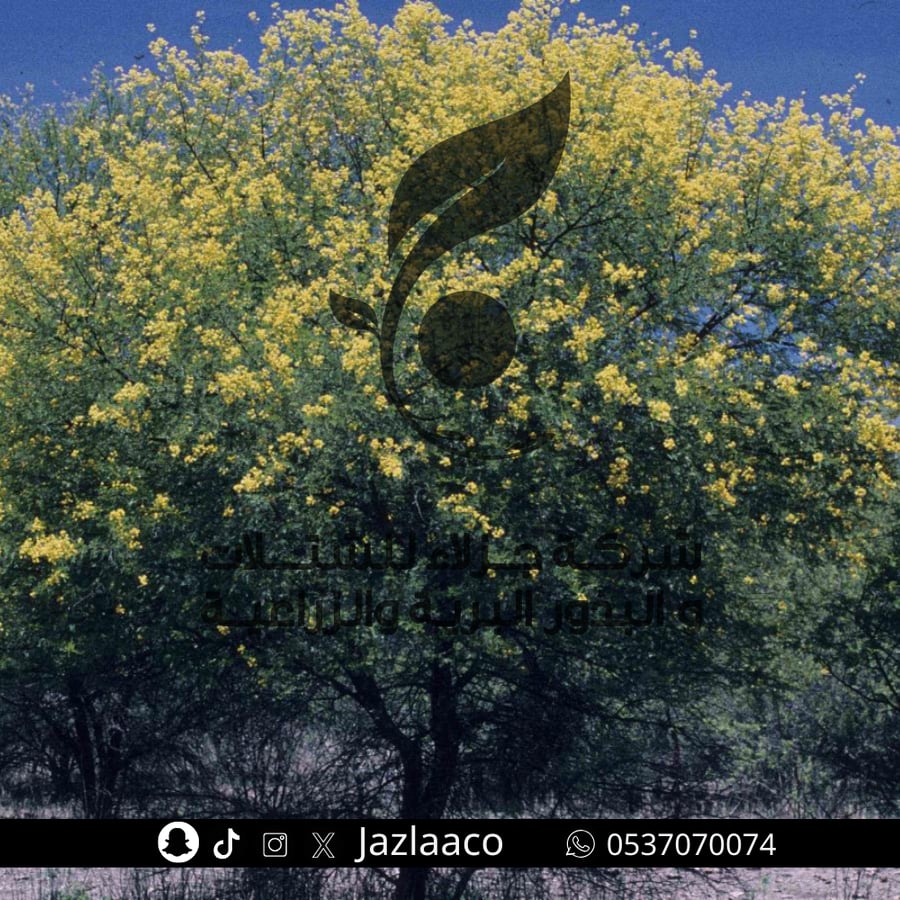
It grows as a small tree or a large shrub, usually reaching a height of about 2–8 meters, and is characterized by a dense, rounded crown and branching offshoots, and sometimes it may grow in a multi-stemmed form.
bark and stem
The bark is grayish-brown to dark gray, becoming rougher and more fissured as the tree ages. Younger branches are green to brown, and often bear straight, sharp thorns.
thorns
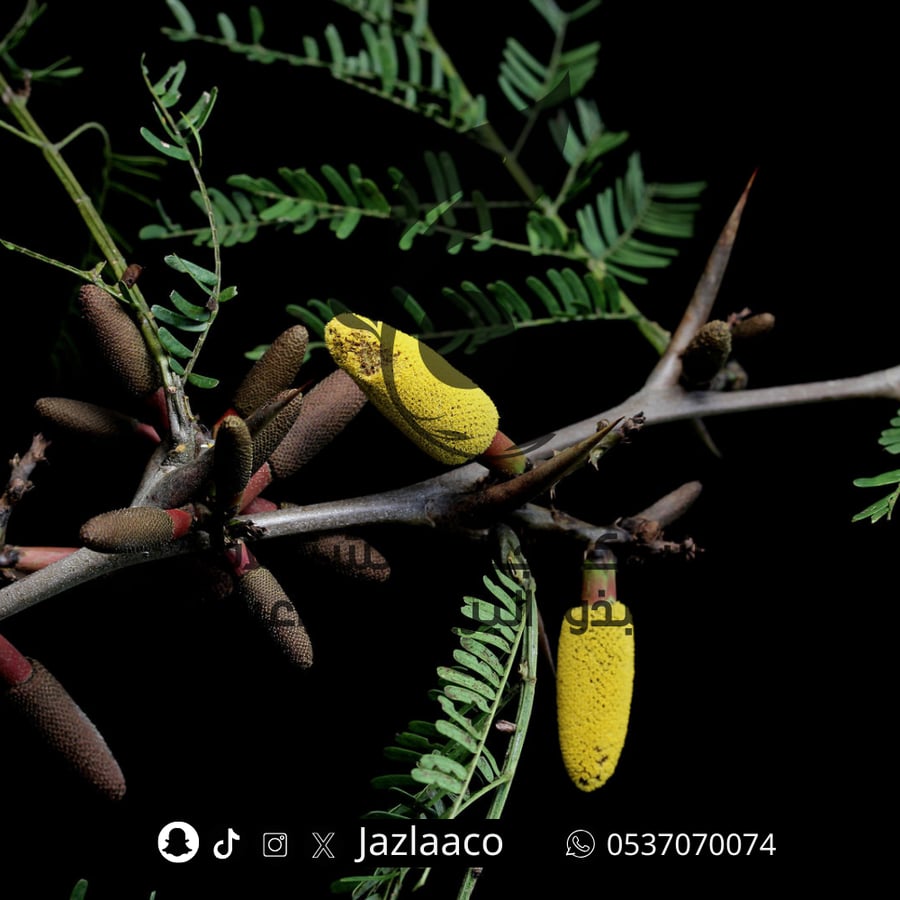
It is characterized by straight white or light gray spines, which may be about 1–5 cm long, and often appear in pairs at the bases of the leaves. These are clear characteristics that help to distinguish the species.
Papers
Its leaves are bipinnately compound, finely divided into numerous small leaflets, and range in color from green to grayish-green. The small size of the leaflets helps to reduce water loss in dry conditions.
flowers
It produces small, spherical, bright yellow flower heads with a strong, distinctive fragrance, appearing singly or in small clusters in the leaf axils. The flowers attract bees, insects, and pollinators.
Fruits and seeds
It produces legume-like pods that are swollen or cylindrical to slightly curved, starting green and turning dark brown or black upon maturity. The pods contain several hard, brown seeds, and some pods remain attached to the tree after ripening.
Endurance and suitability
It is characterized by its good tolerance to drought and heat, and it can grow in various soil types, including sandy, gravelly, and clay soils, and it tolerates some levels of salinity. It possesses a root system that helps it access moisture deep within the soil.
Uses
It is valued for its aromatic and environmental properties; its fragrant flowers are used in some perfume industries, and the flowers also provide an important source of nectar for bees and pollinators. The tree provides shade and shelter for wildlife and can be used for soil stabilization and afforestation projects in arid regions.
natural spread
Vachellia farnesiana is naturally found in parts of the Americas, especially warm, dry and semi-dry regions, and has since spread and been cultivated in many parts of the world, including parts of Africa, Asia and the Arabian Peninsula.
Preservation status
Vachellia farnesiana is not globally threatened and is highly adaptable and widespread in various environments. In some areas outside its native range, it has become a naturalized plant and may behave as a local invasive species.
