
Pulicaria undulata
9.50ر.س
Product description
Pulicaria undulata is a perennial herbaceous plant from the Asteraceae family. It is an aromatic desert plant adapted to drought and heat, and is characterized by its distinctively scented leaves and yellow flowers.
General Description
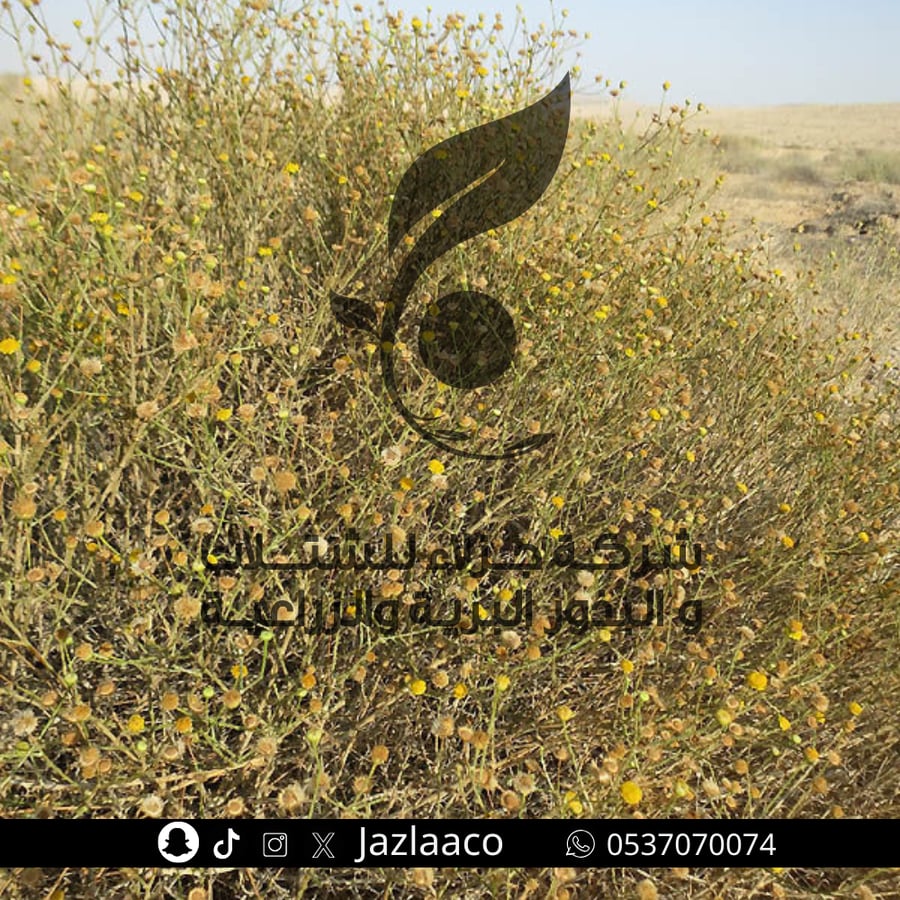
It grows as a branching herbaceous shrub, and usually reaches a height of about 30–80 cm. The stems are upright and branching, and the plant may be relatively dense when fully grown.
Papers
Its leaves are simple, green to gray-green, ovate or lanceolate, with distinctly wavy or rippled edges, and may be covered with fine hairs. They have an aromatic scent when rubbed.
flowers
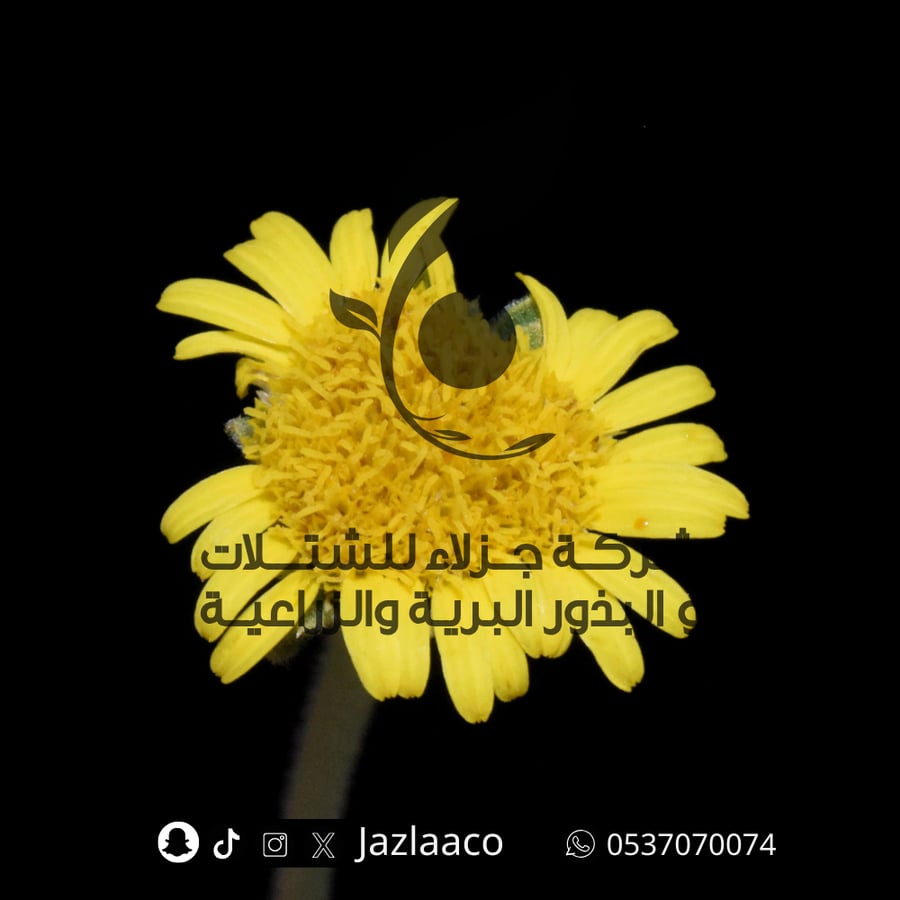
It produces bright yellow flower heads, composed of yellow ray florets surrounding the central disc. The flower heads appear at the branch tips and provide a source of nectar and pollen for insects.
Fruits and seeds
It produces small, dry spores, often with downy hairs that aid in wind dispersal. After the flower heads dry, the seeds are released and spread around the plant or by wind.
Endurance and suitability
It tolerates drought and heat well, and grows in sandy, gravelly, and clay soils, as well as in plains, deserts, and semi-deserts. It can also grow in areas affected by disturbance and grazing to varying degrees.
Uses
It has ecological importance as an aromatic wild plant, and parts of it are traditionally used in some regions for folk and perfumery purposes. Its flowers also provide food for insects and pollinators, and contribute to the plant diversity of desert environments.
natural spread
Pulicaria undulata is widespread in large areas of Africa, the Middle East and the Arabian Peninsula, growing in desert and semi-desert environments, plains, valleys and sandy and gravelly areas.
Preservation status
Pulicaria undulata is not known to be globally threatened and has a wide distribution and good adaptability to arid environments. Its density varies locally depending on rainfall, grazing pressure, and habitat condition.
