

Hama - Griba - Farsetia aegyptia
9.50ر.س
Product description
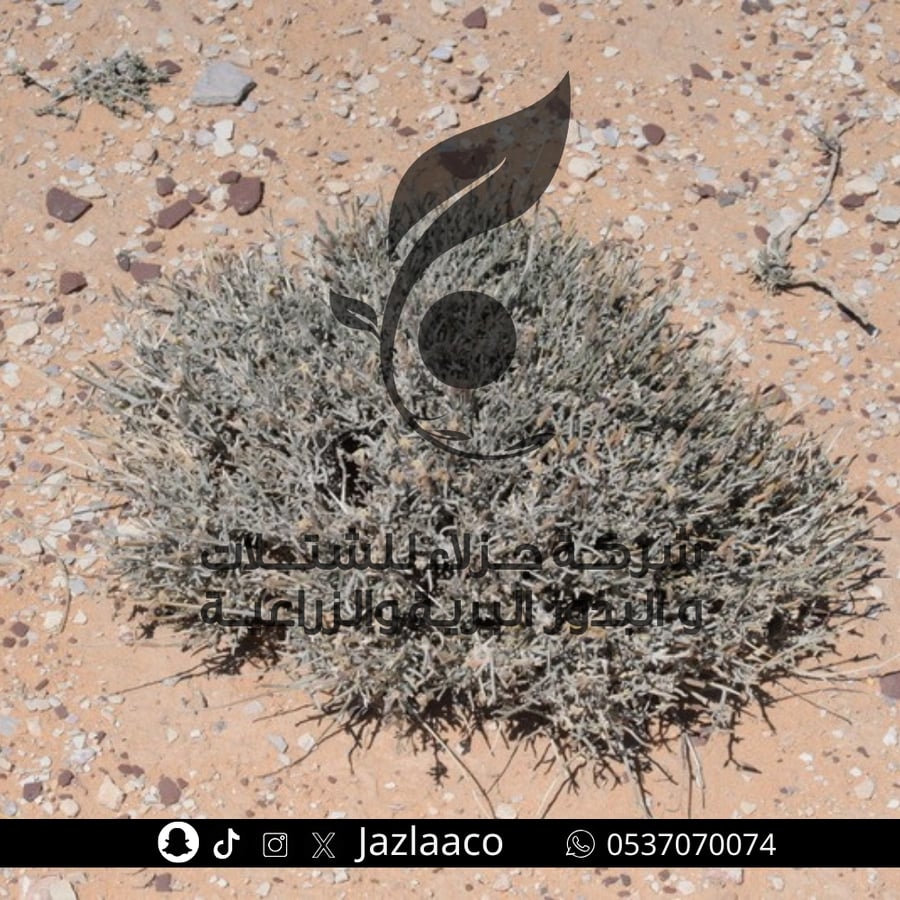
Farsetia aegyptia is an annual herbaceous plant from the Brassicaceae family. It is a desert wild plant that appears during the rainy season and is characterized by its small flowers, gray leaves, and ability to withstand drought.
General Description
It grows as a branching herbaceous plant, upright or spreading, and usually reaches a height of about 15–40 cm. The stems branch out from the base, and the plant is often low and relatively dense.
Papers
Its leaves are simple and alternate, narrow to lanceolate, gray-green to silvery, and may be covered with fine hairs. These characteristics help to reduce water loss and adapt to desert conditions.
flowers
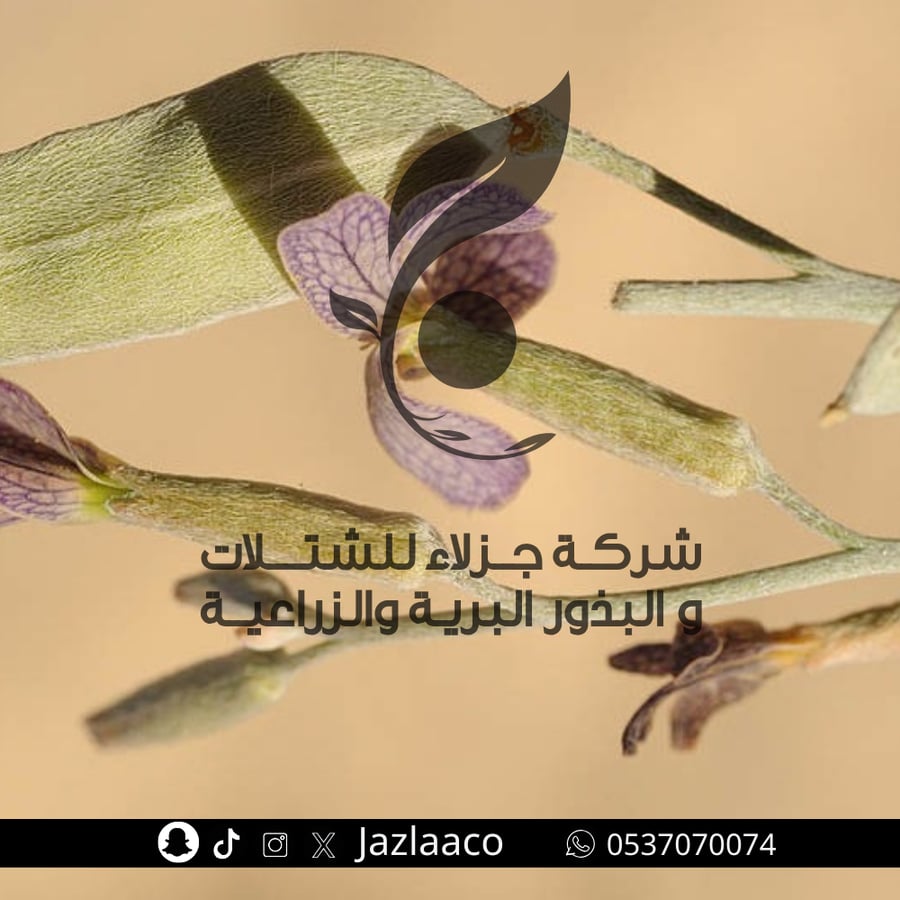
It produces small, four-petaled flowers, usually white to light purple or pink, which appear in clusters at the ends of branches. The flowers attract insects and pollinators.
Fruits and seeds
It produces thin, dry pods containing small seeds. The fruits turn brown when ripe, and the seeds are released to remain in the soil until the next rainy season.
Endurance and suitability
It tolerates drought and heat and grows in sandy, gravelly, and light clay soils, as well as in plains, valleys, and open desert areas. It benefits from seasonal rains to complete its life cycle quickly.
Uses
It has ecological importance as a seasonal wild plant, contributing to the diversity of desert vegetation and providing pollen and nectar for insects. Some Farsetia plants have been used traditionally in certain regions, but medicinal use is not recommended without verifying the species and safety.
natural spread
Farsetia aegyptia is found in areas of North Africa, the Middle East and the Arabian Peninsula, and is associated with arid and semi-arid regions, plains and sandy and gravelly areas.
Preservation status
Farsetia aegyptia is not known to be globally threatened with extinction, and its density may change from season to season depending on rainfall and environmental conditions.
