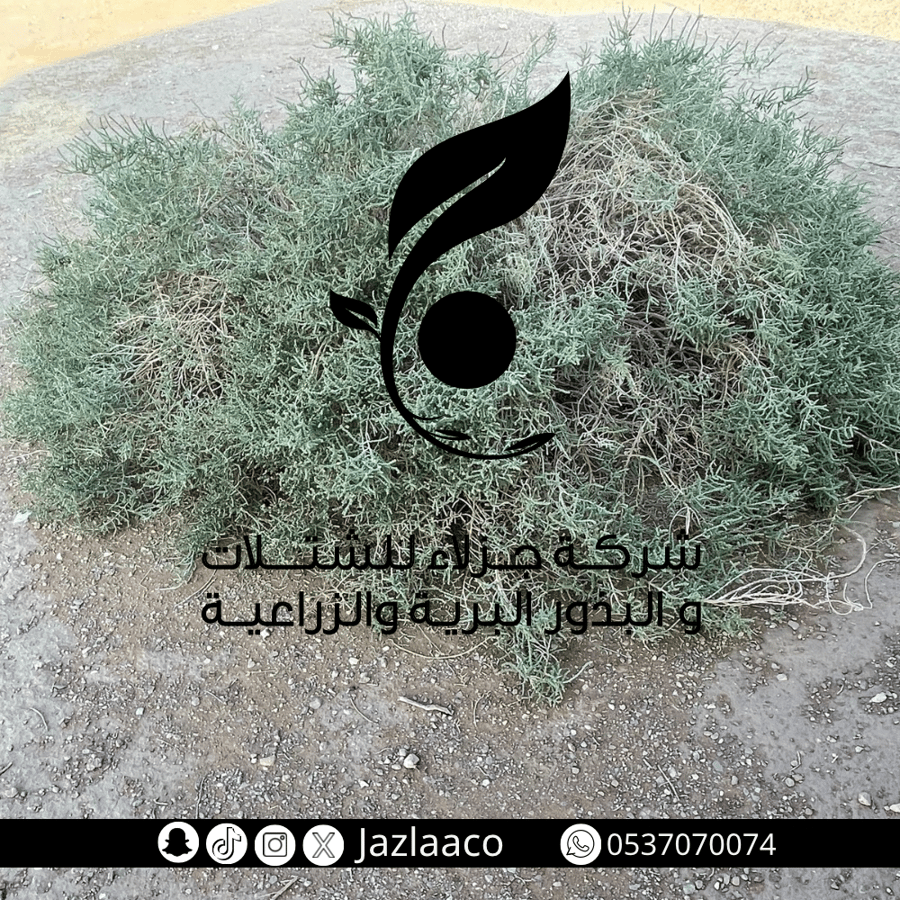
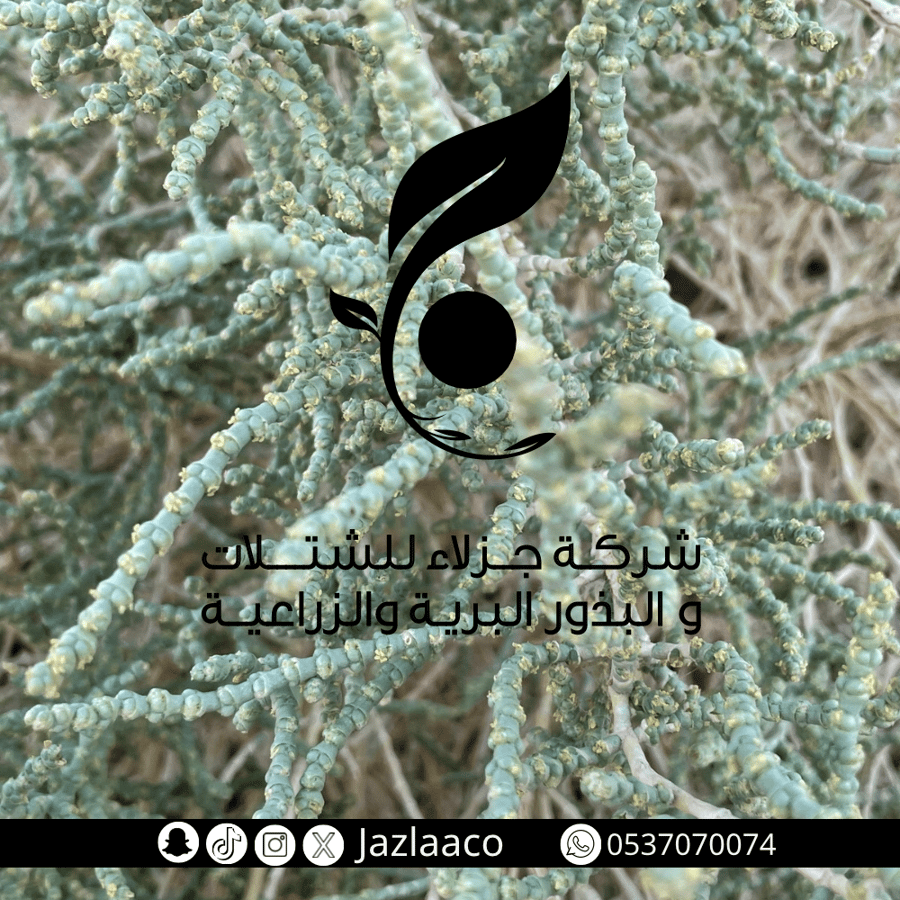
Raft - Haloxylon salicornicum
9.50ر.س
Product description
Haloxylon salicornicum is a perennial desert shrub of the Amaranthaceae family. It is an important plant in desert and semi-desert environments, and is characterized by its high tolerance to drought, heat, salinity and wind.
General Description
It grows as a dense, branching shrub, typically reaching a height of 30–100 cm. Its branches may be upright or spreading, forming a relatively wide vegetation mass. It is characterized by its ability to survive in very arid and low-rainfall environments.
leaves and stems
The leaves are very reduced and inconspicuous, and the green stems and branches become the main part responsible for photosynthesis. The branches are cylindrical or jointed, green to gray-green, and relatively fleshy, which helps to reduce water loss and tolerate drought.
flowers
It produces very small, inconspicuous flowers, appearing at branch nodes or in branch axils, and ranging in color from green to yellowish-green. It does not have large or colorful flowers, and pollination relies on its small structures and pollen grains.
Fruits and seeds
It produces small, dry fruits, and the structures surrounding the fruit are characterized by wings or membranous extensions that aid in their dispersal by wind. The fruits ripen after flowering and turn brown or pale pink.
Endurance and suitability
The saltbush is characterized by its high tolerance to drought, heat, and salinity, and it grows in sandy, gravelly, and clay soils, as well as in water-poor environments. It also withstands wind and harsh desert conditions, and is considered an important plant for soil stabilization and reducing sand encroachment.
Uses
It has pastoral and environmental importance, as it is used by some grazing animals, especially in desert environments, and provides cover and shelter for wildlife. It also contributes to soil stabilization and erosion reduction, and is used in projects to combat desertification and restore desert vegetation.
natural spread
Haloxylon salicornicum is widespread in large areas of the Middle East, the Arabian Peninsula, North Africa, and Southwest Asia, growing in desert plains, sandy and gravelly areas, and saline lands.
Preservation status
Haloxylon salicornicum is not considered a globally threatened species and enjoys wide distribution and good adaptation to desert conditions. Its density varies locally depending on grazing, habitat degradation, and climatic conditions.
