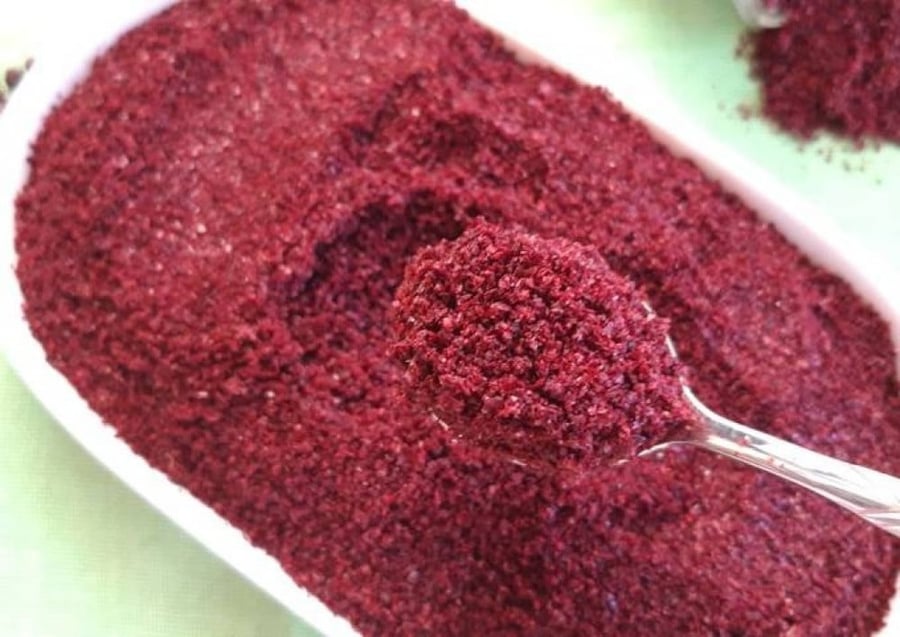


Dark sumac
20ر.س
Product description
Dark sumac description known as sumac as one of the types of spices and seasonings that give a distinctive flavor to many foods in many countries. Dark sumac is produced from a shrub that reaches a height of up to 3 meters, sparsely branched, with oval leaves and dense inflorescences. These shrubs spread on coastal mountains. Dark sumac is used in ground form and has many benefits and uses.
Benefits of sumac
Sumac has many health benefits, so it is widely used in many different dishes, including:
Antioxidant and fights inflammation.
Sumac is one of the elements rich in vitamin C.
Maintains cells.
Enhances collagen production for the skin.
Promotes heart and arteries health.
Maintains heart rate.
Treats respiratory problems.
Boosts digestive health.
Pain reliever for toothaches.
Pain reliever for rheumatic pains.
Sumac plays a role in weight loss.
Removes many toxins from the body.
Sumac ingredients
Many elements are involved in the components of sumac, and thanks to these components, the benefits of sumac are numerous and its uses are widespread, including:
Tannins at 25-33% of dry weight.
Tannins consist of tannin at 15%.
Gallic acid, tetra sugar.
Gallic acid.
Free gallic acid.
It also contains flavonoid substances (myricitrin and fustin).
Types of sumac
There are more than 200 types of sumac, which are widely used in the most delicious dishes around the world, including:
Jawi sumac.
Dabaghine sumac.
Long-leaved sumac.
Fluffy sumac.
Dark red sumac description
There is not much difference between dark sumac and dark red sumac, except that dark red sumac is the original sumac used as a cooking spice and herbal supplement, produced from a flowering shrub scientifically known as Rhus coriaria.
Sumac form
Sumac appears in ground form, added to many different foods to give them a distinctive flavor, such as fish, seafood, and others.
Difference between original sumac and adulterated sumac
You can tell the difference between original and adulterated sumac by noting that the original sumac is red or dark fuchsia in color and has a sour taste, while adulterated sumac is lighter in color and shows some shiny crystals, so you can distinguish between the original and the fake by sight.
Uses of sumac spices
Sumac spices are used in many different dishes, such as:
Various rice recipes.
Healthy grilled vegetable dishes.
Fried eggs.
Meat, both red and white, and fish.
When roasting nuts.
Various types of salads.
Preparing vegetarian kofta eaten by vegetarians.

From Dammam
Questions you might have