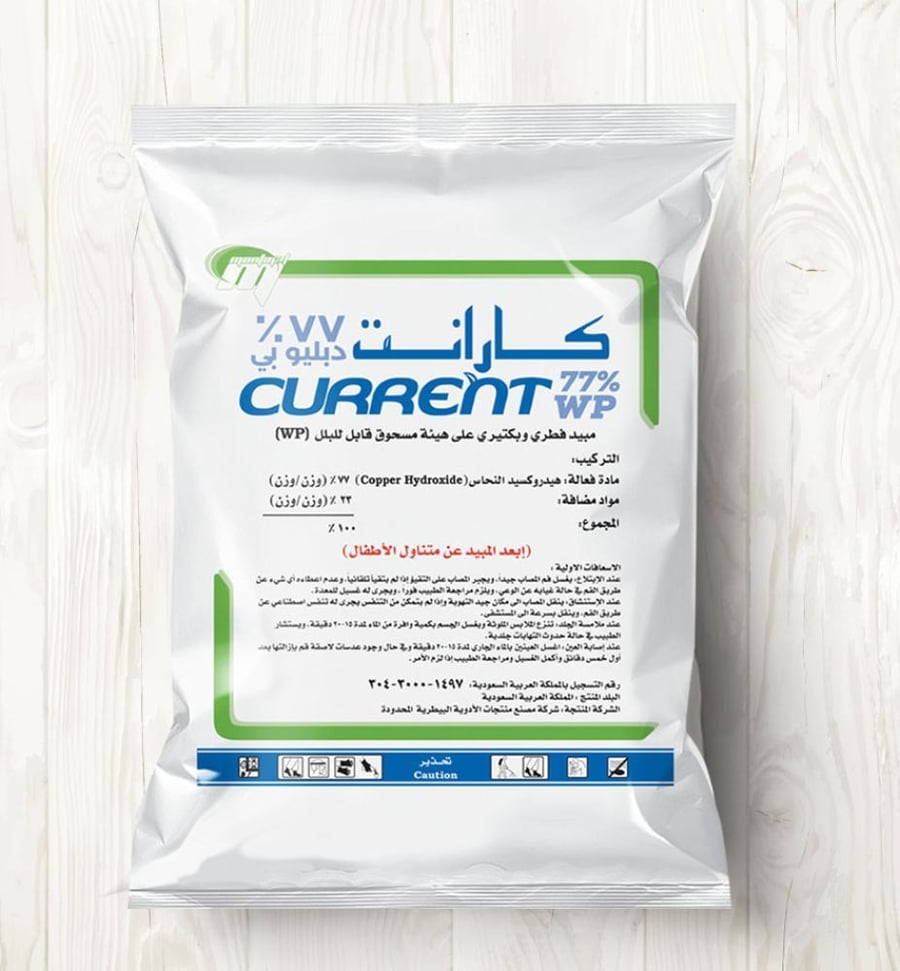


Karant 77% W.P Copper fungicide preventive, 1 kilogram
115ر.س
Product description
Carant 77% WP Copper-based fungicide and bactericide, capacity 1 kilogram
Carant 77% WP Carant 77% WP copper-based fungicide and bactericide contains the active substance Copper Hydroxide at 77%, and is used for prevention and assistance in combating a range of fungal and bacterial diseases that affect vegetable crops, fruits, grains, and ornamental plants. The product comes in a wettable powder (WP) formulation, making it suitable for preparation and foliar spraying when adhering to recommended doses for each crop.
Carant 77% WP is characterized by its preventive nature, as it helps form a protective layer on the plant surface that limits the development and spread of some pathogens, especially during periods of high humidity or increased risk of diseases such as leaf spot, early blight, powdery mildew, fruit rot, neck rot, anthracnose, and some bacterial infections. Therefore, it is a suitable option within plant disease management programs, especially when used before infection spreads or at the onset of symptoms.
To view similar products for controlling plant diseases, you can review the Fungicides section or the Agricultural Pesticides section to choose the appropriate product based on the type of disease and crop.
Product specifications for Carant 77% WP Copper Fungicide:
Trade name: Carant 77% WP
English name: Carant 77% WP
Product type: Copper-based fungicide and bactericide
Usage nature: Preventive and therapeutic according to infection timing and label recommendations
Active substance: Copper Hydroxide
Active ingredient concentration: 77%
Formulation type: Wettable powder (WP)
Target diseases: Leaf spot, early blight, powdery mildew, fruit rot, neck rot, anthracnose, fire blight, and some bacterial diseases
Suitable crops: Vegetables, fruits, grains, ornamental plants, and other crops as per label instructions
Country of origin: Saudi Arabia
Package size: 1 kg
Pre-harvest interval: 7 to 21 days depending on the crop
Features of Carant Copper Fungicide:
Contains a high percentage of Copper Hydroxide 77%
Helps prevent a wide range of fungal and bacterial diseases
Suitable for vegetables, fruits, grains, and ornamental plants
WP formulation, easy to prepare and mix with water
Helps protect leaves and fruits when used at the appropriate time
Can be used within integrated disease management programs
Suitable for preventive spraying before disease spread under favorable conditions for fungi
Helps reduce the impact of diseases that affect crop quality and yield
Uses of Carant 77% WP in agricultural crops:
Used to combat diseases appearing on leaves, fruits, and stems in various crops. Its importance is evident during periods when plants are more susceptible due to humidity, poor ventilation, repeated watering, or previous infections in the field.
Main uses:
Controlling leaf spot in vegetables
Helping reduce early blight in tomatoes, potatoes, and eggplants
Controlling powdery mildew in crops like onions and garlic
Reducing neck rot infections in onions and garlic
Used after pruning in grapes to help combat diseases like fruit rot
Controlling anthracnose in some fruit crops
Used within prevention programs for bacterial infections like fire blight according to crop and label instructions
To improve spray efficiency and solution distribution on leaves and fruits, suitable tools from the Pesticide Sprayers and Pumps section or a small-area manual sprayer from the Hand Sprayers section can be used.
Method of use of Carant 77% WP according to crop:
Carant 77% WP is used as a foliar spray after dilution in water. The required amount of product should be gradually added to an appropriate amount of water with good stirring until the solution is homogeneous, then the remaining water is added to the spray tank while continuing to stir.
Recommended dosages:
Potatoes, tomatoes, eggplants: Used against leaf spot, early blight, and powdery mildew at 100 to 200 grams per 100 liters of water. Pre-harvest interval: 7 days.
Grapes: Used against powdery mildew and fruit rot at 200 to 400 grams per 100 liters of water after pruning. Pre-harvest interval: 21 days.
Bananas and olives: Used against anthracnose and fire blight at 500 grams per 100 liters of water at bud opening. Pre-harvest interval: 21 days.
Onions and garlic: Used against powdery mildew and neck rot at 100 to 200 grams per 100 liters of water. Pre-harvest interval: 7 days.
Important application instructions:
Preferably used preventively before infection spreads or at the first appearance of symptoms.
Cover the entire vegetative parts without over-spraying.
Spray early in the morning or before sunset.
Avoid spraying during strong winds or high temperatures.
Do not mix the product arbitrarily with other pesticides or fertilizers without confirming compatibility.
Adhere to the pre-harvest interval for each crop.
In severe infections, it is recommended to incorporate it into an integrated control program rather than relying solely on it.
Precautions and warnings when using Carant 77% WP:
Read the entire product label before use.
Follow the recommended doses for each crop.
Avoid excessive dosing to prevent plant stress or unwanted effects.
Wear gloves, mask, goggles, and protective clothing during preparation and spraying.
Avoid contact of the product with skin, eyes, or inhalation of dust.
Do not eat, drink, or smoke during use.
Keep away from children, animals, food, and feed.
Avoid runoff into water sources.
Do not reuse empty containers for other purposes.
When used on sensitive plants or under high temperatures, it is preferable to test on a small area first or consult a specialist.
Importance of Copper-based pesticides in plant disease prevention:
Copper pesticides like Carant 77% WP are used in disease prevention programs because they mainly act on the plant surface and help reduce the chance of pathogen development and spread. Their effectiveness is best when used before disease worsens or symptoms appear, not after the disease has advanced.
The importance of copper fungicides is evident in crops prone to spots, blights, mold, and some bacterial diseases, especially during humid seasons, after pruning, or with a history of previous infections. However, they should be part of an integrated management program including improving ventilation, regulating irrigation, removing infected parts when necessary, and rotating pesticides as needed.
Difference between preventive and therapeutic use of Carant:
Preventive use means spraying the product before infection appears or when conditions favor disease, such as high humidity or previous infections. In this case, Carant helps form a protective barrier on the plant surface, reducing the chance of fungi or bacteria developing.
Therapeutic use is applied at the onset of first symptoms, such as leaf spots, early blight, or signs of mold. The earlier the intervention, the better the results. In advanced infections, a broader control program with repeated applications and technical assessment may be necessary.
Diseases that Carant 77% WP helps combat:
Helps prevent and assist in controlling several plant diseases depending on the crop and application method, including:
Leaf spot
Early blight
Powdery mildew
Fruit rot
Neck rot
Anthracnose
Fire blight
And other fungal and bacterial diseases as per label instructions.
For broader options for controlling plant diseases, browse the Fungicides section or the Agricultural Pesticides section based on crop type and infection.
Frequently asked questions about Carant 77% WP:
What is the active ingredient in Carant 77% WP?
Carant contains Copper Hydroxide at 77%.
Is Carant only a fungicide?
Carant is a copper-based fungicide and bactericide, used for prevention and assistance in controlling some fungal and bacterial diseases depending on the crop and label.
Is Carant used for tomatoes and potatoes?
Yes, it is used on potatoes, tomatoes, and eggplants against leaf spot, early blight, and powdery mildew at 100 to 200 grams per 100 liters of water.
What is the dose of Carant for grapes?
The dose for grapes is 200 to 400 grams per 100 liters of water after pruning, against powdery mildew and fruit rot, with a pre-harvest interval of 21 days.
Can Carant be used for onions and garlic?
Yes, it is used for onions and garlic against powdery mildew and neck rot at 100 to 200 grams per 100 liters of water, with a pre-harvest interval of 7 days.
What is the pre-harvest interval for Carant?
It ranges from 7 to 21 days depending on the crop, so check the label instructions before harvest.
Can Carant be mixed with other pesticides?
It may be compatible with some recommended pesticides, but random mixing is not advised. Compatibility should be confirmed before full mixing.
Product summary:
Carant 77% WP is a copper-based fungicide and bactericide containing 77% Copper Hydroxide, used for prevention and assistance in controlling diseases such as leaf spot, early blight, powdery mildew, fruit rot, neck rot, anthracnose, fire blight, and other bacterial and fungal diseases. Suitable for multiple crops like tomatoes, potatoes, eggplants, grapes, bananas, olives, onions, and garlic, and yields the best results when used early within an integrated control program, adhering to dosage and pre-harvest intervals.
Related sections:
Fungicides
Agricultural Pesticides
Pesticide Sprayers and Pumps
Manual Agricultural Sprayers
Carant Plus 50% WP Copper Fungicide and Bactericide

From Jeddah