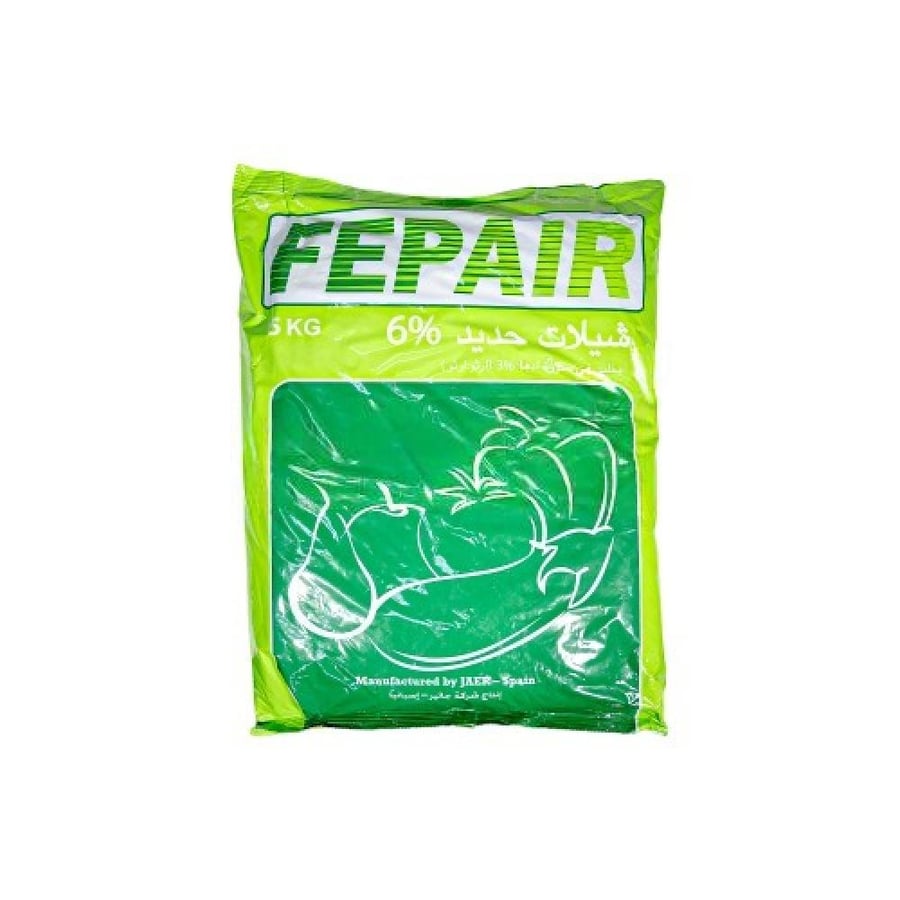
Fiber Shilat Iron 6% trace elements for treating iron deficiency 5 kg
230ر.س
Product description
Fer Beer Chelated Iron 6% for treating iron deficiency and yellowing of leaves
Fer Beer FePair chelated iron fertilizer contains 6% iron, and is used to treat symptoms of iron deficiency in plants such as yellowing of leaves, weak growth, and lack of greening. The product features a chelated formulation that helps provide iron to the plant in a more stable and absorbable form, especially in alkaline and calcareous soils where iron availability is reduced.
Fer Beer is considered a suitable option among microelement and chelated products, and can be incorporated into fertilizer programs for agricultural crops, vegetables, fruit trees, citrus, palms, and ornamental plants when symptoms of iron deficiency or poor greening appear.
Features of Fer Beer chelated iron fertilizer for iron deficiency
Contains 6% chelated iron to support treatment of iron deficiency in plants.
Helps reduce yellowing of leaves caused by iron deficiency.
Supports chlorophyll formation and improves the green color of leaves.
Suitable for alkaline and calcareous soils where iron absorption is difficult.
Helps improve vegetative growth and plant strength when used as part of an appropriate fertilization program.
Water-soluble and suitable for addition with irrigation according to product instructions.
Suitable for vegetables, fruit trees, citrus, palms, field crops, and ornamental plants.
Technical specifications of Fer Beer 5 kg
Product name: Fer Beer FePair
Product type: Chelated fertilizer for treating iron deficiency
Main element: Iron Fe
Iron percentage: 6%
Form: Chelated iron suitable for improving iron availability to the plant
Shape: Granules or powder soluble according to product data
Weight: 5 kg
Main use: Treat iron deficiency, reduce yellowing, and improve plant greening
When to use chelated iron fertilizer for plants?
Fer Beer is used when symptoms of iron deficiency appear, most notably the yellowing of new leaves while veins remain greener in many cases.
This issue often occurs in alkaline and calcareous soils, or with high salinity, weak roots, or element absorption problems.
It can be used within soluble fertilizer programs when the goal is to quickly correct a specific element deficiency better than relying solely on general fertilizers.
However, it is recommended to verify the cause of yellowing before use, as yellowing can also result from nitrogen or magnesium deficiency, poor irrigation, or root problems.
Benefits of chelated iron in improving plant greening
Iron is an essential element in chlorophyll formation within the plant, so its deficiency is usually associated with poor green color and yellowing of leaves.
The chelated iron form helps improve iron availability to the plant, especially in conditions where soil absorption is difficult.
Additionally, the nutrition program can be supported with soil conditioner products if the problem is related to salt accumulation and impaired nutrient uptake around the roots.
How to use Fer Beer chelated iron?
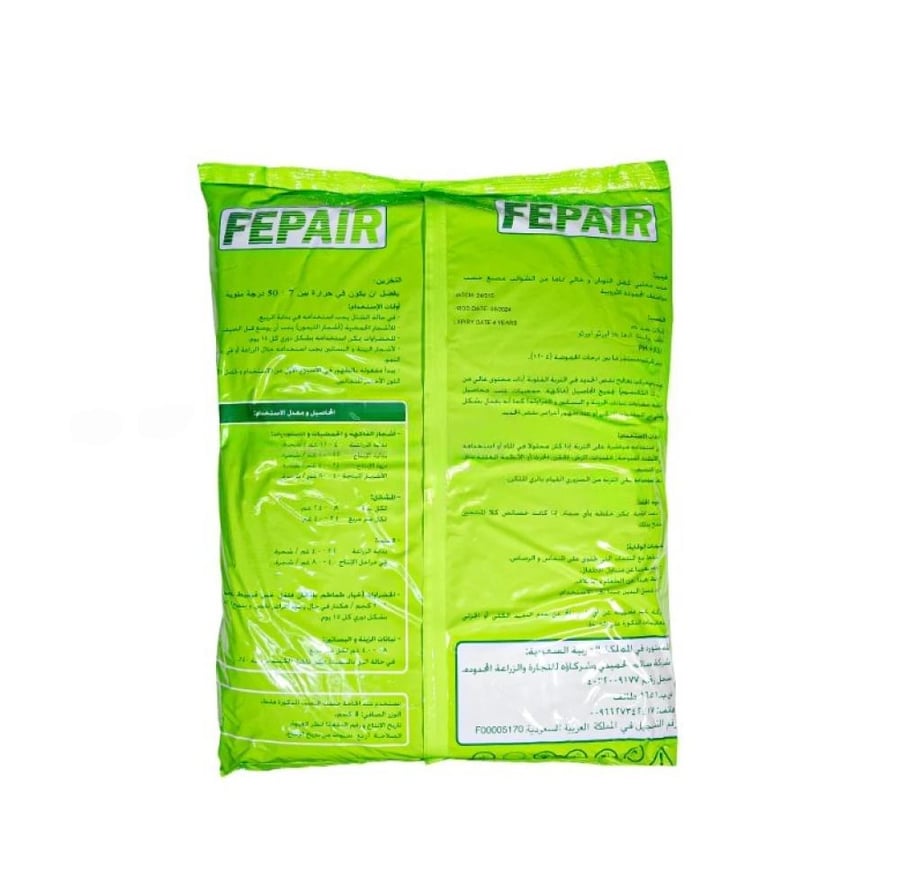
Use according to the instructions on the package or the advice of an agricultural specialist.
Dissolve the product well in water before addition to ensure even distribution.
It is preferred to use with irrigation water or around the root zone depending on the planting method.
Use when symptoms of iron deficiency appear or as a preventive program in alkaline and calcareous soils.
Do not increase the dose arbitrarily, as excess elements may cause imbalance in plant nutrition.
Repeat treatment based on the severity of deficiency, plant condition, and specialist recommendation.
Precautions for using iron chelate
Do not mix the product arbitrarily with fertilizers or pesticides before compatibility testing.
Avoid using high doses without knowing the plant’s actual needs.
Do not rely on it alone if yellowing is caused by overwatering, weak roots, or salinity.
Store in a dry, cool place away from moisture and direct sunlight.
Keep out of reach of children and pets.
Use appropriate measuring tools to control the dose and avoid waste.
Who is suitable for Fer Beer chelated iron 5 kg?
Suitable for farmers, nursery owners, and garden enthusiasts who need chelated iron fertilizer to treat iron deficiency and improve plant greening.
Also suitable for use on vegetables, citrus, palms, fruit trees, field crops, and ornamental plants showing yellowing symptoms related to iron deficiency.
Related sections
You can browse plant nutrition products in the Fertilizers section, or choose similar products from the Microelements and Chelated section, and the Soluble Fertilizers section at Saudi Seeds store depending on the plant’s condition and needs.
Frequently asked questions about Fer Beer chelated iron
What is the benefit of Fer Beer for plants?
Fer Beer helps supply the plant with chelated iron, supporting the treatment of iron deficiency, reducing leaf yellowing, and improving greening and vegetative growth.
Is Fer Beer suitable for treating leaf yellowing?
Yes, it can be used when yellowing is due to iron deficiency, especially in new leaves. But the cause of yellowing should be confirmed, as some cases result from salinity, poor irrigation, or other nutrient deficiencies.
Is chelated iron used in calcareous soil?
Yes, chelated iron is often suitable for calcareous and alkaline soils where iron availability is low, provided the correct dose and application method are followed.
Can Fer Beer be used as a foliar spray?
It is preferable to follow the instructions on the package. Many chelated iron products are added with irrigation water or around the roots, but the method may vary depending on chelation form and formulation.
Can Fer Beer be mixed with other fertilizers?
It is not recommended to mix arbitrarily. Compatibility testing or referring to the manufacturer’s instructions should be done before mixing with any other fertilizer or pesticide.
Choose Fer Beer chelated iron 6% from Saudi Seeds store to support iron deficiency treatment and improve plant greening within an appropriate fertilization program for farms, gardens, and nurseries.

From Jeddah