
Azostar 325 SC 1 liter fungicide device preventive
179ر.س
Product description
Azostar 325 SC Fungicide Systemic Preventive and Curative 1 liter
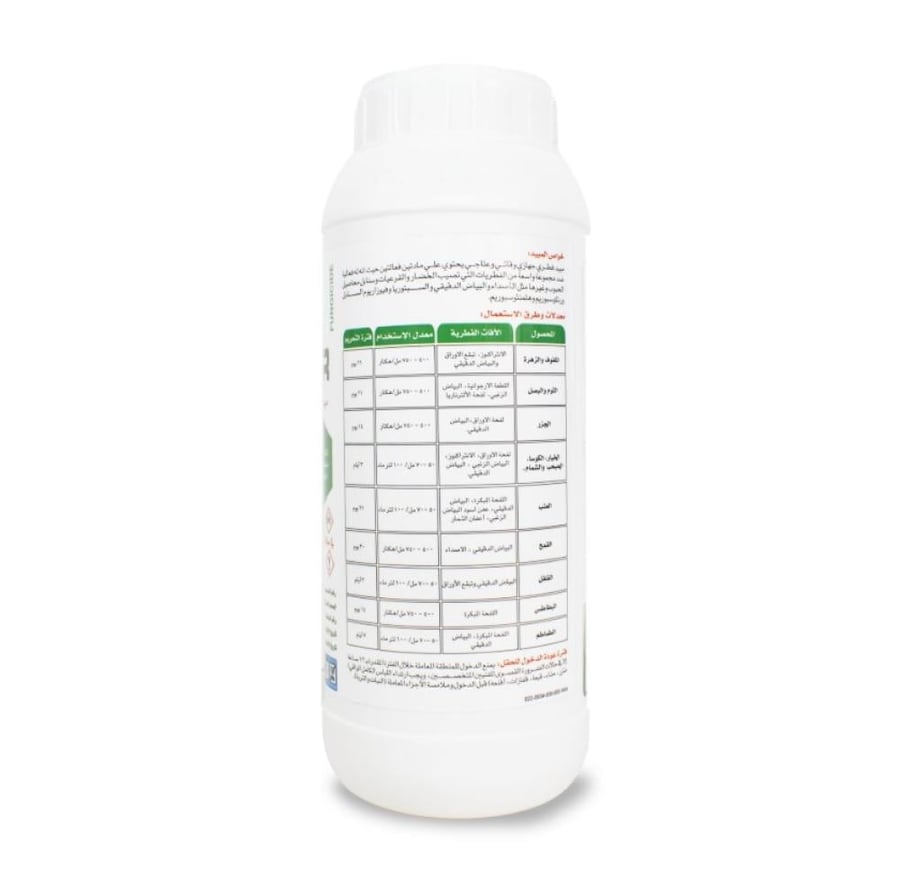
Note before use: Azostar 325 SC is a specialized agricultural fungicide used for prevention and assistance in combating a number of fungal diseases that affect crops, such as powdery mildew, downy mildew, blights, leaf spots, rust, and gray mold. The product should be used according to the instructions on the label only, with adherence to spraying rates, pre-harvest interval, safety precautions, and not increasing the dose or repeating the spray randomly.
Azostar 325 SC is a systemic and curative fungicide with a concentrated suspension formulation (SC), containing two active ingredients: Azoxystrobin 20% and Difenoconazole 12.5%. This formulation combines two different chemical groups: strobilurins and triazoles, making it suitable for use within disease control programs and managing fungal resistance when rotating active ingredients properly.
Azostar helps protect leaves and plant tissues from new infections, and also helps reduce the development of existing infections when used at the right time and recommended rate. It is preferable to include it in an integrated control program that includes crop monitoring, reducing excess humidity as much as possible, improving ventilation, removing infected parts when necessary, and rotating pesticides according to chemical groups.
What is Azostar 325 SC?
Azostar 325 SC is a systemic fungicide that combines preventive and curative effects, used on various agricultural crops to combat common fungal diseases that may affect leaves, stems, flowers, or fruits depending on the crop and disease.
The product formulation contains Azoxystrobin, a active ingredient from Group 11 (strobilurins), and Difenoconazole from Group 3 (triazoles). This combination helps provide a broader effect on some fungal diseases, with the importance of avoiding overuse or repeated use of the same chemical group during the season to reduce the likelihood of resistance development.
Features of Azostar 325 SC for fungal diseases
Contains two active ingredients: Azoxystrobin 20% and Difenoconazole 12.5%.
Works systemically within the plant when used according to instructions.
Helps prevent new infections and reduce the development of existing infections.
Suitable for controlling a range of fungal diseases such as powdery mildew, downy mildew, blights, and leaf spots.
Concentrated suspension formulation (SC) easy to mix and prepare with water.
Suitable for use in integrated disease management programs (IPM).
Helps protect new growth when sprayed at the right time.
Produced by Astra Chem, Saudi Arabia, according to available data.
Technical specifications of Azostar 325 SC
Trade name: Azostar 325 SC
Product type: Agricultural fungicide
Mode of action: Systemic, preventive, and curative
Formulation type: SC concentrated suspension
First active ingredient: Azoxystrobin 20%
Second active ingredient: Difenoconazole 12.5%
Chemical group: Strobilurin + Triazole
Category: Group 11 + Group 3
Capacity: 1 liter
Odor: Light to negligible
Country of origin: Saudi Arabia
Manufacturer: Astra Chem
Usage: To combat several fungal diseases in crops according to the label
Uses of Azostar 325 SC according to diseases and crops
Azostar 325 SC is used to help combat a range of fungal diseases that often spread with high humidity, poor ventilation, plant crowding, or presence of infected plant residues. Effectiveness varies depending on timing, severity, crop type, coverage quality, and adherence to label instructions.
Control of powdery mildew
Helps in controlling powdery mildew on crops such as tomatoes, cucumbers, eggplants, and others as per label recommendations. Preferably sprayed at the onset of symptoms or as part of a preventive program before the disease spreads widely.
Control of downy mildew
Can be used within downy mildew control programs on crops like grapes, melons, onions, and some sensitive crops, noting that downy mildew spreads in humid conditions, so improve ventilation and reduce continuous leaf wetness.
Control of early blights
Included in blight control programs such as early blight and others depending on the crop, especially in potatoes, tomatoes, beans, and chickpeas. Early intervention is preferred, not waiting for advanced infection.
Control of leaf spots
Helps reduce the spread of some leaf spots when used at appropriate stages. Good coverage of leaves is necessary, especially on the underside or within dense foliage.
Control of gray mold and rust
Azostar may be included in control programs for gray mold and rust diseases depending on the crop and label instructions. In these cases, combining correct spraying, reducing excess humidity, and removing infected parts when needed is recommended.
Method of using Azostar 325 SC
Always refer to the product label before use, as the rate may vary depending on crop type, target disease, infection severity, plant age, and spraying method.
Recommended application rates:
Tomatoes, cucumbers, eggplants: 500–750 ml per 100 liters of water for blights and powdery mildew.
Grapes, melons, onions: 500–700 ml per 100 liters of water for downy mildew and gray mold.
Potatoes, beans, chickpeas: 500–750 ml per 100 liters of water for early blight and leaf spots.
Spraying instructions:
Fill the spray tank with an appropriate amount of clean water.
Add the required amount of the fungicide according to the recommended rate.
Stir the solution well until homogeneous.
Continue adding water while stirring.
Spray the plant with good coverage on both upper and lower leaf surfaces.
Preferably spray early in the morning or after sunset.
Avoid spraying during strong winds or high temperatures.
Repeat spraying every 10–14 days depending on infection severity, agricultural engineer recommendations, and label instructions.
Pre-harvest interval
The pre-harvest interval usually ranges from 7 to 14 days after the last application, depending on the crop and label instructions. Harvest should not occur before the end of the safety period, as the pre-harvest interval varies with crop, application rate, and method.
Precautions for using Azostar 325 SC
Read the full product label before preparation and spraying.
Do not use the product at a higher dose than recommended.
Do not repeat spraying randomly without assessing infection.
Do not mix with alkaline pesticides or copper compounds unless the company's instructions specify compatibility.
Use gloves, mask, and protective glasses during preparation and spraying.
Avoid contact of the fungicide with skin or eyes.
Do not eat, drink, or smoke during application.
Avoid spraying near water sources or fish ponds.
Keep children and animals away from the spraying area until the application is complete and the plant is dry.
Wash the sprayer thoroughly after use with water and soap.
In case of direct exposure or unusual symptoms, consult a specialist and bring the product container or label.
Advice for farmers before using Azostar
For better results, use Azostar 325 SC at the onset of infection or as part of a preventive program when conditions favor fungal disease spread, such as high humidity or dense foliage. Do not rely on a single pesticide throughout the season; rotate active ingredients among different chemical groups to reduce the likelihood of fungal resistance.
It is also recommended to improve ventilation between plants, reduce continuous leaf wetness, remove infected plant residues when necessary, and use appropriate spraying tools to ensure uniform coverage without wastage.
Who is this product suitable for?
Azostar 325 SC is suitable for:
Farmers facing fungal diseases such as powdery mildew, downy mildew, or blights.
Greenhouse owners when a systemic fungicide is needed according to label recommendations.
Tomato, cucumber, eggplant, potato, grape, melon, onion, bean, and chickpea farmers according to the diseases mentioned.
Those implementing integrated disease control programs (IPM).
Technicians and specialists needing a dual-formulation fungicide from Group 11 + 3.
It is not suitable for random use, or use without protective tools, repeated spraying without rotating active ingredients, or spraying near children, animals, or water sources.
Storage instructions for Azostar 325 SC
Store Azostar 325 SC in its original tightly sealed container, in a dry, shaded, and relatively cool place, away from direct sunlight, heat sources, and humidity.
Keep away from food, feed, and seeds, and out of reach of children and animals.
Store in a well-ventilated place.
Do not leave under the sun or inside a car for long periods.
Close the container tightly after each use.
Do not transfer to food or drink containers.
Keep away from ignition sources and heat.
Dispose of empty containers according to local regulations.
Related sections
You can browse pest control products in the agricultural pesticides, insecticides, and rodent control sections, as well as spray equipment, fertilizers, and pesticides to choose suitable spraying tools, or visit the indoor and outdoor plants section for plant care products.
Frequently Asked Questions about Azostar 325 SC
What is Azostar 325 SC?
Azostar 325 SC is a systemic, preventive, and curative fungicide with a concentrated suspension formulation, containing Azoxystrobin and Difenoconazole, used to combat several fungal diseases according to the label instructions.
What diseases does Azostar help control?
It helps control powdery mildew, downy mildew, blights, leaf spots, rust, gray mold, and other fungal diseases depending on the crop and label recommendations.
Is Azostar a preventive or curative pesticide?
Azostar combines both preventive and curative effects, helping to protect the plant from new infections and reduce the development of existing infections when sprayed at the right time.
What are the active ingredients in Azostar 325 SC?
It contains Azoxystrobin 20% and Difenoconazole 12.5%.
What is the recommended usage rate for Azostar 325 SC?
Rates range from 500 to 750 ml per 100 liters of water depending on the crop and target disease; always refer to the label before use.
Can Azostar be used for powdery mildew?
Yes, it can be used to help control powdery mildew on crops such as tomatoes, cucumbers, and eggplants according to label instructions.
Can Azostar be used for downy mildew?
Yes, it can be used within downy mildew control programs on crops like grapes, melons, and onions, with an emphasis on improving ventilation and reducing excess humidity.
When is the best time to spray Azostar?
Preferably early morning or after sunset, avoiding high temperatures or strong winds.
Can Azostar be mixed with other pesticides?
Not recommended to mix randomly. Avoid mixing with alkaline pesticides or copper compounds unless the company's instructions specify compatibility.
What is the pre-harvest interval after using Azostar?
Usually between 7 to 14 days depending on the crop and label instructions; do not harvest before the end of the safety period.
Is Azostar suitable for integrated pest management programs?
Yes, it can be included in IPM programs, provided active ingredients are rotated and not used repeatedly in the same chemical group throughout the season.
How should I store Azostar after opening?
Keep the container tightly closed in a dry, shaded place, away from sunlight, heat, and humidity, and out of reach of children and food or feed.
Order Azostar 325 SC from Saudi Seeds Store
If you are looking for a systemic, preventive, and curative fungicide to help control powdery mildew, downy mildew, blights, and leaf spots, Azostar 325 SC 1 liter is a suitable option within disease control programs when used according to label instructions. You can order it from Saudi Seeds Store, choosing appropriate spray tools and following safety guidelines.
Verimectin 18 SC acaricide 1 liter

From Jeddah