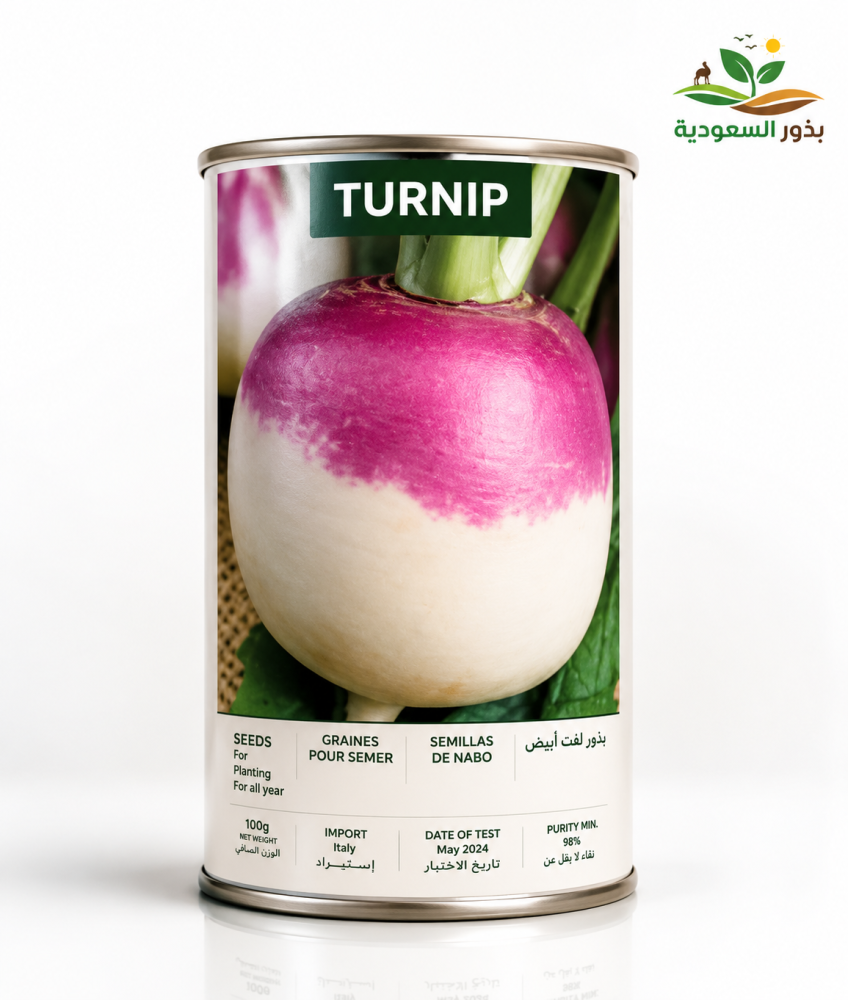

Turnip seeds top white 50g box - EMERALD
49ر.س
Product description
50 grams EMERALD Turnip Seeds 50 grams of EMERALD are vegetable seeds designated for planting two-tone turnip, which is one of the root crops known for producing white roots with a purple or reddish upper shoulder depending on the variety and growing conditions. The turnip is characterized as a crop suitable for seasonal cultivation in moderate and cold weather, and is used for fresh consumption or cooking when harvested at the right time. This product is suitable for farmers and hobbyists who wish to grow a practical root crop in open fields or home gardens. Turnip requires well-drained loose soil, regular watering, and appropriate planting distances so that the roots grow evenly without deformity or crowding. It can be included in a diverse planting plan with other vegetable seed varieties.
Specifications of EMERALD Two-tone Turnip Seeds
Product Name: Two-tone Turnip Seeds
English Name: Turnip Seeds
Brand: EMERALD
Crop: Turnip
Type: Root vegetable crop
Weight: 50 grams
Model Number: ORK SD TWH 009
Use: Planting turnip in fields or home gardens
Crop Nature: Root crop suitable for moderate and cold weather
Features of Two-tone Turnip Seeds:
Suitable for planting two-tone turnip with white roots and purple or reddish upper shoulder.
A practical root crop suitable for fresh consumption and cooking.
Suitable for cultivation in open fields and home gardens when conditions are right.
50 grams packaging suitable for seasonal planting and small to medium areas.
Grows best in relatively loose and light soil.
An appropriate option for those wishing to grow root crops within a diverse agricultural program.
How to Plant Turnip Seeds
Plant turnip seeds directly in the permanent soil, as turnip is a root crop that prefers to grow in its final location without transplanting. Before planting, prepare the soil well by loosening it, removing stones, large clumps, and old root remnants, as hard soil may cause root deformity or irregular size.
Plant the seeds at a shallow depth, then cover with a thin layer of fine soil, and water gently to maintain proper moisture. After germination, it is advisable to thin out the plants if the planting is dense, so each plant has enough space to develop a good, uniform root.
To improve the growing environment, use light, well-drained soil from the soil section and cultivation media or choose suitable soil from the agricultural soil section, especially when planting in containers or home gardens.
Care for Turnip After Germination
Turnip needs regular and balanced watering, as severe drought may lead to small roots or increased toughness, while overwatering can cause root problems and weak plant growth. Therefore, maintaining relatively stable moisture according to soil nature and temperature is recommended.
Remove competing weeds around the plants, especially in early stages, so that turnip does not compete for water and nutrients. Avoid overcrowding, as turnip needs enough space to develop roots naturally.
Timing for Planting Turnip
It is preferable to plant turnip during moderate and cold weather, as conditions are better for forming good-sized, tender roots. In most areas, planting is most suitable during autumn and winter, with consideration for timing differences depending on the region and temperature.
Avoid planting turnip during extreme heat periods, as high temperatures may affect root quality and increase the likelihood of toughness or poor formation. Therefore, choose an appropriate planting date and monitor weather conditions before sowing.
Harvest Time for Turnip
Harvest turnip when the roots reach a suitable size for use, and avoid delaying harvest too long so that roots do not become overly large or too hard. Harvest gradually according to root size and usage needs.
For better quality, monitor root growth after the complete vegetative growth, and maintain consistent watering during the root formation stage, as this helps improve shape and tenderness.
Who is this product suitable for?
The EMERALD 50-gram two-tone turnip seed product is suitable for farmers and home gardeners who want to grow an easy-to-use seasonal root crop in the kitchen. It also suits those looking for vegetable root seeds within the seed section for planting a suitable crop for moderate and cold weather.
In home planting, deep containers or suitable pots from the containers and pots section can be used, provided the soil is loose and the container depth allows roots to develop without crowding.
Important Tips Before Planting
Plant turnip seeds directly in the soil and do not rely on transplanting.
Use light, loose soil free of stones as much as possible.
Cover the seeds with a thin layer of fine soil and do not plant them at a deep level.
Maintain regular moisture without overwatering or drought.
Thin out plants after germination if the planting is dense.
Avoid planting during high-temperature periods for better roots.
Harvest roots at the appropriate size before they become too tough.
Seeds are for planting only and should not be used for food consumption or fodder.
Read the packaging data and follow the manufacturer's instructions before planting.
Frequently Asked Questions About Turnip Cultivation
Can turnip be grown at home?
Yes, turnip can be grown at home in relatively deep containers or pots, provided loose, well-drained soil and regular watering without excess water accumulation.
Does turnip need transplanting?
Transplanting turnip is generally not preferred because it is a root crop that grows better when seeds are planted directly in the final location.
What causes turnip roots to deform?
Root deformity may be caused by hard soil, stones, clumps, overcrowding, or irregular watering during root formation.
Related Sections
You can browse more varieties through the vegetable seeds section, or visit the home and garden seeds section to choose suitable varieties for home and seasonal planting. You can also prepare for planting through the soil and cultivation media section and the containers and pots section.

From Jeddah