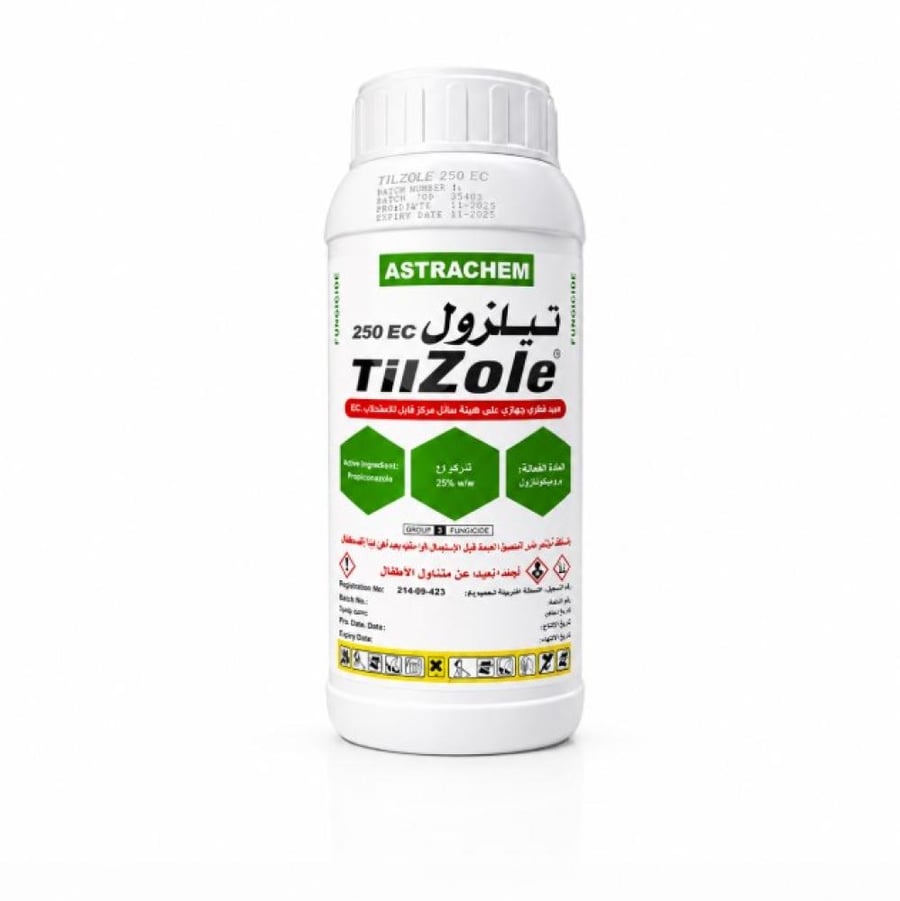
Telsol 250 EC insecticide, device and treatment, for the control of powdery mildew and leaf spot diseases, 1 liter
99ر.س
Product description
Tebuzol 250 EC systemic fungicide for combating rusts, powdery mildew, and leaf spots 1 liter Tebuzol 250 EC Tebuzol 250 EC systemic fungicide, concentrated, emulsifiable, contains the active ingredient Tebuconazole at 25% weight/volume. Used for prevention and treatment of a wide range of fungal diseases that affect crops, such as rusts, powdery mildew, gray mold, early blight, purple mold, downy mildew, and some leaf spots depending on the crop and label recommendations. Tebuzol 250 EC is characterized by its ability to penetrate plant tissues, helping to protect the green parts and reduce the development of infection when used at the appropriate time. It is suitable for multiple crops such as wheat, barley, grapes, tomatoes, potatoes, onions, garlic, and fruit trees like apples, peaches, and plums. This product is suitable within integrated disease control programs that require a broad-spectrum systemic fungicide combining preventive and curative effects. You can review the fungalicide section or the agricultural pesticide section to choose appropriate products based on the disease and crop.
Specifications of Tebuzol 250 EC systemic fungicide
Trade name: Tebuzol 250 EC
English name: Tebuzol 250 EC
Product type: systemic fungicide
Formulation type: emulsifiable concentrate (EC)
Active ingredient: Tebuconazole
Active ingredient concentration: 25% weight/volume
Nature of use: preventive and curative
Target diseases: rusts, powdery mildew, gray mold, early blight, purple mold, downy mildew, and leaf spots depending on the crop
Suitable crops: wheat, barley, grapes, tomatoes, potatoes, onions, garlic, apples, peaches, plums, and other crops according to the label
Country of origin: Saudi Arabia
Manufacturing company: Delta Chemical Industries
Package size: 1 liter
Features of Tebuzol 250 EC for rusts and powdery mildew
Broad-spectrum systemic fungicide suitable for several crops.
Helps combat rusts, powdery mildew, and gray mold.
Works preventively before infection spreads and curatively at the onset of symptoms.
Liquid EC formulation easy to prepare and mix in spray water.
Penetrates plant tissues to support green tissue protection.
Suitable for field crops, vegetables, vineyards, and fruit trees.
Helps reduce the impact of fungal diseases on crop quality.
Can be integrated into pest management programs with rotation of fungicides.
Uses of Tebuzol 250 EC in agricultural crops
Tebuzol 250 EC is used to combat fungal diseases affecting leaves, stems, and fruits, especially those spreading under humid conditions or with a previous history of infection in the field. Its importance is evident in cereal crops like wheat and barley, as well as vegetables, grapes, and some fruit trees.
Main uses:
- Combat rusts in wheat.
- Combat powdery mildew in wheat, barley, grapes, tomatoes, and fruit trees.
- Reduce gray mold infection in grapes, tomatoes, and fruit trees.
- Combat early blight in potatoes.
- Combat purple mold and downy mildew in onions and garlic.
- Protect green tissues from infection development when sprayed early.
- Used as part of preventive and curative programs depending on disease pressure and climatic conditions.
To improve spray efficiency and coverage of leaves, suitable equipment such as sprayers and pumps or manual handheld sprayers should be used.
Method of use of Tebuzol 250 EC according to crop
Tebuzol 250 EC is applied by foliar spray after dilution in water, with the container shaken well before use. The recommended amount is added to the spray tank after partially filling it with water, then continuous stirring is maintained, and the remaining water is added until the solution is homogeneous.
Mentioned doses and withholding periods:
- Wheat: 70 to 100 ml per hectare for rusts and powdery mildew.
Withholding period: 35 days.
- Barley: 70 to 100 ml per hectare for powdery mildew.
Withholding period: 35 days.
- Grapes: 70 to 100 ml per hectare for gray mold and powdery mildew.
Withholding period: 30 days.
- Tomatoes: 70 to 100 ml per hectare for gray mold and powdery mildew.
Withholding period: 7 days.
- Potatoes: 70 to 100 ml per hectare for early blight.
Withholding period: 30 days.
- Onions and garlic: 70 to 100 ml per hectare for purple mold and downy mildew.
Withholding period: 14 days.
- Fruit trees such as apples, peaches, plums: 70 to 100 ml per hectare for gray mold and powdery mildew.
Withholding period: 14 days.
Important application instructions:
- Preferably spray preventively or at the onset of symptoms.
- Cover the entire green tissue for better results.
- Spray early in the morning or before sunset.
- Avoid spraying during high temperatures or strong winds.
- Do not exceed the recommended dose without technical advice.
- Do not mix the product randomly with other pesticides or fertilizers unless compatibility is confirmed.
- Comply with the specified withholding period before harvest.
Different withholding periods apply depending on the crop, and must be strictly followed before harvesting:
- Wheat: 35 days.
- Barley: 35 days.
- Grapes: 30 days.
- Tomatoes: 7 days.
- Potatoes: 30 days.
- Onions and garlic: 14 days.
- Apples, peaches, plums: 14 days.
Always refer to the product label before harvesting, as the safety interval may vary depending on application method or local recommendations.
Precautions and warnings when using Tebuzol 250 EC
- Read the entire product label before use.
- Follow the dose and withholding period for each crop.
- Wear gloves, mask, goggles, and protective clothing during preparation and spraying.
- Avoid contact of the fungicide with skin, eyes, or inhalation of spray mist.
- Do not eat, drink, or smoke during use.
- Avoid spraying in high temperatures or during windy conditions.
- Keep out of reach of children, animals, food, and feed.
- Avoid spray solution reaching water sources.
- Do not reuse empty containers for other purposes.
- Preferably rotate fungicides and do not rely on the same active ingredient in successive sprays.
Importance of Tebuconazole in combating fungal diseases
Tebuconazole is a systemic active ingredient used to control several fungal diseases affecting leaves and fruits. It works inside plant tissues, helping to reduce fungal development and limit its spread when used early in infection.
Tebuzol’s importance is evident in diseases requiring systemic fungicides such as rusts, powdery mildew, gray mold, and early blight. However, for best results, it should be used as part of an integrated program including timely spraying, improved ventilation, reducing excess humidity, and removing infected parts when necessary.
Difference between preventive and curative use of Tebuzol
Preventive use is before infection appears or when conditions favor fungal spread, such as high humidity or previous infections in the same crop. In this case, Tebuzol helps reduce the chance of disease initiation and spread.
Curative use is at the onset of initial symptoms, such as a white layer of powdery mildew, rust spots on leaves, or early gray mold on tissues. The earlier the intervention, the better the chance of controlling the disease.
Diseases helped by Tebuzol 250 EC in control
Tebuzol 250 EC helps control several fungal diseases depending on the crop and recommendations, notably:
- Rusts in wheat.
- Powdery mildew in cereals, grapes, vegetables, and fruit trees.
- Gray mold in grapes, tomatoes, and some fruit trees.
- Early blight in potatoes.
- Purple mold in onions and garlic.
- Downy mildew in onions and garlic.
- Some leaf spots depending on the crop and conditions.
For broader options depending on the disease, refer to the fungalicide or pesticide sections.
Farmer’s advice
For the best results from Tebuzol 250 EC, use it at the onset of infection or as part of a preventive program before disease spreads. Do not wait until infection becomes severe, as fungal diseases are harder to control once they spread in the field.
It is also preferable not to repeat the same fungicide in successive sprays but to include it in a rotation program with fungicides from different groups. Good spray quality and complete coverage of leaves and new growth are key factors in successful control.
Frequently asked questions about Tebuzol 250 EC
What is the active ingredient in Tebuzol 250 EC?
Tebuzol 250 EC contains the active ingredient Tebuconazole at 25% weight/volume.
Is Tebuzol a systemic fungicide?
Yes, Tebuzol is a concentrated systemic fungicide that is emulsifiable and works preventively and curatively against several fungal diseases.
What diseases does Tebuzol control?
It is used to combat rusts, powdery mildew, gray mold, early blight, purple mold, and downy mildew depending on the crop.
Is Tebuzol used for wheat?
Yes, used for wheat at a rate of 70 to 100 ml per hectare for rusts and powdery mildew, with a 35-day withholding period.
Is Tebuzol used for tomatoes?
Yes, used for tomatoes to combat gray mold and powdery mildew at 70 to 100 ml per hectare, with a 7-day withholding period.
What is the withholding period for Tebuzol?
It varies depending on the crop; wheat and barley 35 days, grapes 30 days, tomatoes 7 days, potatoes 30 days, onions and garlic 14 days, and the mentioned fruit trees 14 days.
Can Tebuzol be mixed with other pesticides?
It may be mixed with some pesticides, but random mixing is not recommended. Compatibility should be confirmed first and follow label instructions.
Product summary
Tebuzol 250 EC is a systemic fungicide containing 25% Tebuconazole, used to control rusts, powdery mildew, gray mold, early blight, and downy mildew in various crops such as wheat, barley, grapes, tomatoes, potatoes, onions, garlic, and fruit trees. It provides the best results when used early with good green tissue coverage, adhering to recommended doses, withholding periods, and rotation programs.
Related sections
Fungalicides
Agricultural pesticides
Sprayers and pesticide pumps
Manual agricultural sprayers

From Jeddah