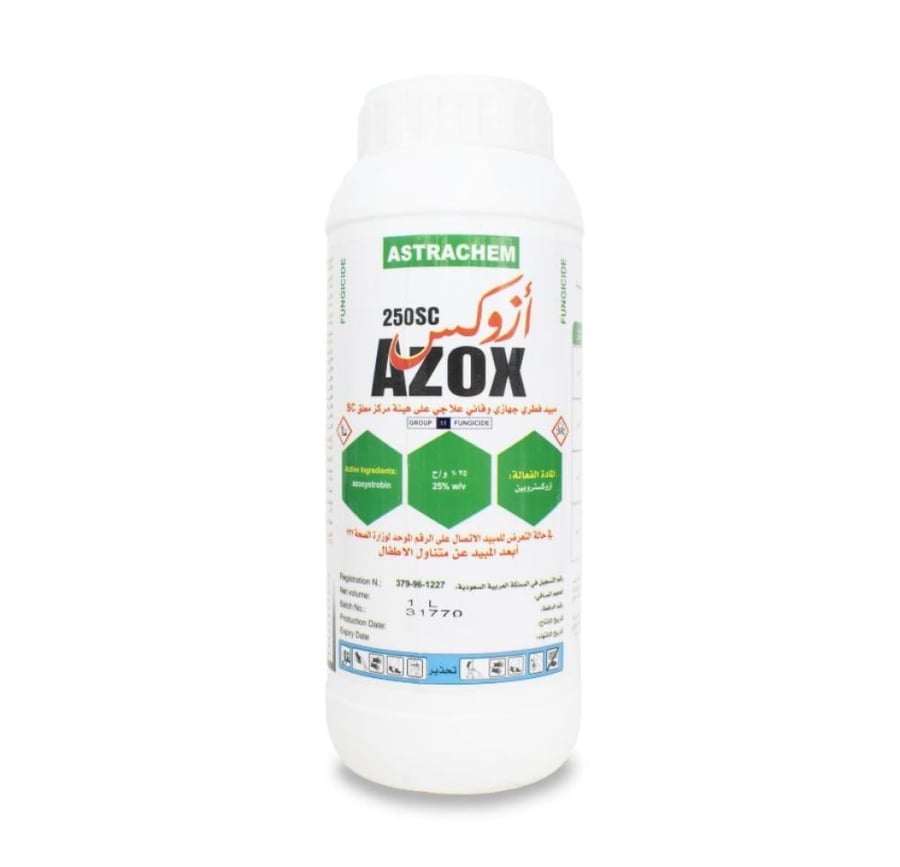


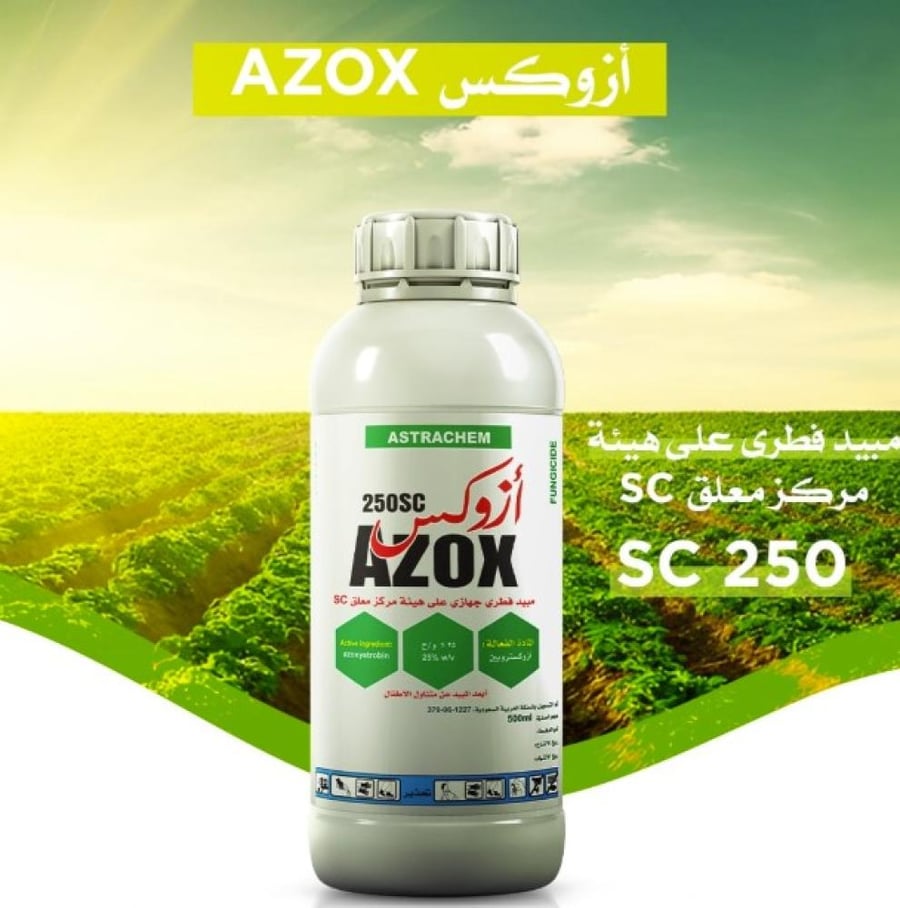
Azox 250 SC Fungicide, device preventive and curative, for combating powdery mildew and downy mildew, 1 liter
199ر.س
Product description
Azox 250 SC Azox 250 SC Fungicide Systemic Preventive and Curative 1 liter Azox 250 SC Azox 250 SC broad-spectrum systemic fungicide, containing the active ingredient Azoxystrobin at 25%, and comes as a suspension concentrate SC. It is used to combat a number of fungal diseases that affect agricultural crops such as early and late blight, powdery mildew, downy mildew, scab, and some leaf and fruit rots according to the crop and label recommendations. Azox 250 SC works by affecting the respiration of the fungus inside its cells, helping to stop fungal growth and reduce the spread of infection when used at the appropriate time. It can be classified under agricultural pesticides, especially fungicides for products dedicated to combating plant fungal diseases. Azoxystrobin pesticide for controlling powdery mildew and downy mildew. Powdery mildew, downy mildew, and scab are among the most impactful fungal diseases on vegetables and field crops, especially when humidity, poor ventilation, and repeated infection occur in the same growing season. These diseases often appear as spots, yellowing, white or downy fungal growths, weak leaves, and a decline in fruit quality or yield. Azox 250 SC helps in fighting these diseases when used preventively before the infection spreads, or curatively at the onset of symptoms. It is characterized by its internal distribution within the plant, helping to protect treated tissues and reduce disease development, making it a suitable option within integrated disease management programs IPM. Technical specifications of Azox 250 SC Trade name: Azox 250 SC Product type: Systemic fungicide, preventive and curative Formulation: Suspension concentrate SC Active ingredient: Azoxystrobin Active concentration: 25% Usage: Control of powdery mildew, downy mildew, scab, scab, some fungal diseases according to the label Suitable crops: Tomatoes, cucumbers, melons, cantaloupe, grapes, mangoes, potatoes, onions, and other crops as recommended Country of origin: Saudi Arabia Manufacturer: Astra Chem (ASTRACHEM) Scent: Light to almost none Package size: 1 liter Features of Azox 250 SC against fungal diseases Contains 25% Azoxystrobin for a wide range of fungi Combines preventive and curative effects when used at the right time Distributes inside the plant and helps reduce disease progression Suitable for controlling powdery mildew, downy mildew, and scab Used on tomatoes, cucumbers, melons, grapes, mangoes, potatoes, onions as recommended Suitable for integrated disease management programs IPM Easy-to-prepare SC formulation helps ensure good distribution during spraying Uses of Azox in vegetables and fruits Azox 250 SC is used on tomatoes to combat early and late blight and powdery mildew, which directly affect leaves and fruit quality when spread. It is also used on cucumbers, melons, and cantaloupe to fight downy mildew and powdery mildew, common in cucurbit crops, especially with high humidity and poor ventilation. In grapes and mangoes, it can be used to control powdery mildew, scab, and some fungal diseases related to leaves and fruits according to product recommendations. It is also part of disease control programs for potatoes and onions, especially when conditions favor the spread of scab and scab. To improve application quality, tools from the agricultural sprayers and fertilizers and pesticides section can be used, or a suitable manual sprayer from the manual agricultural sprayers section. How to use Azox 250 SC Tomatoes: used to control early and late blight and powdery mildew at a rate of 80 to 100 ml per 100 liters of water. Cucumbers, melons, and cantaloupe: used to control downy mildew and powdery mildew at 80 to 100 ml per 100 liters of water. Grapes and mangoes: used to control powdery mildew and scab at 80 to 100 ml per 100 liters of water. Repeat spraying every 10 to 14 days depending on the severity of the infection and the agricultural engineer’s recommendation. Ensure good coverage of the leaves, especially at the onset of symptoms or when conditions favor infection. Avoid spraying during high temperatures or strong winds. Pre-harvest interval The interval ranges from 7 to 14 days from the last treatment depending on the crop type and label recommendations. Refer to the package data during actual use, as safety intervals may vary depending on the crop, application method, and local registration system. Important guidelines to reduce fungal resistance Since Azox 250 SC contains Azoxystrobin, it is preferable not to rely on it alone throughout the season. Rotate fungicides with active ingredients from different groups to reduce the likelihood of resistance development in fungi, especially for fast-spreading diseases like powdery mildew, downy mildew, and scab. It is also recommended to use the product within an integrated program that includes improving ventilation, regulating irrigation, reducing continuous leaf wetness, removing heavily infected parts when necessary, and monitoring the crop after spraying. Disease control programs can be supported with other products from the fungicide section depending on the disease and crop. Precautions for using Azox 250 SC Read the entire product label before preparation and spraying. Do not mix with alkaline pesticides or copper compounds unless compatibility is confirmed. Use early in the morning or late in the afternoon to avoid rapid evaporation. Wear gloves, mask, and glasses during preparation and spraying. Avoid contact with skin or eyes or inhaling spray. Store the container in a dry, shaded place away from children and animals. Rinse spraying equipment thoroughly after use with water and soap. Do not reuse the same active ingredient without rotating different fungicides. Benefits of Azox when used correctly Helps maintain plant vitality and reduce losses from fungal diseases when used at the right time and dose. Also helps protect the vegetative parts, which reflects on the quality of the crop and extends the plant’s activity period, especially during critical growth stages and fruit formation phases. The product is most effective when used before the disease spreads or at its early stage, not after the disease has advanced. Therefore, regular monitoring of plants is recommended, especially during humid seasons or when powdery mildew and scab diseases recur in the same field. Frequently asked questions about Azox 250 SC Is Azox 250 SC a systemic fungicide? Yes, Azox 250 SC is a systemic fungicide containing 25% Azoxystrobin, used for prevention and treatment of some fungal diseases. What diseases does Azox control? It helps control powdery mildew, downy mildew, early and late blight, scab, and some fungal diseases depending on the crop and label instructions. What is the dose of Azox 250 SC? The dose is 80 to 100 ml per 100 liters of water, varying depending on the crop and severity of infection. Can Azox be used on tomatoes and cucumbers? Yes, it is used on tomatoes to control blights and powdery mildew, and on cucumbers and cucurbits to control downy mildew and powdery mildew as recommended. Can Azox be mixed with copper compounds? Mixing with copper compounds or alkaline materials is not recommended unless compatibility is confirmed or consulted with an agricultural specialist. Related sections You can browse plant disease control products from the agricultural pesticides section and the fungicides section. To apply the product properly, tools from the agricultural sprayers, fertilizers, and pesticides section can be selected, or a suitable manual sprayer from the manual agricultural sprayers section. For crops related to vegetables, review the vegetable seeds section. NeoGen 200 SC nematicide for root-eating and boring worms.

From Jeddah