
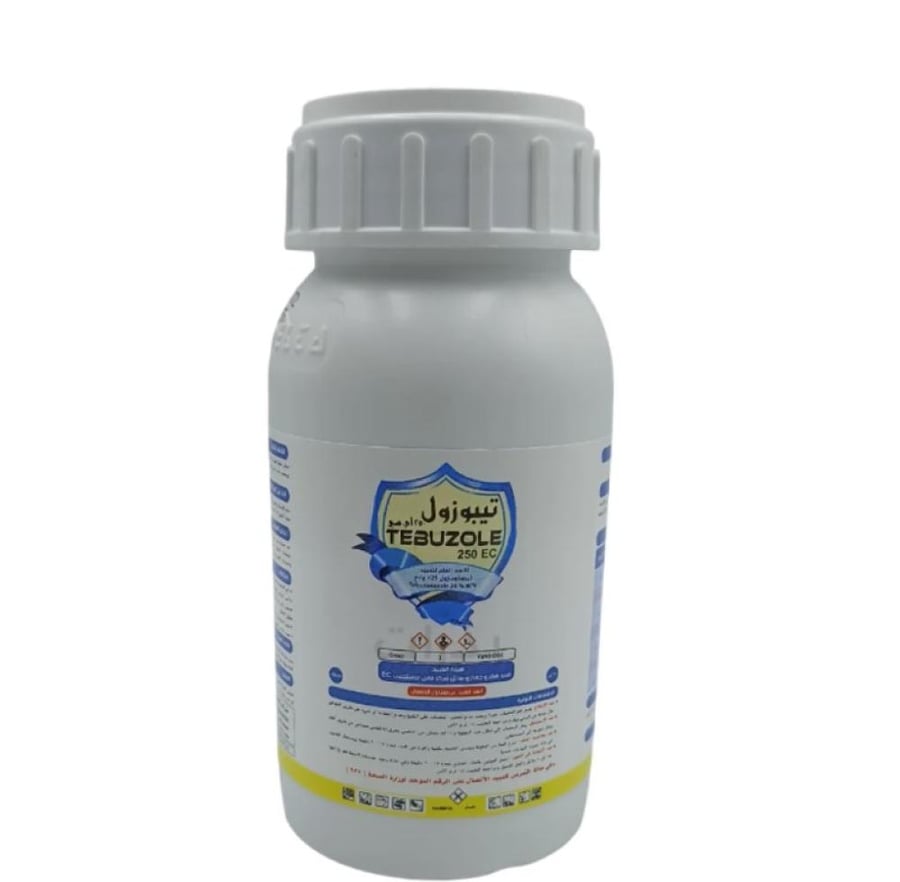

Tebozol 250 EC fungicide device treatment for combating Fusarium, gray mold, and powdery mildew 250 ml
29ر.س
Product description
Tebuzole 250 EC systemic fungicide therapeutic for Fusarium and gray mold and powdery mildew 250 ml Tebuzole 250 EC Tebuzole 250 EC systemic fungicide therapeutic and preventive contains the active ingredient Tebuconazole at a concentration of 25%, and is used to help combat a number of important fungal diseases such as rusts, powdery mildew, gray mold, early blight, purple mold, and some fungi that infect cereal, vegetable, and fruit crops when used according to the label instructions. Tebuzole works inside plant tissues, helping to limit fungal growth and reduce the spread of infection after early symptoms appear. It can also be used preventively during periods of high infection risk, especially with high humidity, poor ventilation, and repeated fungal infections in the same crop. Its 250 ml packaging makes it a practical choice for farmers and growers who need a concentrated fungicide that is easy to prepare and apply.
Specifications of Tebuzole 250 EC Tebuconazole
Trade name: Tebuzole 250 EC
English name: Tebuzole 250 EC
Product type: Systemic fungicide, therapeutic and preventive
Active ingredient: Tebuconazole
Active ingredient concentration: 25%
Formulation type: EC, dispersible concentrate
Package size: 250 ml
Country of origin: Saudi Arabia
Company: Delta Chemical Industries
Effect method: Systemic, inside plant tissues
Target diseases: Rusts, powdery mildew, gray mold, early blight, purple mold, and some fungal diseases
Suitable crops: Wheat, barley, grapes, tomatoes, potatoes, onions, garlic, apples, peaches, plums, according to label recommendations
Features of systemic fungicide for powdery mildew and rusts
Tebuzole 250 EC features a systemic formulation that helps the active ingredient move inside the plant, making it suitable for dealing with certain fungal infections that surface spraying alone cannot sufficiently control. The product helps combat powdery mildew, rusts, and gray mold when used at the correct timing and recommended doses. Its key advantage is that it combines preventive and curative effects; it can be used before disease spreads in high-risk conditions or after initial symptoms to limit disease progression. The dispersible EC formulation facilitates preparing a uniform spray solution when well mixed with water, easing distribution over the crop.
Uses of Tebuzole for gray mold and early blight
Tebuzole 250 EC is used on wheat and barley to help control rusts and powdery mildew, which can affect leaf surfaces and reduce the plant's growth and productivity. It is also used on grapes, tomatoes, and fruit trees against gray mold and powdery mildew, especially in humid conditions that promote these diseases. In potatoes, it is part of early blight control programs, while in onions and garlic, it is used against purple mold and downy mildew according to recommendations. It is always preferable to use it within an integrated fungal control program that includes improving ventilation, irrigation management, removing infected parts when necessary, and rotating active ingredients to reduce fungal resistance.
Application method of Tebuzole 250 EC according to crop
In wheat, Tebuzole 250 EC is used at 70 to 100 ml per hectare to control rusts and powdery mildew, with a 35-day withholding period. In barley, the same rate is used with a 35-day withholding period. In grapes, it is used at 70 to 100 ml per hectare to control gray mold and powdery mildew, with a 30-day withholding period. In tomatoes, the same rate is used for gray mold and powdery mildew, with a 7-day withholding period. In potatoes, it is used at 70 to 100 ml per hectare to control early blight, with a 30-day withholding period. For onions and garlic, it is used at 70 to 100 ml per hectare against purple mold and downy mildew, with a 14-day withholding period. For fruit trees like apples, peaches, and plums, the same rate is used to control gray mold and powdery mildew, with a 14-day withholding period.
Best timing for spraying Tebuzole on crops
The best timing to use Tebuzole 250 EC is at the onset of symptoms or before disease spread during periods when conditions favor infection, such as high humidity, dew formation, plant crowding, or poor ventilation. Early intervention is more effective than waiting until the disease has expanded significantly. The spray solution is prepared by adding the required amount of fungicide to part of the water in the spray tank, then stirring well before adding the rest of the water. The plant should be sprayed evenly, avoiding application during high temperatures or strong winds, and adhering to recommended spraying schedules and withholding periods for each crop.
Precautions for using a fungicide containing Tebuconazole
Read the full label before use and do not exceed the specified dose for each crop. It is also advised not to repeatedly use the same active ingredient throughout the season, as this may increase the risk of resistance development in fungi. It is best to rotate fungicides among different groups within a clear program. Wear gloves, a mask, and protective glasses during preparation and spraying, and avoid contact of the spray solution with skin or eyes. Keep the container away from children, animals, food, and water sources. Do not mix the product with other pesticides or fertilizers unless compatibility is confirmed or a limited test is performed.
When to choose Tebuzole as part of a fungal disease control program?
Tebuzole 250 EC is suitable when infections are related to diseases such as powdery mildew, rusts, gray mold, early blight, or purple mold, especially when an systemic fungicide capable of working inside plant tissues is needed. It is also useful in crops requiring rapid intervention when early fungal symptoms appear. Do not treat yellowing or weak growth as a fungal disease directly. Proper diagnosis is essential, as some symptoms may result from salinity, nutrient deficiencies, poor irrigation, or heat stress. Correct diagnosis helps in selecting the appropriate product and avoiding unnecessary spraying.
Frequently asked questions about Tebuzole 250 EC
What is the active ingredient in Tebuzole 250 EC? It contains Tebuconazole at 25%.
Is Tebuzole an systemic fungicide? Yes, Tebuzole is a systemic fungicide that works inside plant tissues and is used to help control several fungal diseases.
Is Tebuzole used for powdery mildew? Yes, it is used to combat powdery mildew on crops such as wheat, barley, grapes, tomatoes, and fruit trees according to label recommendations.
Is it suitable for gray mold? Yes, it is included in gray mold control programs on grapes, tomatoes, and some fruit trees depending on dosage and withholding periods.
What is the recommended usage rate of Tebuzole? The rate is 70 to 100 ml per hectare, varying depending on the crop, target disease, and withholding period.
Related sections
You can browse fungal disease control products in the Fungicides section, and access broader options through the Agricultural Pesticides section. For liquid pesticide applications with even coverage, suitable tools can be selected from the manual sprayers or the sprayers and fertilizers section. To improve the farming environment and reduce causes of plant weakness, browse the Soil and Growing Media section.
Marketing conclusion
Tebuzole 250 EC systemic fungicide is suitable for controlling powdery mildew, rusts, gray mold, early blight, and purple mold on multiple crops when used according to the label instructions. With a 25% Tebuconazole formulation and easy-to-prepare EC formula, the product provides a practical option for farmers seeking organized preventive and therapeutic protection against fungal diseases.
Tilmaster 480 SL non-selective herbicide 1 liter

From Jeddah