
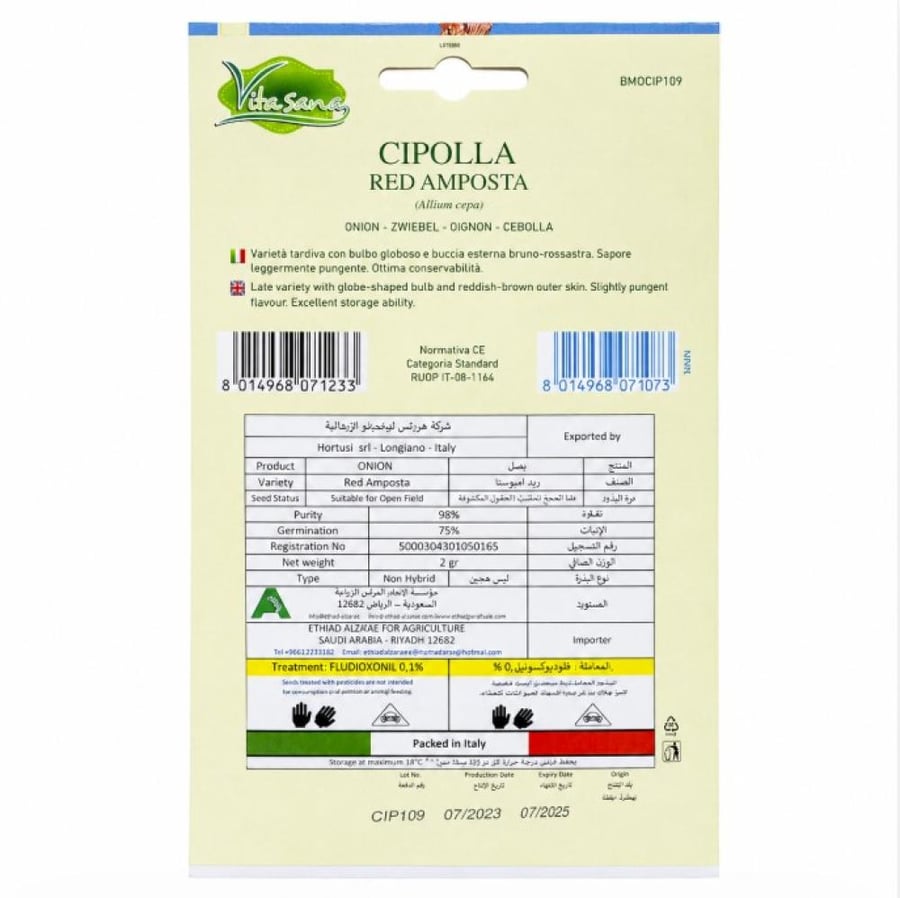
Red onion seeds 2 grams
11.50ر.س
Product description
Red Onion Seeds 2 g Red Onion Seeds 2 g are vegetable seeds designated for planting red onions, which are among the essential crops used in daily cooking, salads, seasonings, and home dishes. The red onion is distinguished by its attractive color and clear flavor, making it a suitable choice for those who wish to grow a practical crop inside the home garden or in open fields during the appropriate season. The product label shows the name Cipolla Red Amposta, which is a red onion variety suitable for cultivation in well-drained soil with regular watering and appropriate planting distances. This product can be included among vegetable seed varieties or within the options for home and garden seeds for those wishing to try growing onions in a small residential or agricultural space.
**Specifications of Red Onion Seeds**
Product name: Red Onion Seeds
English name: Red Onion Seeds
Variety on the package: Cipolla Red Amposta
Product type: Vegetable seeds
Type: Non-hybrid according to product data
Net weight: 2 grams
Purity percentage: 98%
Usage: Growing red onions in fields or home gardens
Planting method: In seed trays or directly in the ground depending on growing conditions
**Features of Red Onion Seeds 2 g**
Suitable for growing red onions for home or field use.
Non-hybrid variety according to product data.
High purity rate of 98% according to the data shown.
2 g packaging suitable for home experimentation and limited cultivation.
Suitable for cultivation in open fields or beds when good soil is available.
A practical crop used in cooking, salads, and daily dishes.
Can be grown as part of a diverse seasonal vegetable program.
**How to Plant Red Onion Seeds**
Before planting, the soil must be well prepared by removing weeds, stones, and large clumps, then loosened and leveled.
Onions need relatively fine, well-drained soil to grow roots better and form bulbs in a balanced way.
Red onion seeds can be planted in seed trays to produce strong seedlings, then transferred to permanent soil after reaching a suitable size.
They can also be planted directly in the open field if the soil is well prepared and climatic conditions are suitable for germination.
After planting, water the soil gently to maintain adequate moisture without flooding.
The planting environment can be prepared using suitable soil from the soil section and planting media or by choosing agricultural soil from the agricultural soil section, especially when planting in beds or home spaces.
**Care for Red Onions After Germination**
Red onions require regular and balanced watering, as severe drought may weaken plant growth, while overwatering can cause weak roots and soil problems.
Maintain moderate moisture in the early stages, then gradually regulate watering based on soil condition and temperature.
Weed competition should be removed continuously, as small onion plants are quickly affected by competition for water and nutrients.
When bulbs start to form, attention should be paid to appropriate spacing and balanced fertilization to prevent excessive leafy growth at the expense of bulb formation.
**Fertilization and Supporting Bulb Formation**
Onions need balanced nutrition according to the growth stage and soil condition.
Initially, the plant needs support for root and vegetative growth, then later requires elements that help form bulbs and improve their size and quality.
You can browse the fertilizers section to choose suitable products based on soil needs and plant growth stage, avoiding excessive fertilization, especially in the later stages of onion growth.
**Best Times to Plant Red Onions**
It is preferable to plant red onions in moderate weather, avoiding extreme heat or cold depending on the region.
Suitable planting times vary from city to city, so it is recommended to choose a time when temperatures are appropriate for germination and seedling growth.
Choosing the right planting time helps improve germination rate, seedling growth, and bulb formation.
Proper soil preparation before planting and regular watering are also important factors for better results.
**When to Harvest Red Onions**
Harvest red onions when the bulbs are fully grown and reach the appropriate size.
The harvesting period varies depending on the variety, soil, temperature, planting method, and care routine.
For better quality, it is preferable to monitor bulb growth and not delay harvesting too long after reaching the desired size.
Gradually reduce watering near the harvest time depending on the plant and soil condition.
**Who is this product suitable for?**
The 2 g red onion seed product is suitable for those who want to grow red onions inside the home garden or in a small agricultural space.
It also suits hobbyists looking for basic vegetable seeds in the seed section to try growing a crop used daily.
In home cultivation, suitable beds or containers from the container and pot section can be used, provided good-draining soil and sufficient spacing between plants for bulb formation.
**Important Tips Before Planting**
Prepare the soil well and clean it from weeds and stones before planting.
Start planting in seed trays and later transfer seedlings.
Maintain regular soil moisture without overwatering.
Leave appropriate spaces between plants to reduce crowding and improve bulb formation.
Continuously remove competing weeds, especially in early growth stages.
Focus on balanced fertilization and avoid excessive nitrogen fertilizer near bulb formation.
Harvest onions when bulbs are fully grown and reach the suitable size.
Seeds are intended for planting only and not for food consumption or fodder.
Read the packaging data and adhere to the manufacturer's instructions before planting.
**Frequently Asked Questions about Growing Red Onions**
Can red onions be grown at home?
Yes, red onions can be grown at home in suitable beds or containers, provided there is well-drained soil, adequate lighting, and regular watering without excess water accumulation.
Should onion seeds be planted directly or in trays?
Both methods are possible; either directly in the open field or in seed trays to produce seedlings then transfer to permanent soil.
What is the most important factor for successful red onion cultivation?
Proper soil preparation, choosing an appropriate planting time, regular watering, weed removal, and maintaining sufficient spacing between plants for good bulb development.
Related Sections
You can browse more vegetable varieties through the vegetable seeds section or visit the home and garden seeds section to select suitable varieties for home cultivation. You can also prepare for planting through the soil, planting media, and fertilizers sections.

From Jeddah