
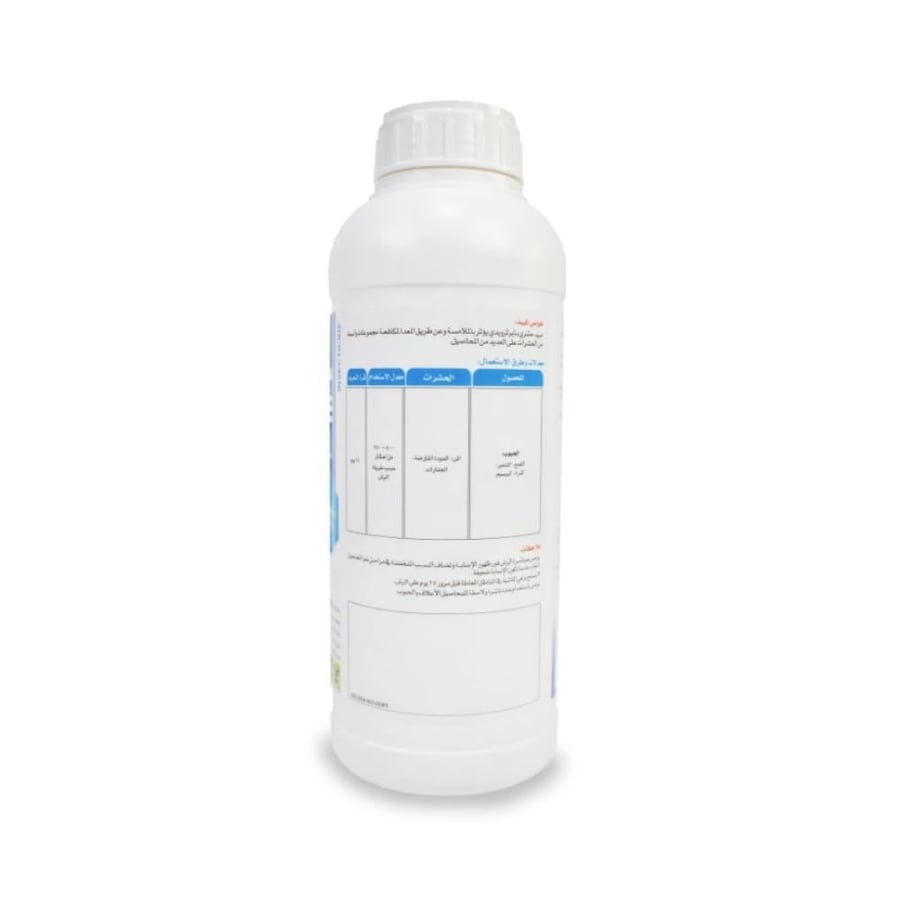

Saiprin 100 EC insecticide non-systemic for aphids, worms, and thrips 1 liter
49ر.س
Product description
Cyprine 100 EC Non-systemic insecticide for aphids, worms, and thrips 1 liter
Cyprine 100 EC Non-Systemic Agricultural Insecticide 1L
Cyprine 100 EC is a non-systemic agricultural insecticide from the group of pyrethroids, comes in an emulsifiable concentrate (EC) form, and contains the active ingredient Cypermethrin at 10%. It is used to combat a range of insect pests that affect field crops such as aphids, worms, stem borer, and thrips, especially in crops like wheat, maize, and alfalfa.
Cyprine 100 EC is a suitable option within pesticide programs and pest and rodent control, especially for farms that need a quick contact insecticide that helps control insects when they appear. It can be used with appropriate spraying equipment from the sprays, fertilizers, and pesticides section to ensure good distribution on the vegetative parts and plant surfaces.
What is Cyprine 100 EC insecticide?
Cyprine 100 EC is a non-systemic insecticide, meaning it does not move within plant tissues like systemic pesticides, but mainly relies on contact and ingestion. Therefore, its efficiency is higher when the spray covers the affected parts of the plant well, especially where insects gather on leaves, stems, growing tips, and hiding places of pests.
The emulsifiable concentrate formulation helps mix the product with water before spraying, making it suitable for use in large fields and farms when adhering to the recommended application rate, withholding period, and label instructions.
Features of Cyprine 100 EC:
Contains Cypermethrin at 10%.
Non-systemic insecticide from the pyrethroid group.
Works by contact and ingestion.
Suitable for controlling aphids, worms, stem borer, and thrips.
Used on field crops such as wheat, maize, and alfalfa.
The EC formulation helps ensure good distribution and stability on plant surfaces when sprayed correctly.
Suitable for use in agricultural fields and large farms.
Helps reduce pest populations when used at the right time and as part of an integrated pest management program.
A 1-liter size is suitable for preparing spray solutions for agricultural areas according to the recommended rate.
Technical specifications:
Product name: Cyprine 100 EC
English name: Cyprine 100 EC
Product type: Non-systemic insecticide
Chemical group: Pyrethroids
Formulation: Emulsifiable concentrate (EC)
Active ingredient: Cypermethrin
Active ingredient concentration: 10%
Mode of action: Contact and ingestion
Odor: Relatively strong due to the EC formulation
Packaging size: 1 liter
Country of origin: Not specified in the provided data
Suitable crops according to data: wheat, maize, alfalfa
Target pests: aphids, worms of all kinds, stem borer, thrips
Usage rate: from 500 to 700 ml per hectare depending on the method of spraying and severity of infestation
Withholding period: 14 days before harvest
Crops on which Cyprine is used:
Cyprine 100 EC is used on some field crops according to the provided data, mainly wheat, maize, and alfalfa. The monitoring method varies depending on the crop and target pest; aphids often appear on new growth and tender parts, while worms may be on leaves or growing tips, and stem borer requires early monitoring before the infestation worsens inside the plant.
In field crops, it is preferable to use the insecticide after actual pest detection, not as a repeated random spray, to avoid increasing pest resistance and harming beneficial insects unnecessarily.
Pests it helps control:
Cyprine 100 EC helps combat several pests, including:
Aphids: absorb plant sap and may cause weak growth and leaf curling.
Worms: feed on leaves or green parts, causing visible holes or erosion.
Stem borer: may cause internal damage to stems if not monitored early.
Thrips: cause scratches, yellowing, or deformities in plant tissues, especially when their numbers are high.
Success depends on timing; early treatment yields better results than waiting for widespread infestation.
How to use Cyprine 100 EC:
Use Cyprine after diluting with water according to the recommended application rate.
Based on the data, the rate is from 500 to 700 ml per hectare, varying with infestation severity, vegetative mass size, crop type, and spraying equipment.
First, fill part of the spray tank with water, then add the required amount of insecticide with good stirring, and then complete with the remaining water.
During spraying, keep stirring the solution if possible to ensure uniformity inside the tank.
Spray early in the morning or late in the evening, avoiding high temperatures, strong winds, or rain forecast.
Direct the spray to pest locations on the plant, ensuring good coverage without excessive wetting or runoff.
Tips to improve spraying efficiency:
For better results, inspect the field before spraying, identify infestation locations and severity.
Do not use the insecticide if the infestation is very mild and manageable with agricultural methods or continuous monitoring, and avoid repeated spraying without reason.
Use an appropriate spray nozzle to ensure good coverage, and do not exceed the recommended dose.
Do not mix Cyprine with other products unless the label permits or under technical supervision, as random mixing may reduce effectiveness or harm the plant.
It is also important to rotate between insecticides from different groups when repeating control programs to reduce the likelihood of pest resistance.
Pre-harvest withholding period:
The withholding period mentioned in the data is 14 days before harvest.
This means the crop should not be harvested or used for consumption or feed before this period passes after the last spray, and always adhere to the instructions on the label, as the withholding period may vary depending on the crop, application method, or regulations.
Precautions:
Cyprine 100 EC is a concentrated agricultural insecticide and must be used carefully.
Wear gloves, mask, protective glasses, and suitable clothing during preparation and application.
Avoid contact with skin and eyes or inhaling spray mist.
Do not spray near drinking water sources, water channels, or fish ponds.
Do not use when children or animals are present in the area.
Avoid spraying against the wind, and do not eat, drink, or smoke during preparation and application.
After finishing, wash spray equipment thoroughly, and wash hands and face with water and soap.
Store the product in its original tightly closed container in a cool, dry place away from sunlight, food, feed, and out of children's reach.
Frequently Asked Questions about Cyprine 100 EC:
Is Cyprine an systemic insecticide?
No, Cyprine 100 EC is a non-systemic insecticide, working by contact and ingestion, so it needs good coverage of the affected plant parts.
What is the active ingredient in Cyprine?
It contains Cypermethrin at 10%.
What pests does it target?
It is used to control aphids, worms, stem borer, and thrips according to the provided data.
What is the application rate?
The application rate is from 500 to 700 ml per hectare depending on infestation severity and spraying method.
What is the withholding period?
The specified withholding period is 14 days before harvest, always follow the label instructions.
Related sections:
Cyprine 100 EC can be used within a pest control plan related to sections such as agricultural pesticides, pest and rodent control, sprayers, fertilizers, and pesticides, especially when preparing a field spray program requiring an agricultural insecticide and suitable application equipment.
Why choose Cyprine 100 EC?
Cyprine 100 EC is suitable for farmers needing a non-systemic agricultural insecticide to control aphids, worms, thrips, and stem borer in some field crops.
It features an EC formulation containing 10% Cypermethrin, with a clear application rate per hectare, and can be used within agricultural spray programs when safety instructions and withholding periods are followed.
When used at the right time, with field inspection, proper calibration, and avoiding over-repetition, it can be an effective part of a more organized pest control program.

From Jeddah