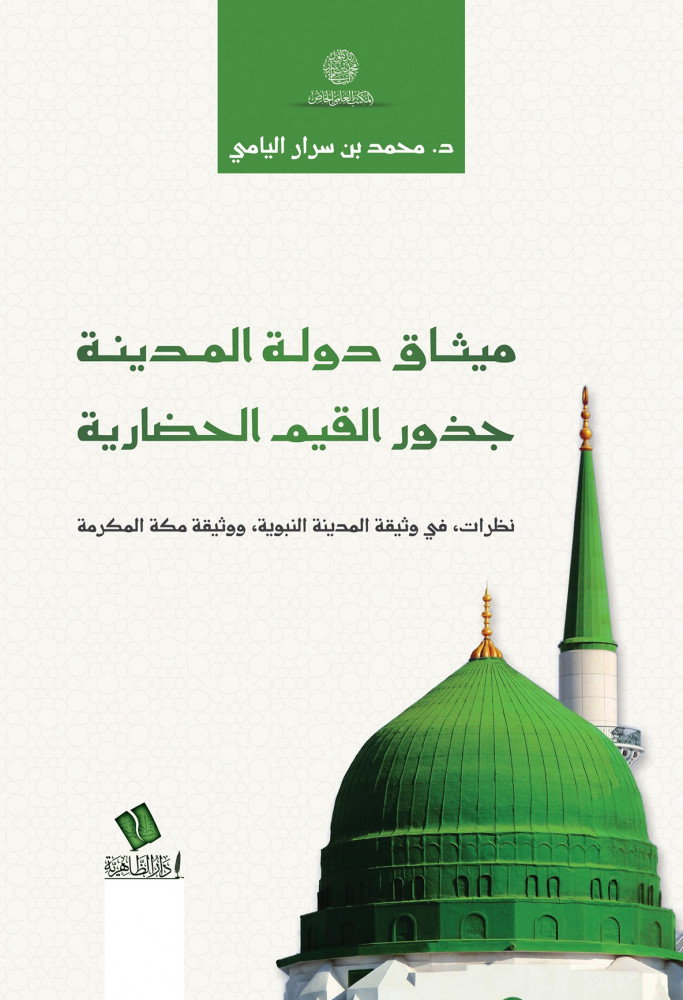
The Charter of the City-State: Roots of Civilizational Values - Mohammed bin Serrar Al-Yami
50ر.س
Product description
Islam has called since its dawn for the great values of human communication and noble principles, whose effects have reflected on the individual, society, and the nation as a whole, especially when the national community fulfills its duties well. The fruits of this are countless, the most important of which are the strength of social fabric, the inability to penetrate it, the creation of a pioneering renaissance in science and knowledge across various fields, the reduction of diseases, economic strength, good guidance of creative minds, continuous development and nation-building, keeping pace with civilization, and even leading among nations, with the homeland and citizen commanding respect.
Immediately after the Prophet’s migration to Medina, he established a historic constitution that included the most important foundations and noble principles regulating the relationship among all groups and factions of society in all its components.
By drafting this document—and with all factions acknowledging it—Medina became a cohesive state with the Prophet as its highest authority. It became the supreme reference for Islam, and all human rights were guaranteed, such as the right to freedom of belief, practicing rituals, equality, and justice.
These are some features of Islamic civilization in the Constitution of Medina, demonstrating how Islam’s system preceded all other systems in elevating the values of tolerance, solidarity, freedom, and supporting the oppressed—and other civilizational values that the world currently adopts.
With the help of Allah, the Almighty, I have resolved to undertake a foundational study of the values of human communication and the roots of civilizational relations, comparing them in light of the documents of Medina and Mecca. I ask Allah, with His beautiful names and highest attributes, to grant me success, guidance, and righteousness.

From Taif