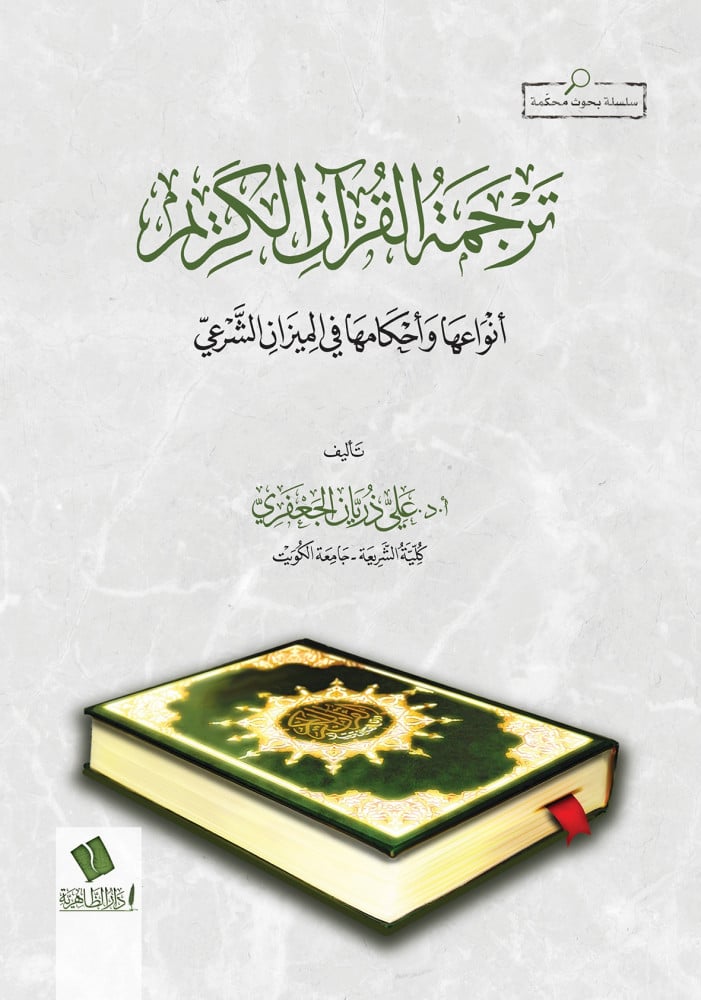
The types and rulings of the Noble Quran translation in the Islamic legal standard
25ر.س
Product description
The research addresses the concept of translation and the validity of its use in the Holy Quran in its three types from a Sharia perspective, and which of these types aligns with the rules and texts of the Sharia, and achieves the benefit of eloquence, the universality of Islam, and the comprehensive invitation of Islam to all humans regardless of their languages and tongues without compromising the sanctity of the Quran, while maintaining the specificity of its revelation in clear Arabic. The research begins with an introduction and an entry into linguistic terminology regarding translation and its meanings used generally in linguistic usage and specifically in translating the Quran. These meanings are summarized as: 1- Communication. 2- Transfer from one language to another. 3- Interpreting speech in its language. 4- Interpreting speech in a language other than its own. 5- Clarification in all its meanings. 6- Literal written translation, which is a contemporary usage and application of the concept of translation. And of these meanings, three have been used in translating the Quran, with their rulings clarified according to Sharia: 1- Literal translation. 2- Literal written translation. 3- Interpretive (meaning-based) translation. The first section discusses the ruling on literal translation of the Quran. The second section discusses the ruling on literal written translation of the Quran. The third section discusses the ruling on interpretive (meaning-based) translation of the Quran. Each of the three issues includes an explanation of different schools of thought and opinions, with evidence, analysis, implications, and discussion, leading to a preference and the determination of the correct ruling. The research concludes with the main results derived from the study, followed by a list of the sources relied upon.

From Taif