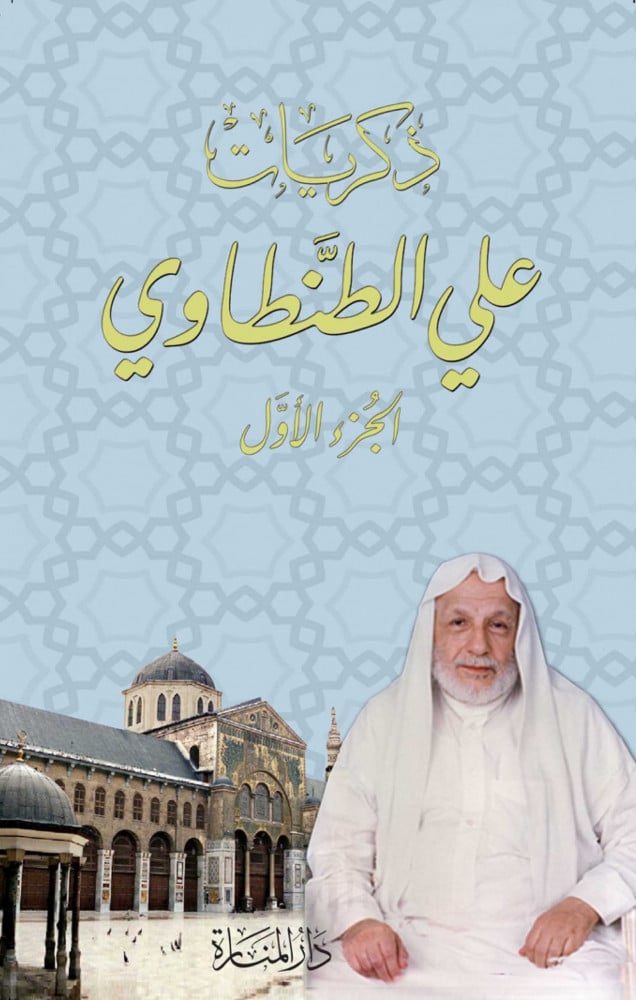

Memories of Ali Al-Tantawi 1/8
300ر.س
Product description
The first part of the "Memories" begins from the early childhood of Ali Al-Tantawi; from his elementary school days, even from the "Kuttab" before that, and it mentions the First World War and describes life in the Levant during those days. We proceed with little Ali Al-Tantawi moving from school to school, from era to era; from the Ottoman era to the Arab era to the French colonialism, and we read about his days in the "Ombar Office" (which is the high school) and about his teachers and mentors. Then we find his father has died, so his affairs are disturbed, and he turned to trade for a short while, then returned to study, and we see he traveled after succeeding in high school to Egypt to study at Dar Al-Ulum, but he interrupted the year before completing it and returned to the Levant. He tells us - in scattered places in this part - about his family origin, his father and grandfather, and his mother and her family. At the end of this part, we read about the revolution against the French and read much poetry of this revolution. Then a new page of memories begins when Ali Al-Tantawi, the young man, at seventeen, publishes his first article in newspapers, and thus a stage of work in journalism begins, and we read about the newspapers he worked for and the journalists he worked with. Then we read about the issuance of his first collection of works, "Messages of Reform."
In the second part, we complete the story of the early collections of Ali Al-Tantawi's publications, which are the "Sief Al-Islam" messages issued after the "Messages of Reform," then images of national resistance and the work of the Supreme Committee of Syrian Students pass by us. In this part, Ali Al-Tantawi details some of his teachers and mentors who influenced and benefited from him. The most impactful chapters are those where he talks about his mother and father, especially when he moves us emotionally to the climax in episode forty-seven: "The day my mother died." Then we move with Ali Al-Tantawi from this atmosphere to the education he started early, so we read some details of his educational journey and move with him from school to another, from Salmiya to Sakba in Ghouta, then to Renkos in the mountains. Finally, this part ends with a talk about the "Literary Assembly" in Damascus and the magazine "Al-Risala" in Egypt, which began publication then.
In the beginning of the third part, we move with Ali Al-Tantawi, the "teacher," from Renkos to the next station in his educational journey, Zakiya. Then we do not take long before moving with Ali Al-Tantawi, the "traveler," on one of the most amazing journeys; the journey to Hejaz to discover the land route for Hajj. But the narration of this journey is interrupted once to tell the story of the Hejaz Railway, then interrupted again to recount Ramadan memories, and a third time to talk about strength and sports memories. In this part, we read about Muḥaddith Al-Sham, Sheikh Badr Al-Din Al-Hassani, about Al-Ma’ani School in Damascus, and we end it having left Sham for Baghdad. The previous transitions were from village to village in education, and now it is a transition from country to country; from Sham to Iraq! Thus, we find ourselves in Baghdad, facing the "Tigris Revolution," and reading about literature lessons in its schools.
The fourth part is full of events and decisive changes. We proceed with Tantaawi's memories of Baghdad and Iraq; about Ramadan in Baghdad, then about the Sasanian Palace and the joy of seeing it, and we move with Ali Al-Tantawi from Baghdad to Basra, then leave all of Iraq for Beirut to spend 1937 there in his Sharia College, but we do not stay long and return to Iraq to live for a while in the Western school in Baghdad before moving to Kirkuk. Finally, Ali Al-Tantawi returns to Syria, appointed as a teacher in Dura Az-Zour, but he stays only a short while. We complete the rest of the part reading about the new phase of "Judge" Ali Al-Tantawi's life in Douma and then in the Damascus Court. As usual, this part includes digressions, such as recounting memories of World War II, dedicating two episodes to doctors: one attacking them and the other defending them, and finally talking about literary life half a century ago, which we pause here to continue in the next part.
We begin this fifth part by continuing the discussion of literary life fifty years ago, which leads us to various literary memories. Then we suddenly shift to Algerian memories, then to Palestinian memories. These memories lead us to the Palestine issue, and we find ourselves moving with Ali Al-Tantawi to Jerusalem to attend the "Jerusalem Islamic Conference," then suddenly find ourselves in the middle of the journey without realizing; we move from Jerusalem to Baghdad, passing through Mosul and Arbil, then stopping for a long time in Karachi. This long pause naturally leads us to listen to Ali Al-Tantawi narrate the interesting "Pakistan story," then he talks to us about Delhi, the lost Islamic Paradise. Then we suddenly shift from India and Sindh to find ourselves in Damascus on the day of withdrawal, and a new series of topics is generated: withdrawal reminds us of colonialism and its methods, and this reminds us of corrupting education and morals in the French way, which in turn reminds us of the debate over religious lessons in Sham schools, leading to a discussion about the call for socialism and the tampering with curricula during the Unity period; we end this part as we enter the era of unity and read about how Cairo received Nasser, and how his Minister Kamel Al-Din Hussein met with the Sham scholars, then we conclude with the speech that shook Damascus!
We start the sixth part amid the chaos; from the speech that shook Damascus, or rather that Ali Al-Tantawi shook Damascus with, and the story - in several subsequent episodes - extends to the story of unity and separation, stopping to examine the reasons for separation, then the story of the slaughter of Ali Al-Tantawi, which the Nasserite newspapers promoted with full details. After that, we return to the path of memories and resume the journey eastward that we started in the previous part, so we travel to Indonesia, moving between its islands and cities, and stop again to hear a historical talk about Indonesia’s story; with Islam, Japanese, Dutch, and British. But this part also does not escape digressions, as we experience two episodes with the famous prayer for rain during the Unity period in Sham, and read about one of Ali Al-Tantawi’s literary battles, and at the end of the part, memories of education and schools, then two episodes about judges and lawyers. The most impactful episode is the one that begins with mourning Shukri Faysal, then moves to his martyr daughter, Banan, and suddenly produces one of the greatest elegies in modern literature.
We have reached the seventh part, which begins with more memories and images of the judiciary, then quickly moves between various topics; from the Week of Armament, to news about science and scientists in Damascus fifty years ago, then to the Fitna of the Tujjaniyah in Sham, then to the Sharia College. After that, we read a scientific episode on the classification of sciences and another on jurisprudence and personal status, and this topic leads us to the Personal Status Law project that Ali Al-Tantawi worked on, and we travel with him to Egypt on his journey there for that purpose.
After small pauses and some digressions, we begin reading the details of Ali Al-Tantawi’s trip to Europe in 1970, traveling with him to Germany, Belgium, and the Netherlands, and reading about the Islamic call in these countries, experiencing his days in Aachen, Brussels, and other cities and regions of those European countries. Finally, after a long interruption and digressions that took us to the ends of the earth, we return to the judiciary and enter with Ali Al-Tantawi into the Court of Cassation.
We start the eighth part with farewell to the Sharia Court, and after encountering scattered memories, we return to the context, moving with Ali Al-Tantawi in his most important and last transition, to the Kingdom of Saudi Arabia; so we spend a year first in Riyadh, then move with him to Mecca. We briefly touch on various topics, such as interpreting some verses, talking about girls’ education, and a stand with Abu Al-Hassan Al-Nadwi and his memoirs. Finally, we reach the end of the book with Ali Al-Tantawi saying: “When I started writing these memories, I did not expect they would reach twenty-four episodes, but God blessed it until it became two hundred and forty, and I have not exhausted all I have, nor emptied all that is in my mind, for it came in a strange pattern, not following the usual way nor the familiar style, nor arranged according to years or divided into events and incidents, and it was not always on the straight path but veered right and left; I start talking but do not finish, and begin at the end but do not complete, and I do not know how the readers endured all this from me? And I used to part from you every Thursday, promising to meet you the next Thursday, but today’s part is a parting without a meeting.”

Questions you might have