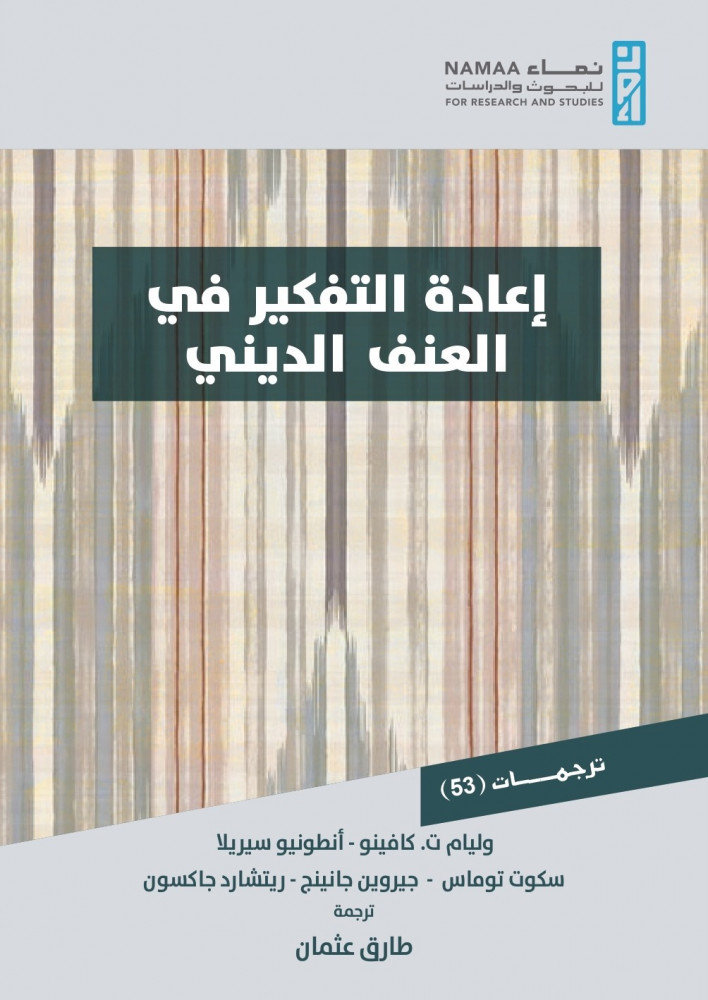
Reconsideration of religious violence
40ر.س
Out of Stock
Product description
Because religious violence has been and still is more than any other violence a subject of denial, and because defining violence and religion, and then defining religious violence, has been and still is an example of a problematic issue, research, and questioning. This book combines research papers that attempt to define violence, religion, and religious violence, and seeks to uncover the origins of violence in the contemporary world, and the monopoly of political institutions on violence in terms of tools and legitimacy. The research in this book is united by a common thread that raises new questions about terrorism and religious violence, and argues that the idea that religion causes violence is one of the most widespread myths in Western culture. The book contains four translated studies. William Cavanaugh analyzes in the first study "Religious Violence: Examining a Popular Myth" the common link between religion and violence in contemporary academic studies, and refutes the three main arguments used to defend it. In the second study, "Until the Hour: Gérard and Schmitt and the Origins of Violence," Antonio Sirella provides a rich comparative analysis of the ideas of René Girard and Carl Schmitt regarding the origins of political violence and its contemporary manifestations under globalization. Scott Thomas, in the third study "Rethinking Religious Violence: Toward a Mimetic Approach to Violence in International Relations," seeks to apply René Girard's theory of mimetic violence and the scapegoat mechanism in the field of foreign policy and international relations. In the fourth and final study, "What Is Really Religious in Religious Terrorism?" Gérwin Janing and Richard Jackson provide a critical analysis of the use of the term "religious terrorism" in political analysis and terrorism studies.

From Taif
Questions you might have