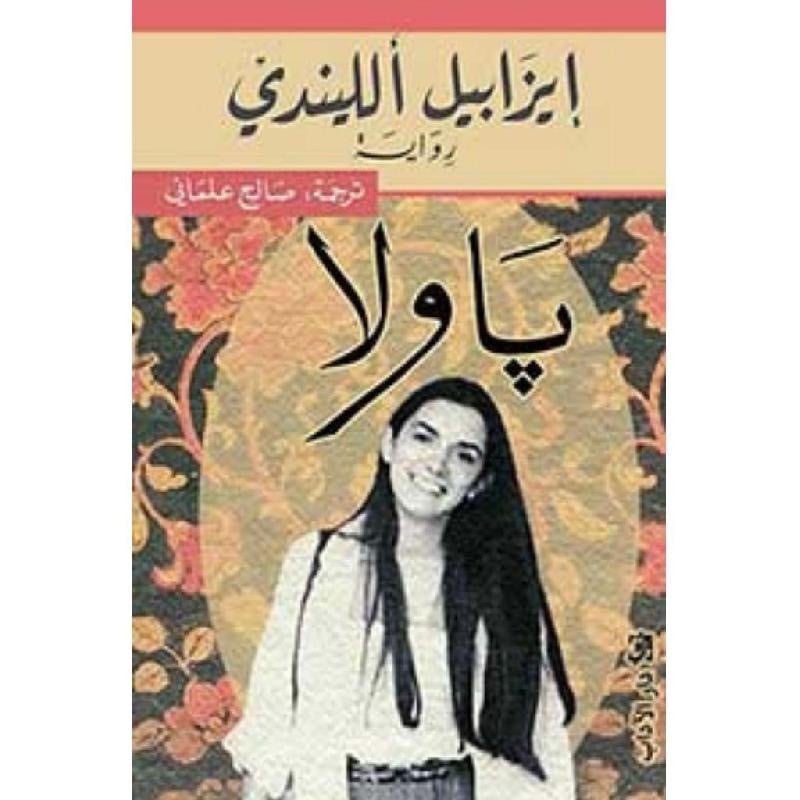
Paula - Isabel Allandi
78ر.س
Product description
Paula is the daughter of Isabel Allende who died in 1992 AD after a long suffering from the disease of Ververin – as Saleh Alamani translated it, and I have not heard of this disease or its symptoms before –. Paula is absent in this book as she was absent from consciousness due to the disease, present in both cases was Isabel in her constant companionship of her twenty-year-old daughter – 28 years old when she died – in the hospital, and in talking about her little, and about herself and Chile a lot in this book. Isabel says she started writing this book in the hospital after her daughter’s fall, it was at the beginning a message to Paula hoping she would read it when she wakes up, a message documenting her ancestors’ lives, then her own life, and Chile’s history with the political and social changes that affected it in the seventies, which pushed Isabel to flee to Venezuela and live there for many years. We can consider this book half an autobiography – Isabel returned to complete her autobiography in her latest book recently published under the title (The Sum of Days) which clearly carried the description (Memoirs) and where she continued from where she left off in Paula’s book – full of journalistic, television, political, and literary work, full of fleeting lovers, and love she thought would never come – eager to read her memoirs about the 13 years following (Paula) – from 1992 AD to 2005 AD when she began writing (The Sum of Days) to see if that love remained as she described in (Paula) or if she replaced it with a new love – and talking about the prevailing social and political situation in Chile until the period of the coup that led to the killing of her relative (Salvador Allende), the first socialist president elected democratically in history, and Augusto Pinochet’s rise to power. The book is very loaded, written by a great novelist, a loving mother, and a patriotic woman, and the features of Chilean culture – the class to which Isabel at least belongs – are clear in it, which may seem strange to those accustomed to European and American rationalist novelists, where the spirits of ancestors, tales of unfulfilled prophecies, and magical acts that bring luck are widespread.

From Saihat