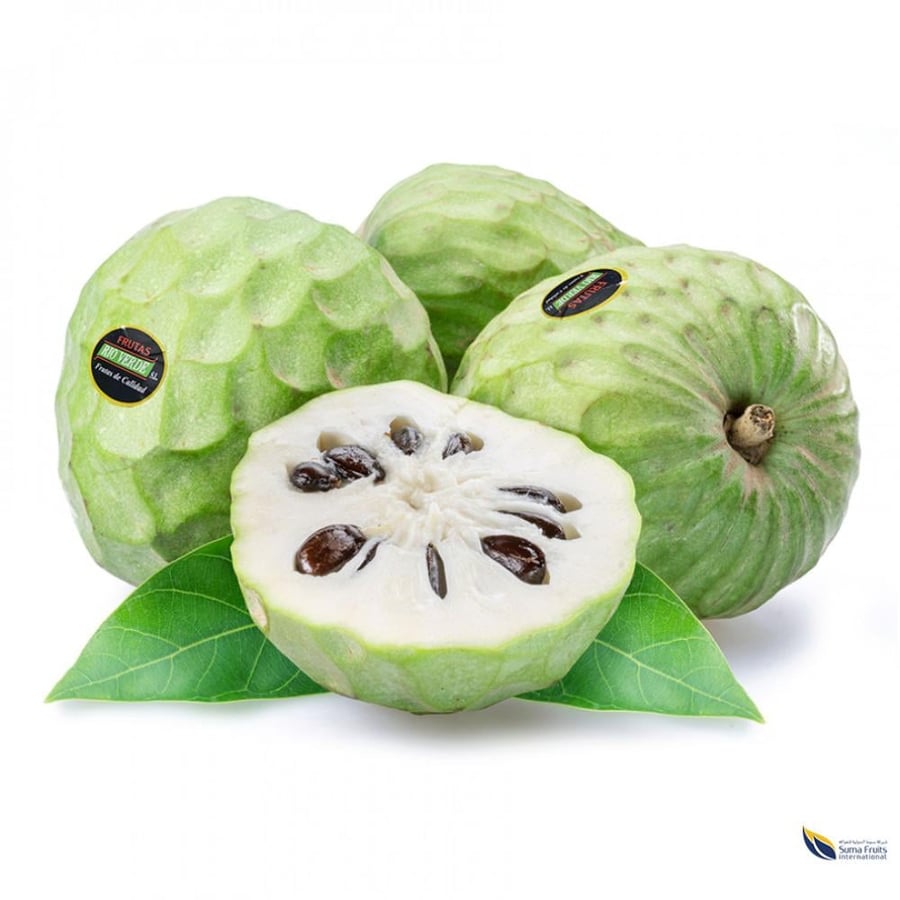
Spanish Qashta seedlings or Shireemoya
40ر.س
Product description
Seedlings approximately 30 cm long
This fruit is known as custard apple (Annona cherimola) or cherimoya, and it is a tropical fruit with a smooth green skin depending on the variety. It features a creamy white pulp.
Information about custard apple:
• Scientific name: Annona cherimola
• Origin: Andes mountain regions in South America (Peru and Ecuador)
• Taste: Sweet and creamy, combining flavors of banana, pineapple, and strawberry
• Health benefits:
• Rich in antioxidants, such as vitamin C
• Contains fiber that promotes digestive health
• Contributes to strengthening immunity and improving heart health
• Consumption:
• Eaten fresh by cutting and removing the seeds
• Can be used in juices and desserts
How to cultivate a custard apple (cherimoya) tree
1. Suitable climate and soil
• Climate:
• Grows best in warm, moderate climates, such as tropical and subtropical areas
• Tolerates temperatures between 15 - 30°C, but not severe frost
• Soil:
• Prefers fertile, well-drained soil
• Preferably sandy or light clay soil with a pH between 6 - 7.5
• Avoid salty or heavy soils that retain water for long periods
2. Watering and fertilization
• Watering:
• Needs moderate watering, avoiding waterlogging
• Deep watering once or twice a week is preferred, with increased watering during summer and reduced in winter
• Fertilization:
• Preferably use organic fertilizer at the beginning of planting to improve soil fertility
• Use NPK 10-10-10 fertilizer every two months during the growing season
• Calcium and magnesium can be added to enhance fruit quality
3. Pruning and tree care
• The tree should be pruned regularly to remove dead branches and stimulate the growth of fruitful branches
• It is preferable to keep the tree at a height of no more than 3 - 4 meters for easier harvesting
• Sticky traps can be used to control pests like whiteflies
4. Fruiting and harvesting
• The custard apple tree begins to bear fruit after 3 - 5 years of planting
• Fruits usually ripen between late summer and early winter
• Harvest the fruits when the skin turns light green and feels slightly soft when pressed

From Almandaq