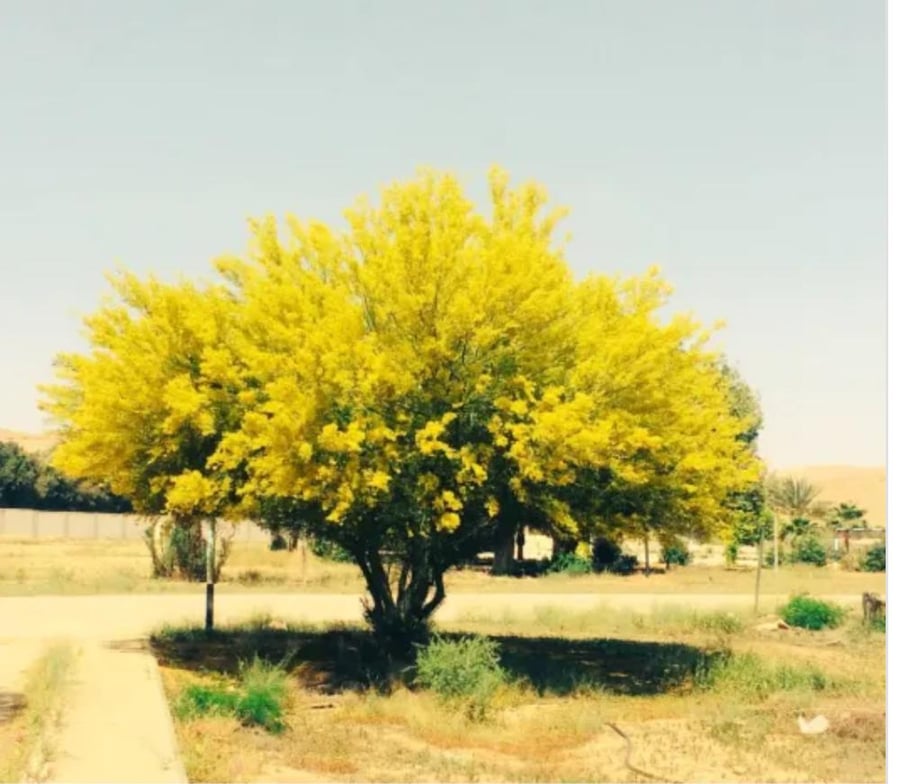
Parkinsonia seedlings
35ر.س
Product description
Seedlings approximately from 1.5 meters to 2 meters. Parkinsonia tree (Parkinsonia) is a spiny beautiful tree belonging to the Fabaceae family, also known as the yellow pea tree or Jerusalem thorn tree. It is characterized by its bright yellow flowers and delicate leaves, and is commonly planted in dry and semi-dry areas for its high ability to withstand heat and drought. Common species: 1. Parkinsonia aculeata: • the most common, known as the Mexican pea tree. 2. Parkinsonia microphylla: • known as Palo Verde or the green tree. 3. Parkinsonia florida: • also known as the blue Palo Verde tree. Distinctive features of Parkinsonia tree: 1. Height: • ranges between 6-10 meters. 2. Trunk and branches: • the trunk is smooth in green or brown color, with photosynthetic ability. • its branches bear short thorns. 3. Leaves: • small, feathery, compound, falling during drought to reduce water loss. 4. Flowers: • bright yellow, appearing in spring and early summer, producing nectar that attracts bees. 5. Fruits: • long pods containing seeds, sometimes used in agriculture or as fodder. Native habitat: • naturally grows in desert and semi-desert areas in North and Central America, but has spread to many dry regions around the world. Agricultural requirements: 1. Lighting: • needs direct sunlight for optimal growth. 2. Soil: • grows in sandy or rocky soil, tolerates poor soil. • soil must be well-drained. 3. Irrigation: • tolerates drought excellently. • regular watering increases growth rate but is not necessary. 4. Temperature: • tolerates very high temperatures and thrives in dry climates. Advantages of Parkinsonia tree: 1. Drought tolerance: • suitable for water-scarce areas. 2. Shade: • used as a shade tree in open areas. 3. Attracting living creatures: • its flowers attract bees and butterflies, enhancing environmental diversity. 4. Soil: • contributes to soil improvement due to its nitrogen-fixing ability. Uses: 1. Afforestation in desert areas: • widely planted to stabilize sands and prevent desertification. 2. Garden decoration: • used in xeriscape garden design (low water consumption). 3. Fodder: • its leaves and seeds are used as animal feed in some areas. 4. Firewood: • its wood is used as fuel in some rural areas. Parkinsonia (Parkinsonia) is a beautiful spiny tree belonging to the Fabaceae family, also known as the yellow pea tree or Jerusalem thorn tree. It is characterized by its bright yellow flowers and delicate leaves, and is commonly planted in dry and semi-dry areas for its high ability to withstand heat and drought. Common species: 1. Parkinsonia aculeata: • the most common, known as the Mexican pea tree. 2. Parkinsonia microphylla: • known as Palo Verde or the green tree. 3. Parkinsonia florida: • also known as the blue Palo Verde tree. Distinctive features of Parkinsonia tree: 1. Height: • ranges between 6-10 meters. 2. Trunk and branches: • the trunk is smooth in green or brown color, with photosynthetic ability. • its branches bear short thorns. 3. Leaves: • small, feathery, compound, falling during drought to reduce water loss. 4. Flowers: • bright yellow, appearing in spring and early summer, producing nectar that attracts bees. 5. Fruits: • long pods containing seeds, sometimes used in agriculture or as fodder. Native habitat: • naturally grows in desert and semi-desert areas in North and Central America, but has spread to many dry regions around the world. Agricultural requirements: 1. Lighting: • needs direct sunlight for optimal growth. 2. Soil: • grows in sandy or rocky soil, tolerates poor soil. • soil must be well-drained. 3. Irrigation: • tolerates drought excellently. • regular watering increases growth rate but is not necessary. 4. Temperature: • tolerates very high temperatures and thrives in dry climates. Advantages of Parkinsonia tree: 1. Drought tolerance: • suitable for water-scarce areas. 2. Shade: • used as a shade tree in open areas. 3. Attracting living creatures: • its flowers attract bees and butterflies, enhancing environmental diversity. 4. Soil: • contributes to soil improvement due to its nitrogen-fixing ability. Uses: 1. Afforestation in desert areas: • widely planted to stabilize sands and prevent desertification. 2. Garden decoration: • used in xeriscape garden design (low water consumption). 3. Fodder: • its leaves and seeds are used as animal feed in some areas. Challenges and care: 1. Pests: • may be affected by insects such as aphids or stem borers. 2. Pruning: • recommended to prune to maintain shape and prevent the spread of its thorns in populated areas. Additional facts: • In low-rainfall areas, the tree may completely shed its leaves to reduce water loss. • Its name “Palo Verde” in Spanish means “green wood,” referring to the green trunk and branches that perform photosynthesis. If you need tips on cultivating or dealing with its problems, do not hesitate to ask for help! Challenges and care: 1. Pests: • may be affected by insects such as aphids or stem borers. 2. Pruning: • recommended to prune to maintain shape and prevent the spread of its thorns in populated areas. 3. Spread: • may become invasive in some areas if seed dispersal is not controlled. Additional facts: • In low-rainfall areas, the tree may completely shed its leaves to reduce water loss. • Its name “Palo Verde” in Spanish means “green wood,” referring to the green trunk and branches that perform photosynthesis.

From Almandaq
Questions you might have