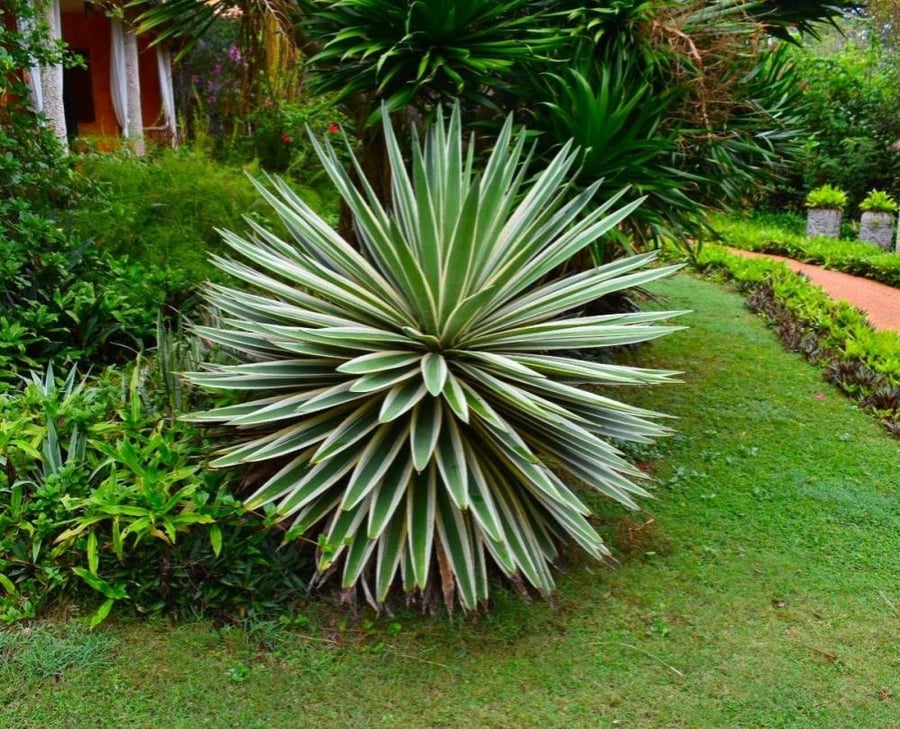


Juka Veragata seedlings
70ر.س
Product description
🌿 Yucca gloriosa “Variegata”
Scientific name: Yucca gloriosa L. “Variegata”
Family: Asparagaceae – Asparagus family
Origin: Southeastern United States, especially sandy coasts (Carolinas, Florida)
Common names: Colorful Yucca, Striped Yucca, Spanish Dagger
📌 Plant Description
Evergreen perennial plant with a beautiful architectural shape.
Leaves: Long (30 – 60 cm), sword-shaped, green striped with creamy or golden yellow, with sharp ends.
Stem: May be short initially, then lengthens with age (up to 1 – 2.5 m).
Flowers: Appear in summer and autumn, bell-shaped white flowers, in branched inflorescences that can reach 1.5 – 2 m in length.
Lifespan: Very long (may exceed 20 – 30 years).
🌍 Environment and Suitable Conditions
Climate:
Tolerant of drought and high temperatures.
Resistant to coastal humidity and air salinity.
Resistant to frost down to -10°C if in a sheltered location.
Soil:
Best: Well-drained sandy loam soil.
Tolerant of poor nutritional conditions and moderate salinity.
Not suitable for heavy, poorly-drained clay soils.
💧 Watering:
Highly drought-tolerant.
In fields and gardens:
Summer: every 10 – 14 days.
Winter: every 20 – 30 days or according to soil moisture.
Important note: Excessive watering is the biggest risk to the plant and causes root rot.
☀️ Light:
Needs direct sunlight for clear, attractive colors.
Can grow in partial shade, but leaves will have less contrast.
🌸 Flowering and Fruit:
Begins flowering at age 3 – 5 years.
Produces beautiful white inflorescences that attract bees and butterflies.
After flowering, the flowering stalk can be cut to stimulate the plant.
🍂 Care:
Remove dry lower leaves to maintain aesthetic shape.
Fertilization: Twice a year (spring and summer) with decomposed organic fertilizer or balanced NPK (20-20-20).
Requires minimal care and is considered a “plant you plant and forget.”
🐛 Diseases and Pests:
Generally very resistant.
May be affected by:
Root rot due to overwatering.
Mealybugs and scale insects on leaves (treated with neem oil or Potassium soap).
Fungal rust in shaded, high-humidity areas.
🏡 Uses:
Decorative: Ideal for rock gardens and front yard landscapes.
Used as a solitary plant or in groups.
Can be planted in large pots as interior or exterior decor.
Other uses: Its leaves and fibers have traditionally been used in rope-making.
Some parts contain saponins, which have been used medicinally and traditionally.
📋 Quick Agricultural Summary
Sun: Direct (best).
Soil: Sandy – well-drained.
Watering: Little and regular.
Fertilizing: Twice a year.
Tolerance: Drought, salinity, heat, light frost.

From Almandaq
Questions you might have