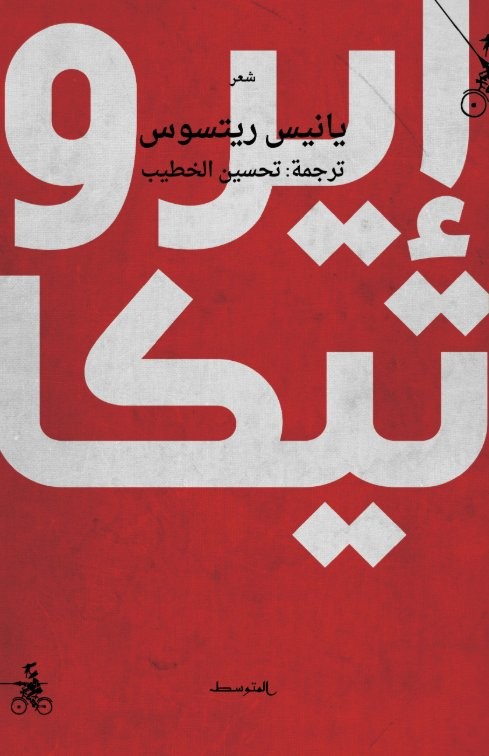
إيروتيكا
25ر.س
41ر.س-39%Product description
On the cover of the book it came: "Jansā (Ritsos), and in an undeniable manner, between passion and poetry, and between the love of the beloved's body and the body's world as one. Her body is a bridge that leads him to the outside world, and from his experience with her, he draws his courage to respond—sensually, erotically in some way—to all the diversity of the world, and to embrace this diversity as well, without failing, in any case, to distinguish between truth and falsehood, bearing the responsibilities of man as a political animal. He must dedicate his life: sometimes to praise the infinite diversity of the body's world, and at other times to condemn all that is false and evil. But he realizes, just as many poets before him have realized, that love or erotic passion dissipates creative forces just as much as it amplifies them, and becomes a loyalty/realization self-sufficient in itself. And he is to part sadly, keeping the aura of that realization through which he can illuminate his love for the world, and for his work as an artist, knowing the poet's necessity to condemn himself for that solitude and isolation, which are often the fate of the creative person. So we see him, as compensation for that, caressing the world as he caresses the naked body of the beloved, then adorns it with lustful words. Thus, despite the fact that Ritsos wrote a few "erotic" poems, or "love" poems specifically, there is a latent feeling of sensuality flowing through all his poetry." ..And this is a passage from the introduction of poet Kimon Friar to the English edition of the book, translated from Greek, including the translation by Mohsin Al-Khatib, the distinguished Palestinian translator, of the book into Arabic.
