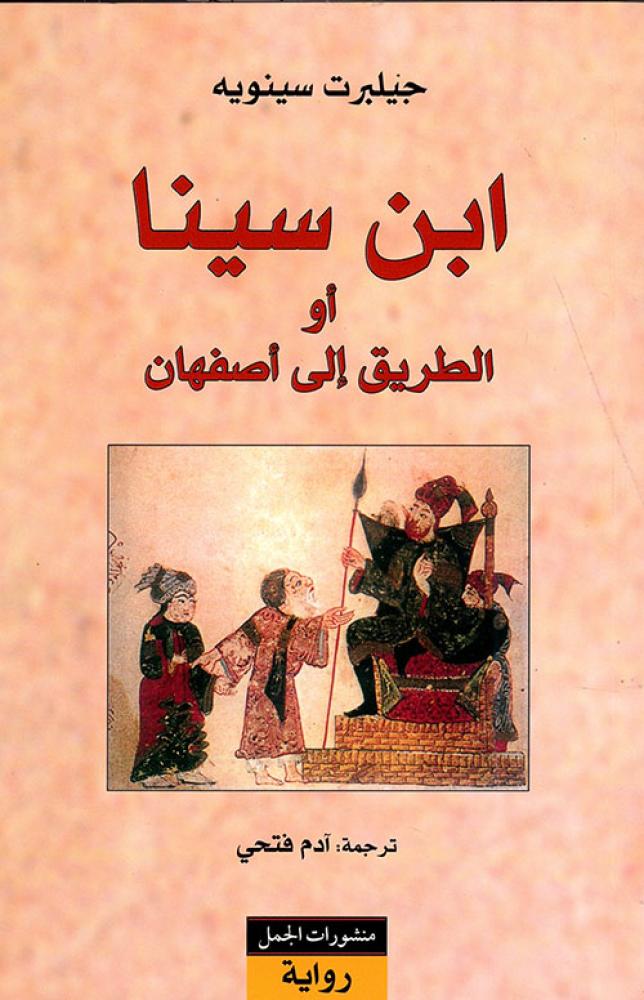
Ibn Sina or the road to Isfahan
57.96ر.س
Out of Stock
Product description
Author's name: Gilbert Sinouhidar
Publisher: Al-Jamal Publications for Publishing and Distribution
Year of publication: 2006
Literary classification: Biographies and Memoirs
Brief about the book: Ibn Sina one of a few geniuses of past ages whose most important works have reached us, in addition to a clear picture of their personal lives, through the pages left by his student and follower Abu Ubaid Al-Juzjani who accompanied him in his travels and hardships, and who described to us in about twenty pages what his teacher endured from the injustice of kings, the dominance of princes, and the physical exhaustion in pursuit of great spiritual goals.
It appears that Ibn Sina, through “The Life of Al-Juzjani,” is a tragic character ready for literary execution, with details, twists, suspense, and an ending where fate conflicts with will according to the conditions of Greek tragedy.
Gilbert Sinouhidar exploited this short biography to create his monumental work, making the text of this novel on the tongue of Abu Ubaid Al-Juzjani, and including a number of footnotes attributed to this loyal follower who accompanied Ibn Sina for twenty-five years, and adding other footnotes signed “the translator” to reinforce the illusion of attributing this text to Ibn Sina’s student and famous biographer, and to further convince (the reader) that the (French) author is nothing more than a translator of Ibn Sina’s biography as written by Al-Juzjani, which also means he is merely an honest transmitter of a text originally written in Arabic.
Since this is the essence of the “game” of narration intended in this work, we saw it appropriate to respect the rules of the game during translation, annotating our footnotes with the signature “the Arabizer,” as if we are not translating a text but returning it to its mother tongue.
This required us to go back to the text of Abu Ubaid’s letter, and to Ibn Sina’s own writings: especially the Canon of Medicine, The Book of Healing, and the medical poem, and to verify many Quranic verses, prophetic hadiths, proverbs, and poetic lines, to get as close as possible to an “original text,” which is more akin to virtual truth than anything else.
Thus, the reader finds himself before two games: the game of writing as translation, and the game of translation as a return of the text to some original.
That was the first reason that tempted us to translate this novel.
Gilbert Sinouhidar assigns Abu Ubaid Al-Juzjani a dual role or, more precisely, two complementary roles in the storytelling process: the role of the “explicit narrator” relying on the first person, describing events from the character’s perspective, and the role of the “hidden narrator” who impersonates the author and claims “neutrality.”

From Najran