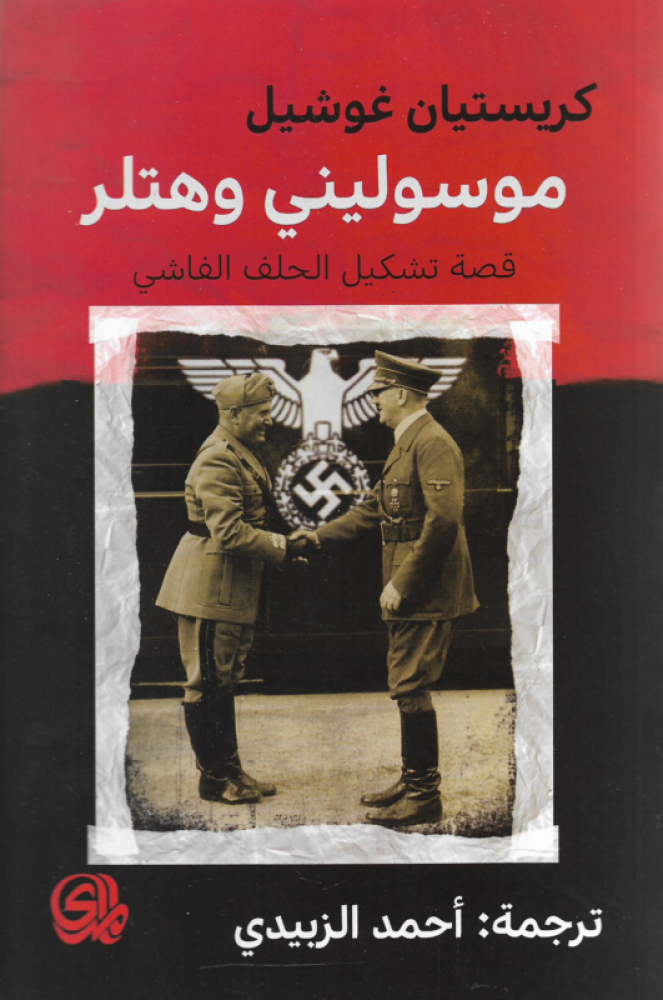
Mussolini and Hitler the story of the formation of the fascist alliance
61.82ر.س
Product description
At first glance, it seems that the two leaders share many similarities, as both of them come from humble origins and hail from relatively remote areas. Both possessed charisma. Both rose to power through a combination of political violence and what appeared to be legal means of controlling authority in their countries in a climate resembling civil war. Each of them constantly focused on their masculine qualities and military tendencies, and both promised to unite the masses behind them and transform their countries into global powers. Both tried, to varying degrees, to maintain a balance between repression and creating popular consensus. Both were harsh and determined to establish what they saw as a new world order through war and invasion. Both adopted domestic and foreign policies aimed at war, with fundamentally different results, considering their divergent economic performance and their distinctive political cultures. However, their relationship was not only fraught with tensions but also with some ideological contradictions and personal rivalries. It was also shaped through very different national races through which they operated. Hitler had a solid and clearer ideology based on anti-Semitism and expansion according to the Lebensraum theory toward annexing Eastern European lands, compared to Mussolini, and it is clear that anti-Semitism was a central theme for Hitler and the Nazis, leading to the Holocaust massacres, while in Italy, the local racism built on the segregation practiced in Italian colonies became more apparent only with the consolidation of Fascist-Tazi relations in the mid and late 1930s. Meanwhile, their relationship, which seemed unlikely because the leaders fought on opposite sides in the First World War, which Germany lost, concealed the fact that neither of them was friendly or trustworthy. Mussolini pretended to be the head of the family in Italy, while Hitler portrayed himself as a person deeply loyal to the German nation.

From Najran
Questions you might have