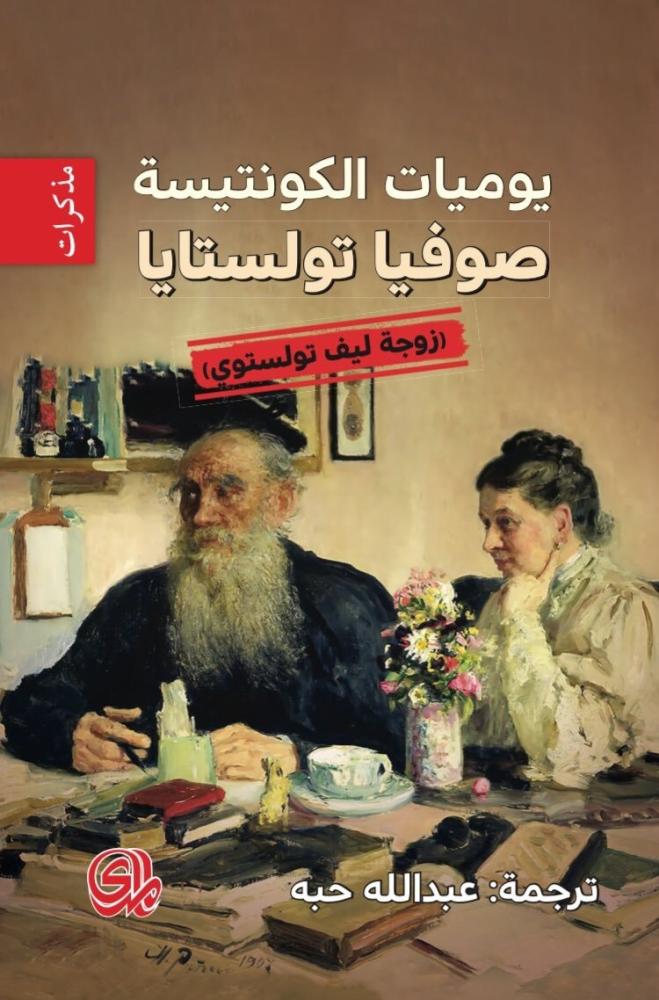
The diaries of Countess Sofia Tolstoy
61.82ر.س
Out of Stock
Product description
May God forgive the people of that woman who perhaps was unable, since the youth of her years, to carry on her weak shoulders that noble task – to be the wife of a genius man and a great human.
Sophia Andreyevna lived for about half a century with the writer and shared with him, since she married him at the age of 18, the difficulties of life in the strict Tsarist society, and in his rise to fame until he became one of Russia’s most famous writers in the second half of the 19th century and the beginning of the 20th century.
The diaries are like a novel of daily events that embody the writer’s qualities and his wife’s attitude towards his behaviors with her and others, her revolutionary ideas at that time, and her suffering because of all this.
Sophia Andreyevna married Duke Lev Tolstoy in 1862, and she became a duchess, after growing up carefree in the care of her father, Andrei Pers, a court doctor who lived with his family in a government apartment inside the Kremlin.
Sophia acquired many aristocratic habits, received a good education, mastering three foreign languages: French, English, and German, and learned to play the piano, not to mention her exposure to world literature.
Tolstoy’s wife was characterized by a poetic nature and several talents that later left their mark on her relationship with her husband, as Sophia loved the magic of nature in the Russian countryside, as well as music and art in general, and she disagreed with her husband in his evaluation of the arts as mentioned in his book "On Art."
At that time, Tolstoy had become well known, competing even with the Russian writer Ivan Turgenev (1818-1883) in fame, and his works had been translated into foreign languages.
He made his way in the field of literature after harsh life experiences, including service in the army, participation in the Crimean War, and then in the Caucasus as an artillery officer.
He knew all the vices of officer life at that time, including drunkenness, debauchery, gambling, and mingling with gypsies and women of pleasure.

From Najran
Questions you might have