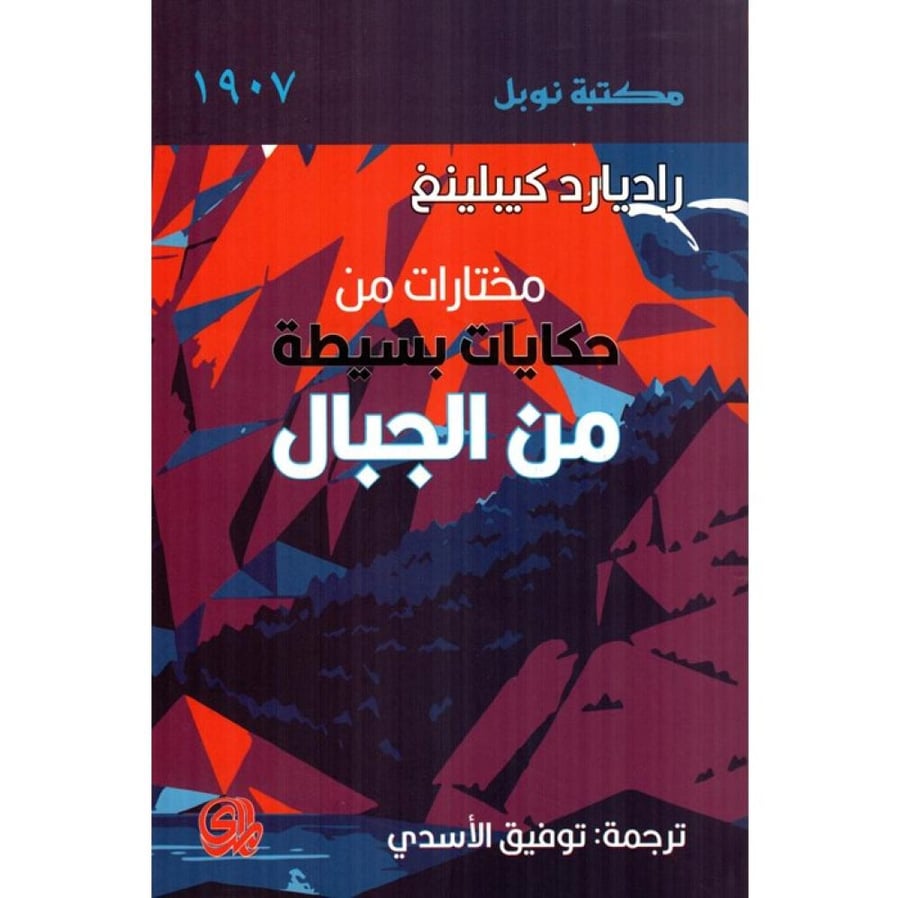
Selections of simple stories from the mountains
22.22ر.س
Product description
Rudyard Kipling (1865 - 1936) British writer, poet, and storyteller born in British India. Among his most important works is "The Jungle Book" 1894. A collection of stories, including the story "Rikki-Tikki-Tavi," and "Kim" 1901, "an adventure." He also authored many short stories, including "The Man Who Became King" 1888.
Who among Arabs does not know the British poet, storyteller, and writer Rudyard Kipling, and his famous quote: "The East is East, and the West is West, and never the twain shall meet." This ideological stance from the author of "The Jungle Book" made him, in the eyes of many, the cultural spokesperson for British imperialist (colonial) tendencies, and because of his positions derived from this quote, George Orwell nicknamed him "The Prophet of the Empire," although he later expressed great respect for him due to his unmatched literary talent.
This Kipling, and specifically with this description, is currently—like the prodigal son—returning to lead British academic interest, as if undergoing a new discovery. The tendency extending beyond the borders of the English island, and the challenges it faces, make enthusiasts seek a cultural justification to legitimize their orientations, or an icon to adorn their aims, which have become dormant over the past decades.
Perhaps only coincidence is what brought Kipling back to the forefront of interest two years ago, when American researcher Thomas Penny unexpectedly discovered about 50 poems by Rudyard Kipling in his family archives during renovations at one of his houses in Manhattan. Some of these poems were written during World War I, in which Kipling lost his son.

From Najran
Questions you might have