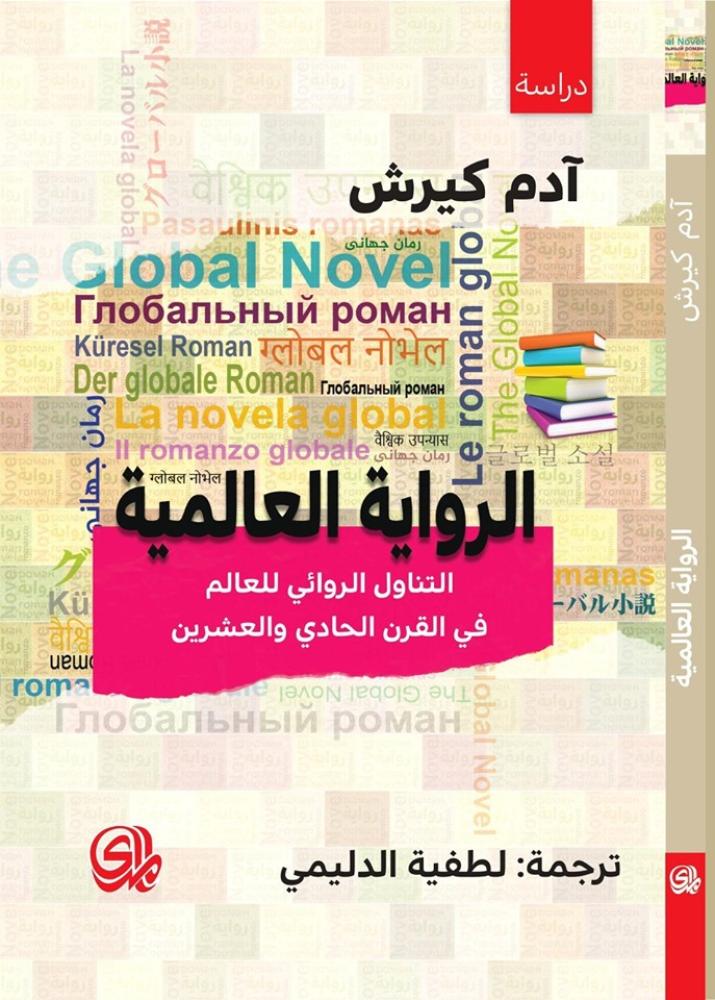
The global novel: the novelistic portrayal of the world in the twenty-first century
25.12ر.س
Product description
Author's name: Adam Kirsch
Publisher: Al-Mada for Publishing and Distribution
Year of publication: 2019
Literary classification: Literary studies and articles
About the book: The challenge facing the global novelist lies – as Kirsch sees it – in many matters that are essentially a matter of style and technique: "How can a writer rooted in a certain culture convey its truth to readers from vastly different places and cultures?" This is how Kirsch questions.
In the midst of his attempt to find a suitable answer, he proceeds to question the works of eight writers: Pamuk, Murakami, Roberto Bolano, Chimamanda Ngozi Adichie, Mohsen Hamid, Margaret Atwood, Michel Whelebeek.
Kirsch writes about these writers saying: "They write in six languages: Turkish, Japanese, Spanish, English, French, Italian," and adds, "And there is a generally accepted agreement worldwide that these represent the fictional characters leading the novel in the (Pantheon) of world literature."
If we wanted to speak more precisely, we would say that the type of works that seem to have attracted Kirsch to many of these works is the resonant impact they had in the West.
The first novel that Kirsch analyzes in detail is Orhan Pamuk's "Snow": the novel tells the story of a poet named Ka who returns to Turkey after twelve years abroad, and travels to the town of Kars – one of the important towns in a Turkish province – to research and write about the phenomenon of young women who commit suicide, who are young girls and may (or may not) be martyrs for a religious belief.
It happened that one of them participated in a school demonstration where she refused to remove her headscarf, for example, at the request of her openly secular school principal, who was later assassinated by an Islamic extremist under the pretext that he was suppressing religious beliefs.
For Kirsch, this shows how the novel "Snow" dramatically presents the conflict between Turkey and Europe, between Islam and the West.
Thus, Pamuk is placed in this novel in the context of the West and its entrenched ideas about Islam after September 11, 2001.
Adam Kirsch (born 1976): An American poet and literary critic, who is a regular participant in the literary discussion circle at the Center for American Studies at Columbia University.

From Najran
Questions you might have