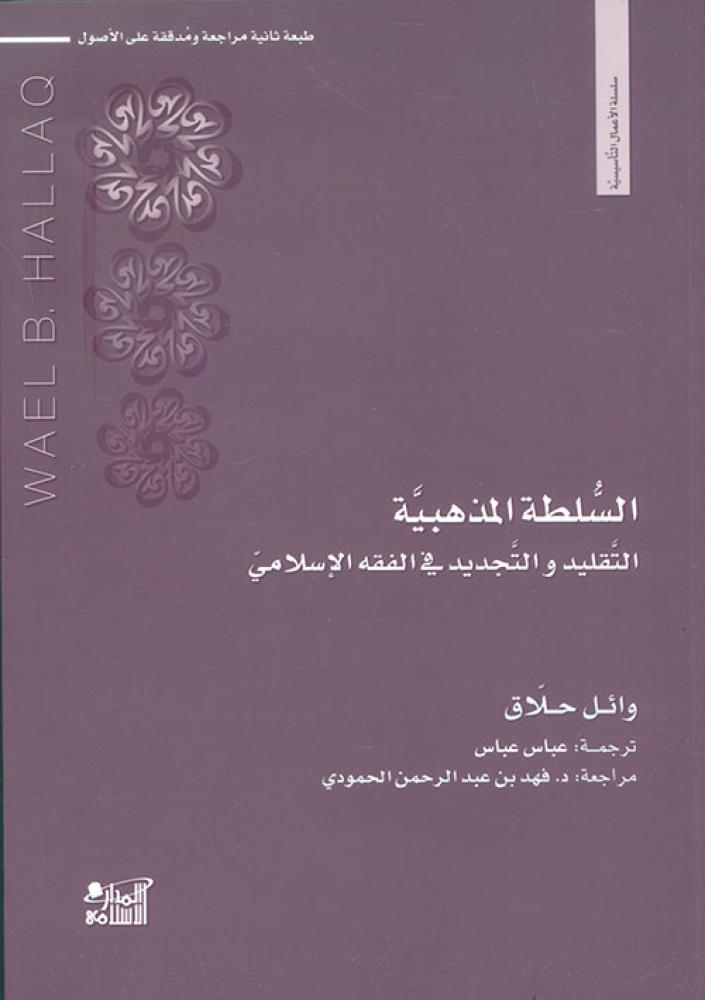
The sectarian authority, tradition and renewal in Islamic jurisprudence
76.31ر.س
Product description
Author's name: Wael Halakadar
Publication: Al-Madar Al-Islami for Publishing and Distribution
Year of publication: 2007
Literary classification: History and Religions
Book overview: The book aims to conduct an accurate investigation into the essence and dimensions of the paths of tradition and renewal and their relationship to doctrinal authority. To achieve this goal, it examined the logical structure of the ranks of jurists, according to levels of interpretive activity, because reaching conclusions related to doctrinal authority must start with reading what is written in the legal traditions themselves and by their scholars, not from external observers. This results in the dismantling of the structure of imagination and historical inventions that were necessary to build the reference edifice of the legal and doctrinal system.
The author chose to answer the question: How was the doctrinal authority of the Imams established? And what are the stages through which the jurisprudential schools passed to consolidate their authority among their followers?
Historical data indicate that the image of the four founders of the schools was the result of subsequent historical stages, starting from framing the foundational aspect of the school represented by the layers of jurists, passing through the way the reference authority was built based on the contributions of the school’s founder. The efforts of later scholars focused on emphasizing the founder’s status, and therefore, the issue of narrowing diverse opinions within the school can only be seen as one of the attempts to reinforce the reference authority of the founder and reject what contradicts it, in order to achieve the central goal of protecting the school and giving it the effectiveness that makes it capable of renewal and presence in ongoing social practices.
The book also discusses what it calls procedural terms, which served to determine which opinions govern a particular issue and enjoy the highest level of doctrinal authority. This is because examining the internal mechanisms of legal opinions is one of the most important factors of adaptation that can elevate a legal opinion from a marginal level to a higher level, and vice versa.
As a result of this idea, the issue of legal change was not an anomaly in Islamic law, and Halakadar was able to prove that legal change is an integral part of the structures of Sharia itself.

From Najran
Questions you might have