The cook's role in human civilization
78.09ر.س
Product description
Author's name: Balqis Sharara
Publisher: Dar Al-Mada for Publishing and Distribution
Year of publication: 2012
Literary classification: General Culture
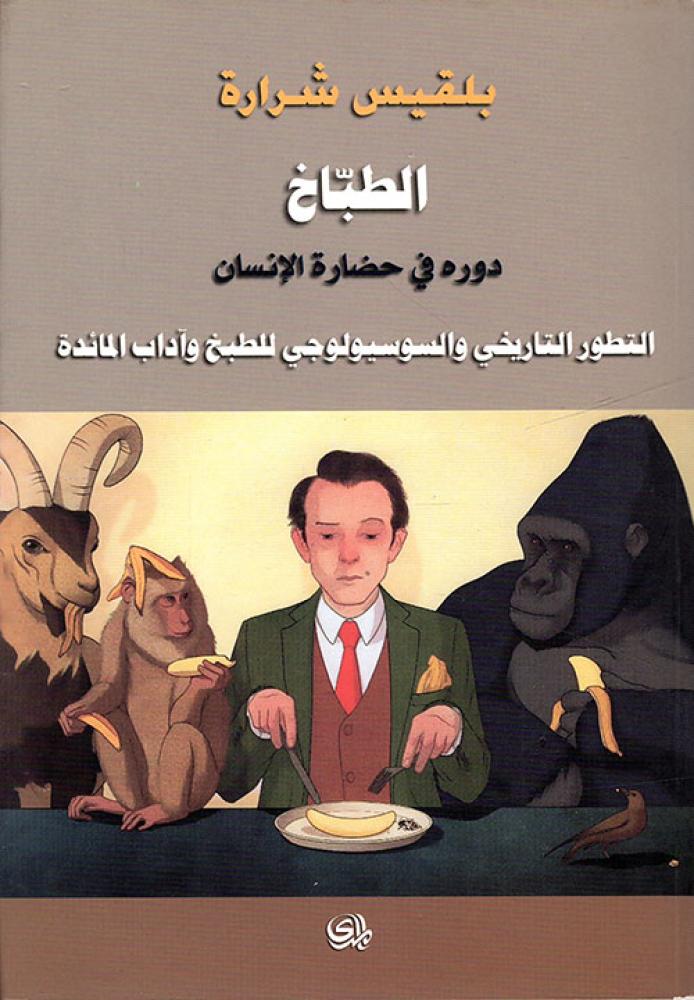
Book overview: The book spans 743 pages of medium size, and the cover illustration was designed by artist Richard Wilkinson.
Sharara divided her author into fifteen chapters, in which she discussed the historical and sociological development of cooking and table manners, starting with the evolution of the human brain, fire, and cooking, as well as the development of the knife. Then Sharara moves in the second chapter to the civilizations of Mesopotamia and the Nile Valley, to talk about the structure of society in Mesopotamia, storage and trade exchange, also about priests and cooking, as well as food etiquette – feeding the gods and the king, in addition to women and cooking, cooking tools, banquets, drinks, and beer brewing.
She then talked about the cook in ancient Egyptian society, Egyptian society, and the status of the cook.
The author also addressed other civilizations in the remaining chapters, including Greek, Roman, Chinese, Indian, Islamic civilization, Byzantine, Charlemagne’s era, the medieval period, the Renaissance, Louis XIV’s era, the Enlightenment, and others, ending with globalization. She discussed the use of food as a weapon in war, changing attitudes towards cooking and cooks, the role of television, then the modern kitchen, and the slow food movement.
The book’s introduction was written by the writer Rifa'a al-Jaderji, who said: "Food is not like other crafts invented by humans for sustenance and comfort. It is a necessary need, rooted in the biology of maintaining existence and survival. With the emergence of rational humans endowed with creative abilities, food diversity was invented, and humans grew tired of repetition. Innovation became the driving force behind the development of human civilization.
With the advancement of craft and the invention of surplus agricultural production, humans gained the ability to indulge. The craft of food evolved from its original domestic role, which was the responsibility of women, to a craft led by the chef, starting with cooks of military campaigns, then to cooks of authority. It gained a prestigious position in society, and from there appeared the artist-chef who took his role in the development of civilization alongside sculptors, architects, musicians, singers, and other pioneers of civilization."

From Najran